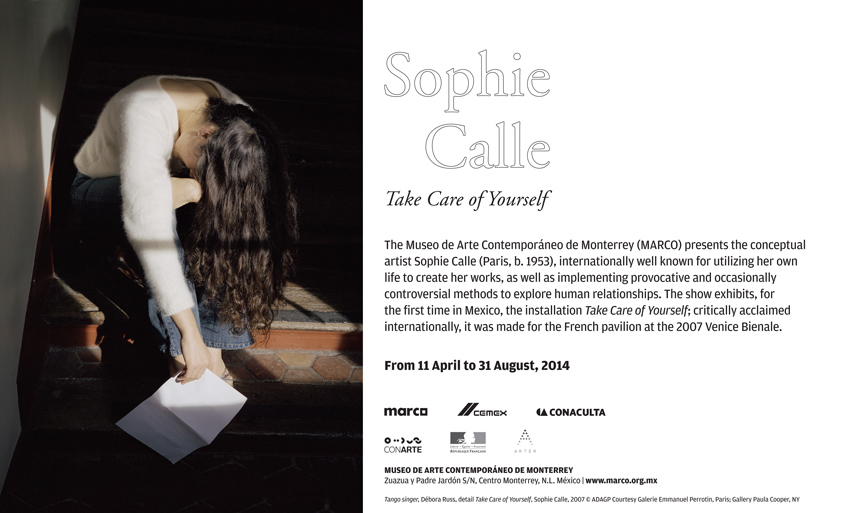
Examples of relay in contemporary photographic practice include Sophie Calle’s
Take Care of Yourself and Sophy Rickett’s Objects in the Field (see interview in the
Appendix to this course guide) where clashes of understanding or interpretation
work together to create a perhaps incomplete but nonetheless enriching
dialogue between artist and viewer.
Look these pieces up online. Investigate the rationale behind the pieces and see
if you can find any critical responses to them. Write down your own responses in
your learning log.
● How do these two pieces of work reflect postmodern approaches to
narrative?
Post modern approaches to narrative mean that the traditional structure of a story that has a beginning, middle and end is challenged. The notion of authorship control too.
Examples of post modern approaches are
Including fragments of other texts – ambiguous, open ended plots, unresolved endings, reduced, disruptive language.
This approach allows the reader to put themselves into the story, there is a call to the reader to become less passive, for endless possibilities of interpretation for a more enriching experience.
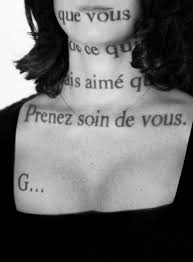
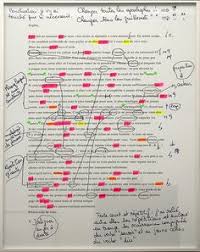
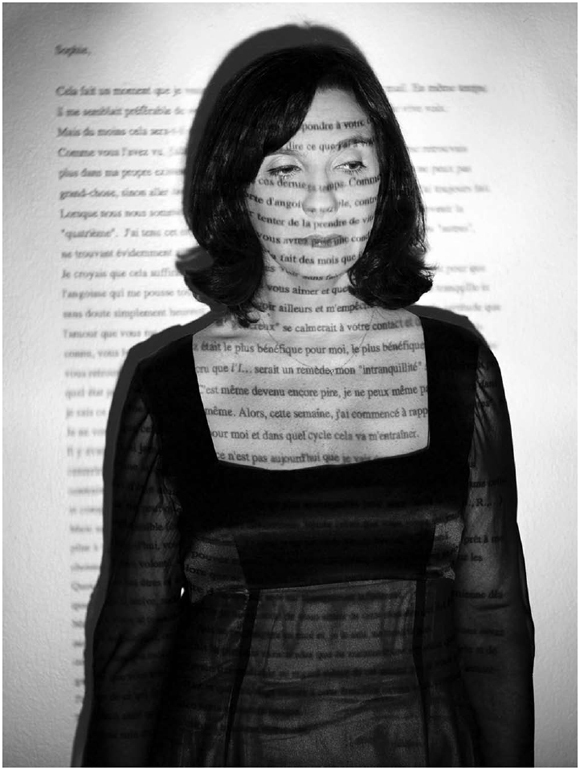
Sophie Calle’s rationale is to use a negative life event and turn it into a positive one through artistic expression using the postmodern narrative approach. The text that is the break up email she received from her boyfriend becomes the work of art, where one of the 109 women who have analysed the email have highlighted certain parts of it to point out grammar errors for example.
Parts of the email text are copied and used on photographic portraits, this is a good example of using a most modern narrative approach (see images below as an example of this)
There is no conclusion to the work, the narrative is open ended for the viewer to interpret. The answers are less important than the forms of engagement of the 109 women from different professions who were asked to review and critique the email message, invited to construct meaning. These forms of engagement are a key creative part of the final body of work since each one approached the critique in their own unique way, depending on their line of work.
Another way to incorporate text into an image-based project is to include
interviews or audio.
The New York Times has a simple but effective project online called One in 8
Million about the inhabitants of New York. It includes images of people from
different walks of life and professions with audio clips overlaid to give a voice to
the subject. It is a clever way of celebrating the richness and diversity of a city
with such cultural and social variety. Some photographers use interviews and
diaries to incorporate text with their images.
You can research the following examples by searching on the weareoca
website:
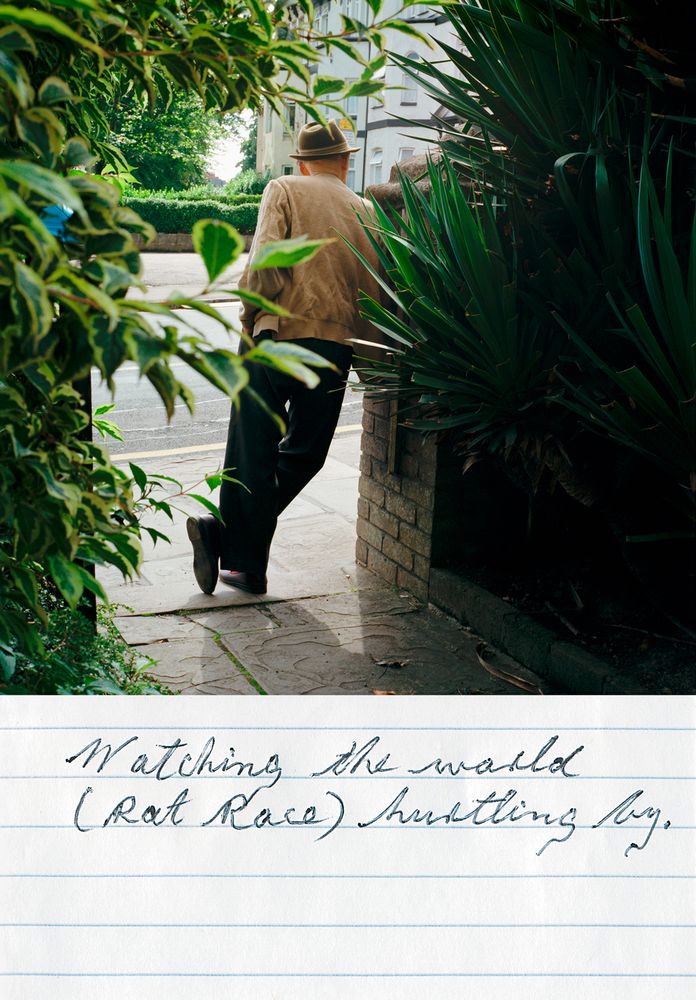
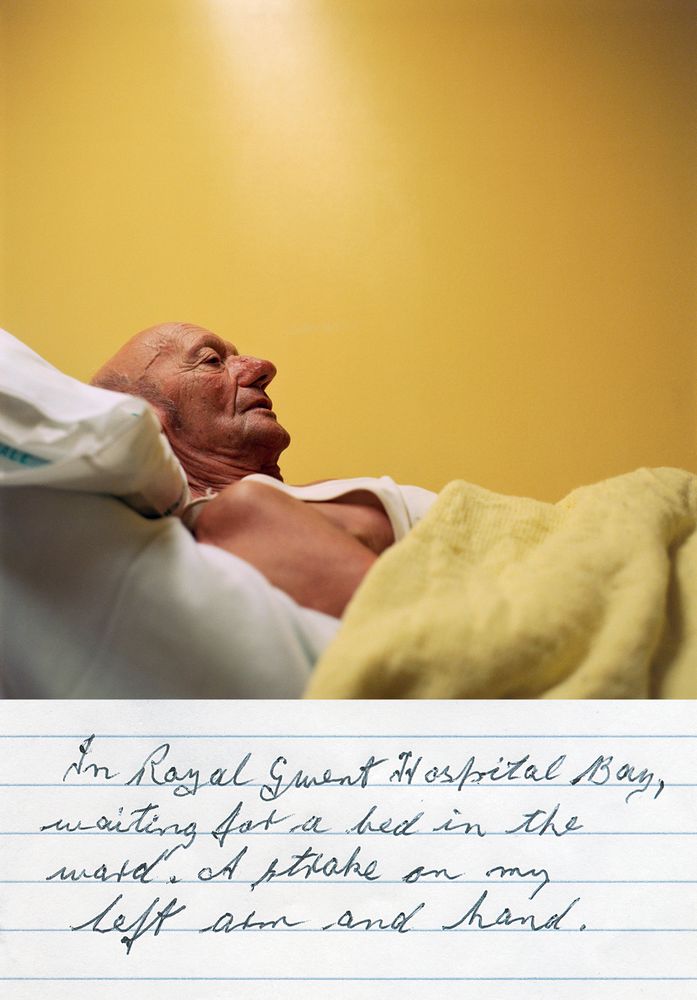
Kaylyn Deveney – The Day-to-Day Life of Alfred Hastings
Who is KayLynn Deveney? From USA, she moved to the south of Wales to study documentary photography and earned a masters and PHD in University of Wales Newport. The Day-To-Day life of Alfred Hastings was her first photography book produced in 2007. In 2008 it was nominated by several institutions across the world for “best photobook”
Deveney’s work focusses on addressing the myths of domesticity. She lived near an elderly gentleman called Alfred Hastings and became friends with him and asked if she could work with him to make this work. This module has been focused on the use of text that works alongside an image and how this adds context and meaning and enriches the work. The text in this work has been added by the subject who is not an artist, Alfred Hastings. This work is in collaboration with him and gives him a voice about the way he sees himself and an important visual contribution to the work. The fact that the text is his own handwriting makes it feel to me as more authentic and emotionally draws me in to this work. Alfred Hasting’s description of the photographs gives him a voice and a real sense of his own home surroundings and routines. The text is integral to the work and without it the work would not be as good.
The lined paper that he has written his notes on to describe each image gives an informal diaristic feel to the work, again, making feel more authentic.
Each image shows a very different aspect of his life, for me this kept my interest as I Iooked and read through the work. The images are also different in composition and colours used, but the wording in the same handwriting, by the same person, on the same paper (each containing the same number of lines) is what creates a cohesiveness in the series.
Karen Knorr – Gentlemen (1981 to 1983)
Knorr was born in Germany to American parents, grew up in San Juan, Puerto Rico, studied in Paris, and moved to London in the summer of 1976. She wanted to understand the country she had chosen to live in and reflect on her position as a white upper-middle- class woman in it. “I was trying to figure out who I was and where I stood,” she says. The photographer moved into her parents’ Belgravia maisonette for six months, situating her at the centre of an unfamiliar world inhabited by the British elite.
A series of 26 black and white photographs taken in gentlemen’s clubs in St James in central London with short passages accompanying each image. They were images of gentleman’s clubs in the 1980s and they revealed hidden spaces and what went on in those spaces. The passages are fictitious and written by Knorr. They are based on contemporary news events and parliamentary speeches published in Hansard concerning race, the role of women, and the Falklands War. The photos are staged with actors, employees or friends, so modern contemporary people and text are combined with historical settings of the gentlemans club. It took the artist a year to take the images and make the work.
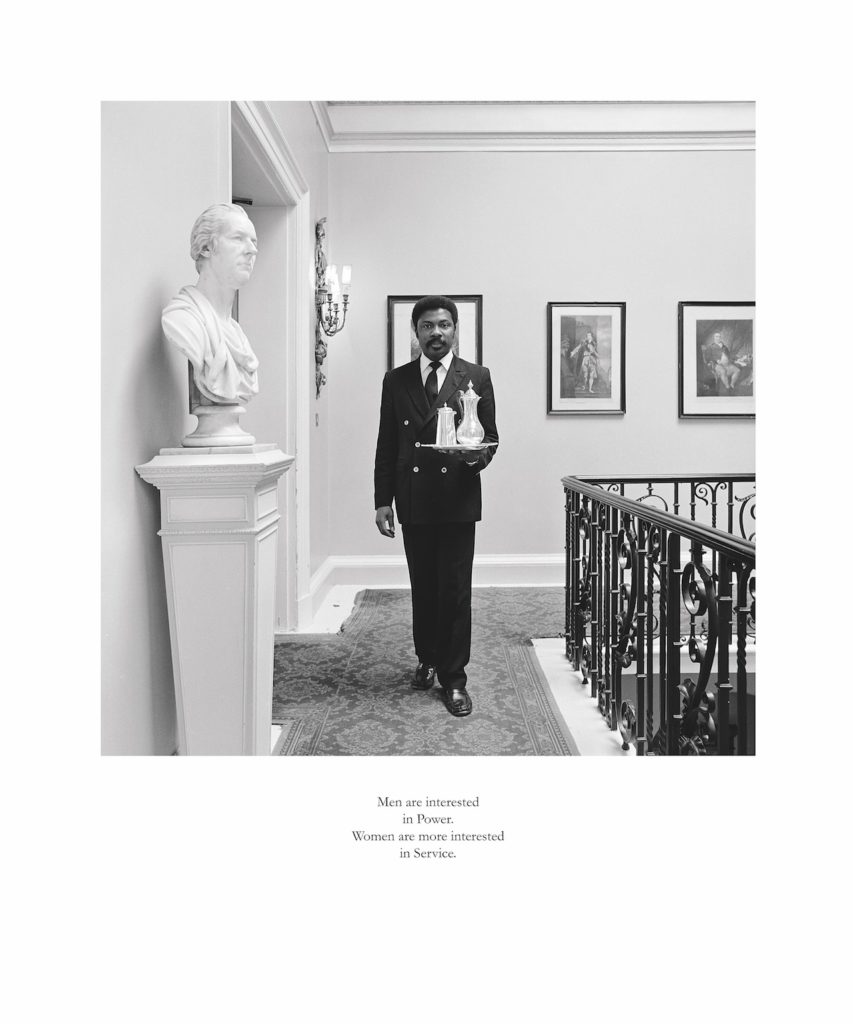

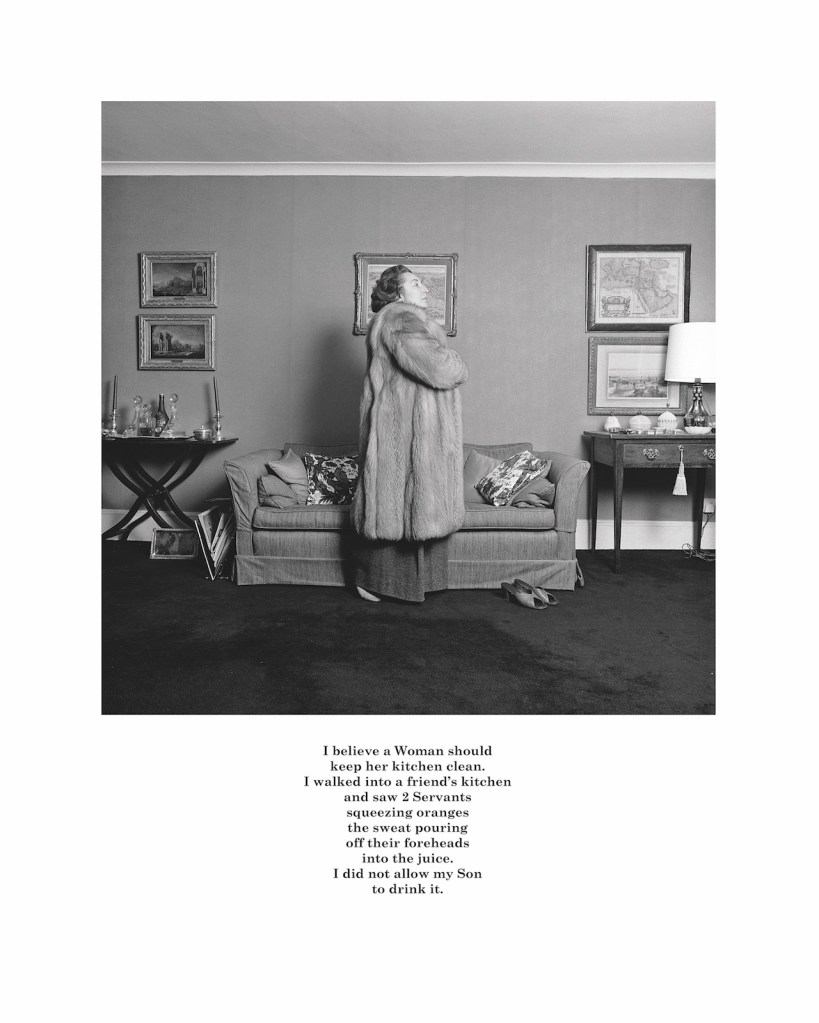
Karen Knorr – Gentleman
Bibliography
Haber, J., 2020. Haber’s Art Reviews: Sophie Calle. [online] Haberarts.com. Available at: <https://www.haberarts.com/scalle.htm> [Accessed 21 April 2020].
KayLynn Deveney Photographer. 2020. The Day To Day Life Of Albert Hastings — Kaylynn Deveney Photographer. [online] Available at: <https://kaylynndeveney.com/the-day-to-day-life-of-albert-hastings> [Accessed 25 April 2020].
Deveney, K., 2020. The Day-To-Day Life Of Albert Hastings. [online] Ulster University. Available at: <https://pure.ulster.ac.uk/en/publications/the-day-to-day-life-of-albert-hastings-3> [Accessed 27 April 2020].
British Journal of Photography. 2020. Karen Knorr: Gentlemen. [online] Available at: <https://www.bjp-online.com/2020/02/karen-knorr-gentlemen/> [Accessed 27 April 2020].
 Jenny Stork: Photography 1: Context & Narrative