
Terry Barrett, Art Education July 1986
This article is suggested reading from my tutor in response to the submission of my second assignment, Photographing the Unseen. I have made notes of the key parts of this article below:
Viewers who want to understand and appreciate a photograph need to see what fresh and significant relationships the photographer may have brought about and the means used to make them manifest. Considering context allows this.
Context can be “INTERNAL” “ORIGINAL” or “EXTERNAL”
Internal Context:
Description and analysis of what is seen in the photograph – identification of hte subject matter, consideration of its form and relationships between the two
Photography brings its own set of formal elements and terms, beyond those shared with paintings and drawings and need to be learned and investigated. Focus, dept of field, angle of view, shutter speed, types of illumination, grain size, tonality, contrast range shoudl be explored to see how they effect the subject matter and form and how form and subject combine to express.
Not all photographs can be understood and appreciated solely on the basis of what is shown.
Original Context
These are photographs that need outside contextual information to understand the image.
Original context is information drawn from sources outside the photograph that, if used, adds meaning and therefore a fuller appreciation. It is information that was physically and psychologically present to the photographer at the time the photo was made.
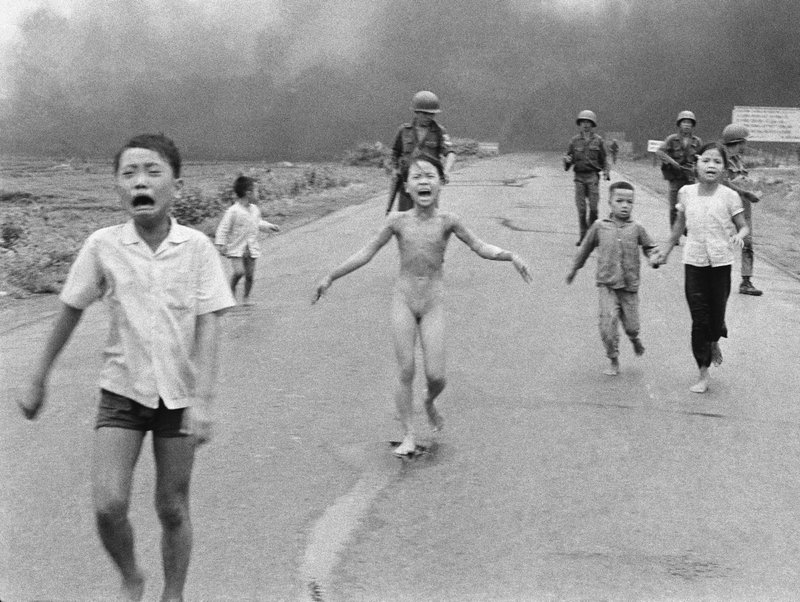
A good example of an image that benefits from original context is the famous image of a naked girl and soldiers fleeing from smoke and running towards us. Knowledge of the circumstances around this photograph is what makes it powerful, the original context is that the girl is Viatnamese and she is burning so has torn away her clothing because she has just been sprayed with napalm. It is about the US involvement in the Vietnam war. This knowledge could never have been gained by simply viewing the image.
External Context
Refers to the photographer’s presentational environment:
How and where it is being, has been presented
Received
How other interpreters have understood it
Where it has been placed in the history of art
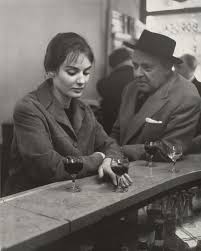
Robert Doisneau’s Photograph: external context has radically altered its meaning
5 places (external contexts) for this photograph:
Photo was published in a magazine called Le Pont, devoted to cafes
This photo ended up in a small brochure about the evils of alcohol abuse
French scandal newspaper : “Prostitution on the Champs- Elysees”
Since this misinterpretation this image has also appeared in the Museum of Modern Art in New York and
Szarkowski’s (1973) Looking at Photographs: 100 Pictures from the collection of the Museum of Modern Art
No photograph is presented without context.
Summary / My Thoughts
When presenting my assignments I need to think about and describe the context more accurately. Using the knowledge from this article and others given to my by my tutor has helped me to understand why it is so important to describe the context of the images I make.This is something I need to practice doing so my assignments improve.
 Jenny Stork: Photography 1: Context & Narrative