Summarise your research findings – might be a sentence or two – as a reflective learning
example. What this then does is show that you have trawled though your own research
made notes and concisely summed up the main points then put the reference to the blog
– in level two that should be in Harvard thus:
• Stork, J., 2021. A3: Self Portraiture: Research and Ideas. [online] Jenny Stork:
Photography 1: Context & Narrative. Available at: <https://
contextandnarrativewriting.poetry.blog/2021/05/12/a3-self-portraiture-research-
Initial Response
I am by nature not someone who thinks about myself and my identity and does not care about an image as such, I think this is why my immediate response to this brief was to choose empty locations and objects rather than focus on myself or another person to represent me. Usually I have several different ideas in response to an assignment but this time I was sure that there was only one way I would approach this piece of work
Planning
My photographs have been taken over a period of months with a plan to capture moments when I am in a particular state of mind, for example, I photographed parts of my home I could see when I was sitting, feeling helpless and trapped. My version of freedom was being outside and having access to my family and this is what I planned to capture for this assignment. The shoot list method where a list of images are planned before a shoot is not my preference, I feel this is too rigid and has potential to stifle creativity, however, I do see the advantage in this to keep to the brief.
Research /Inspiration
My series of images (body of work) The first x images are inspired by the work of Shafran with the absence of human figures and the mundane domestic nature of the work. See my research exercise on Shafran here
Richard Billingham’s work called Squalid Realism was also an inspiration for my disruptor image (no. 4) which shows packed boxes in my bedroom, this feels intimate and a peek into the personal life that one would not otherwise get to see unless it was a close friend or family member. see notes here
Elina Brotherus in her work Annonciation there is a blurred image which is a theme in her work in this series where hiding subjects within the frame ( and showing certain parts) is a theme. See research notes here
Idea
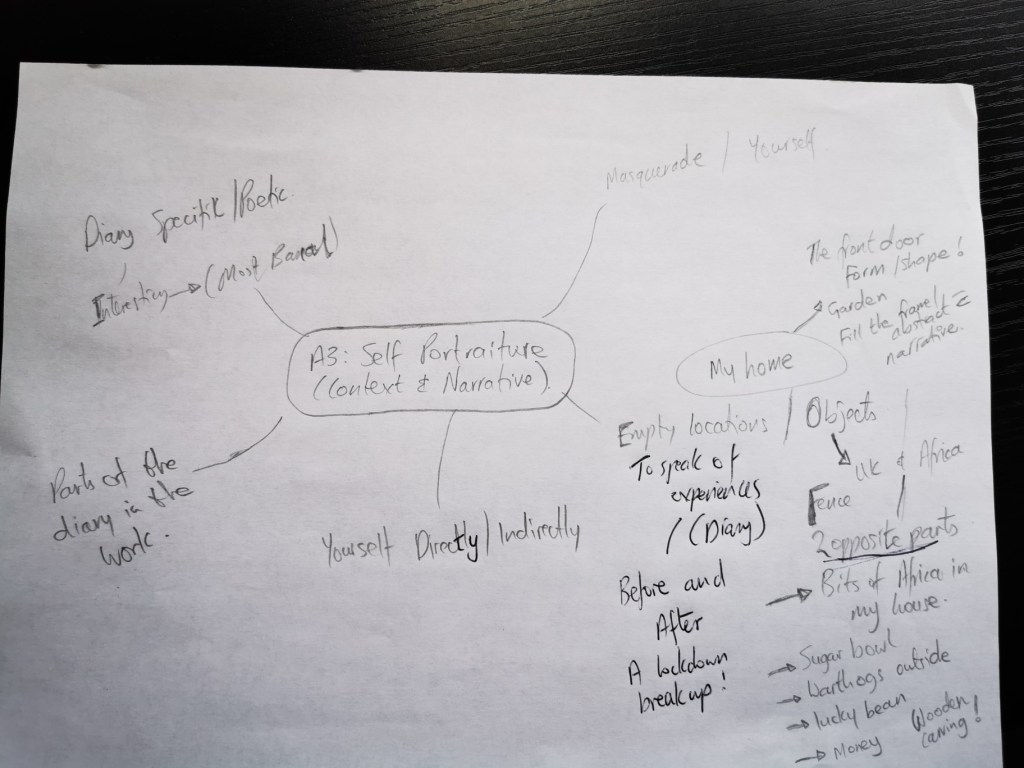
Conclusion
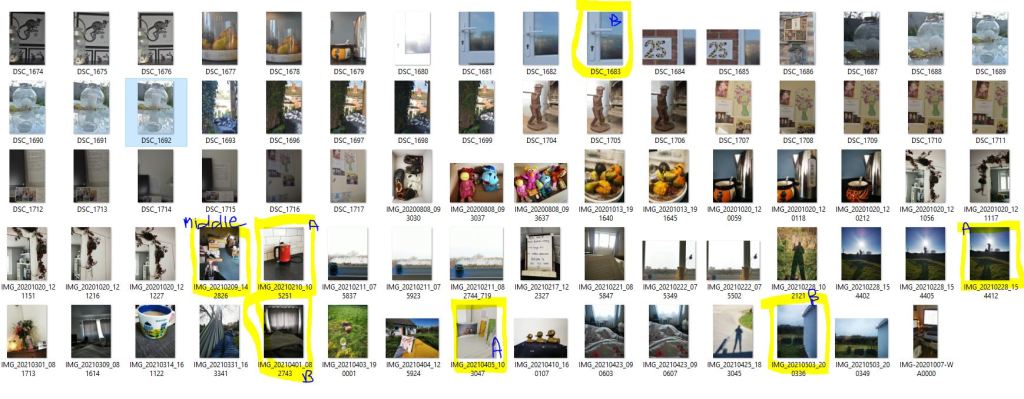
The recommended reading by my tutor about how to read a photograph and sequencing of work has really helped me in an area I find challenging, the editing/selection process. The “why” have I chosen what I have from a few hundred images has become less difficult. I have learned a great deal about self portraiture and how a life story can be expressed through images in so many different ways.
See my assignment blog here


Pingback: A3: Self Portraiture | Jenny Stork: Photography 1: Context & Narrative