Homelessness on the streets of the UK, how different people in society behave when confronted by a homeless person as they walk past. Also, images produced through the eyes of someone living on the street.
Form:
Strategy of POV shots – landscape / portrait dichotomy to demonstrate “two sides of the story”
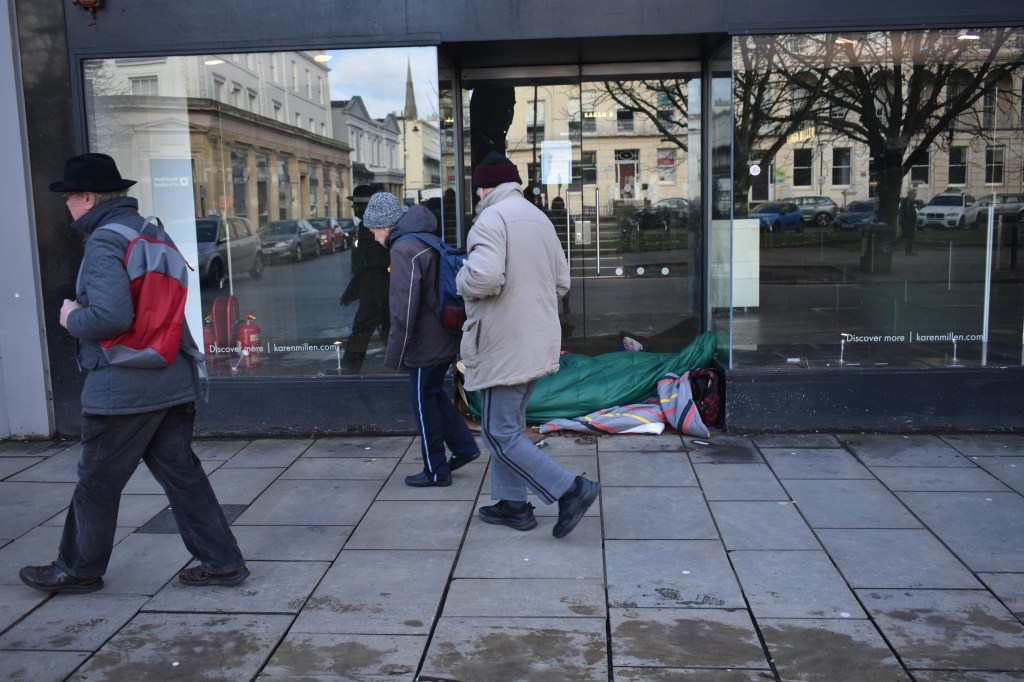
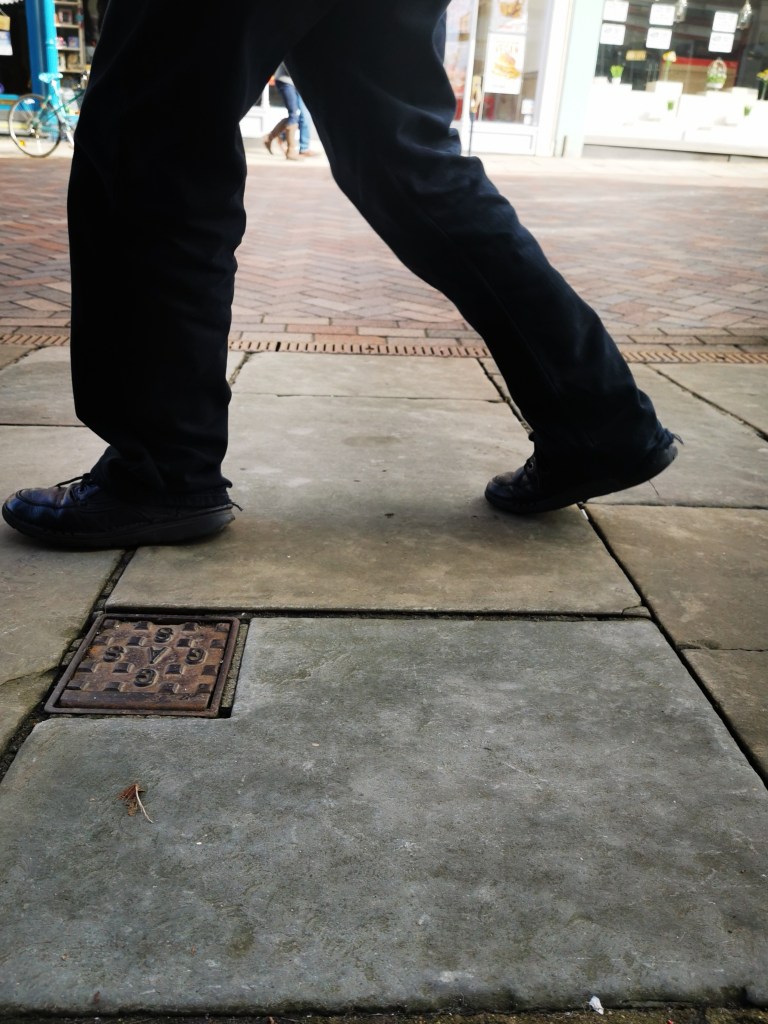
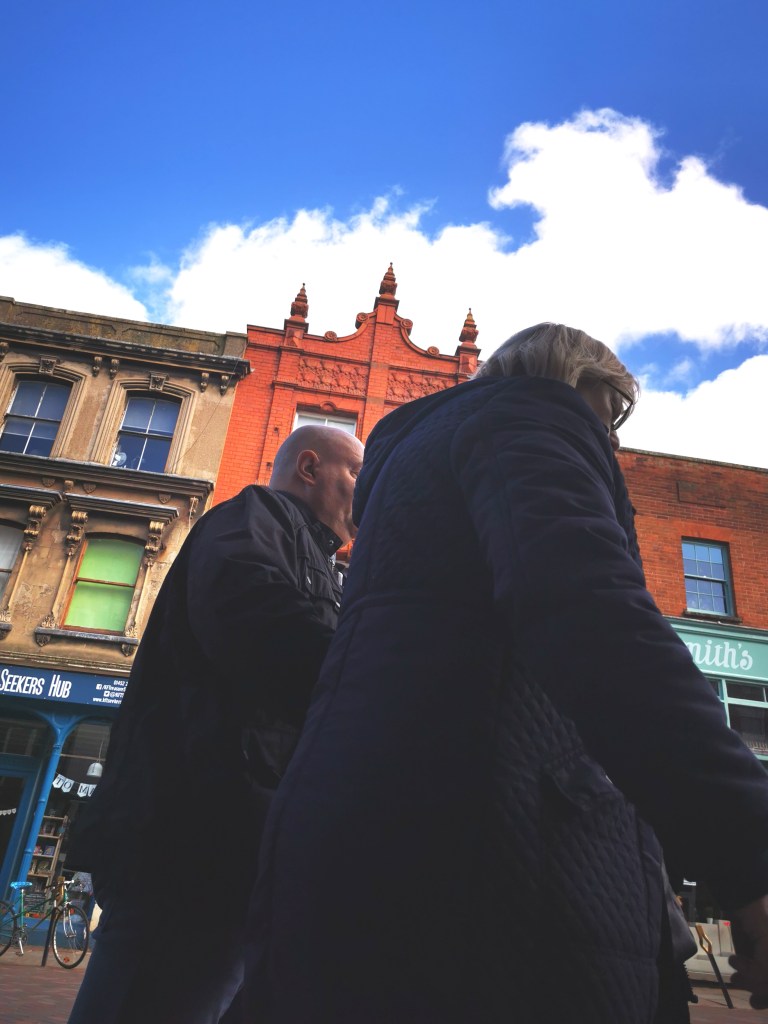
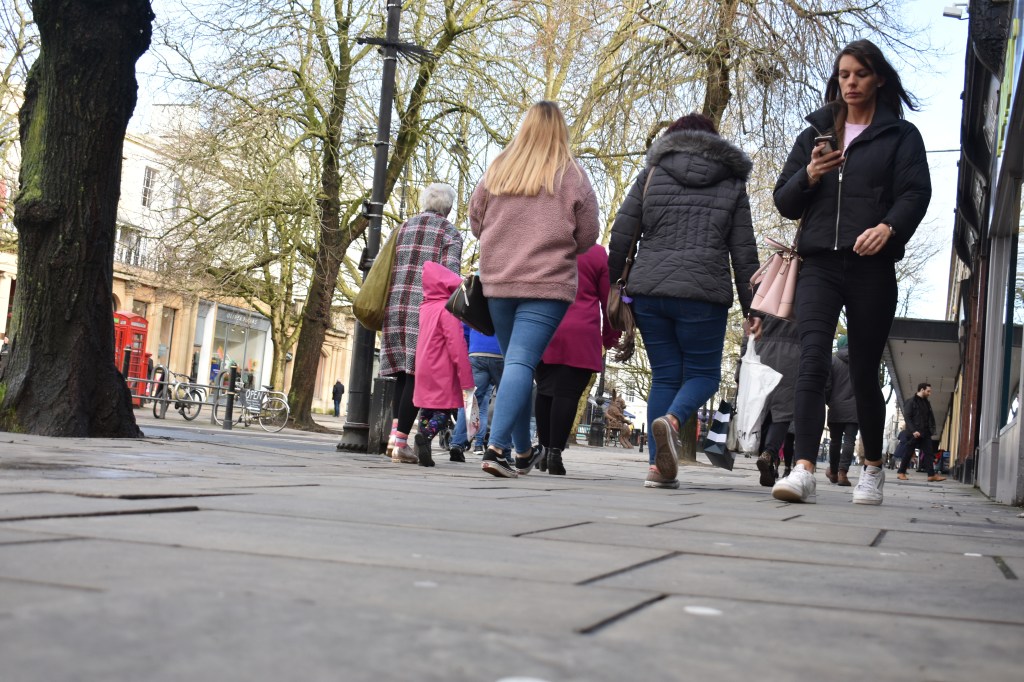
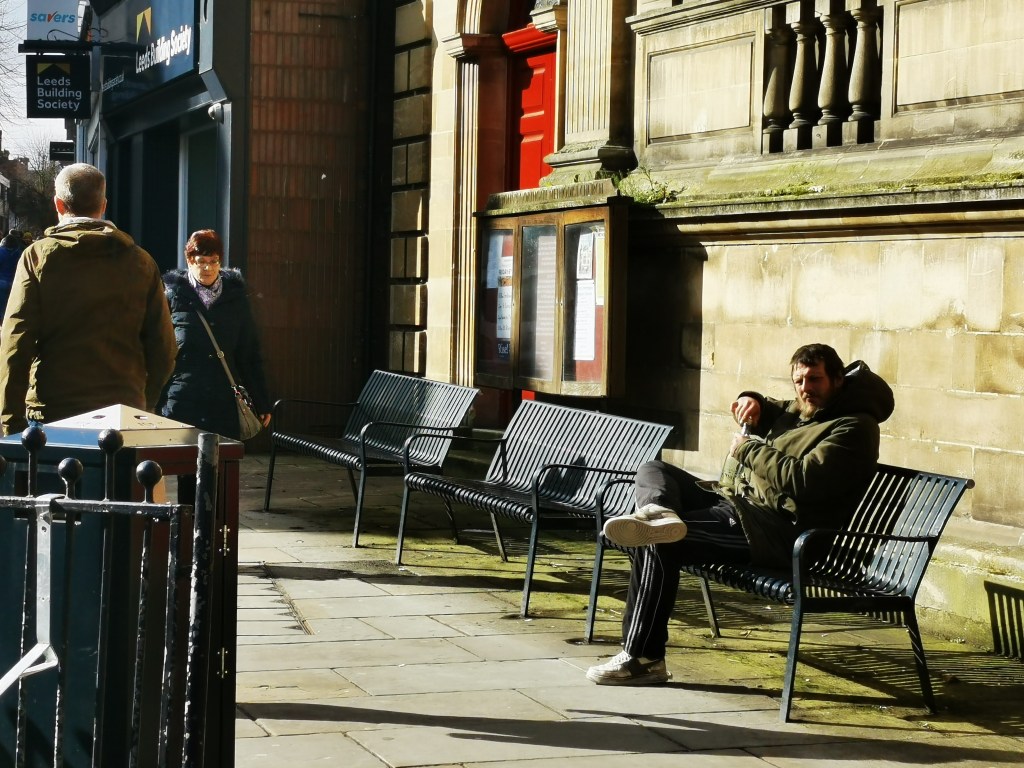
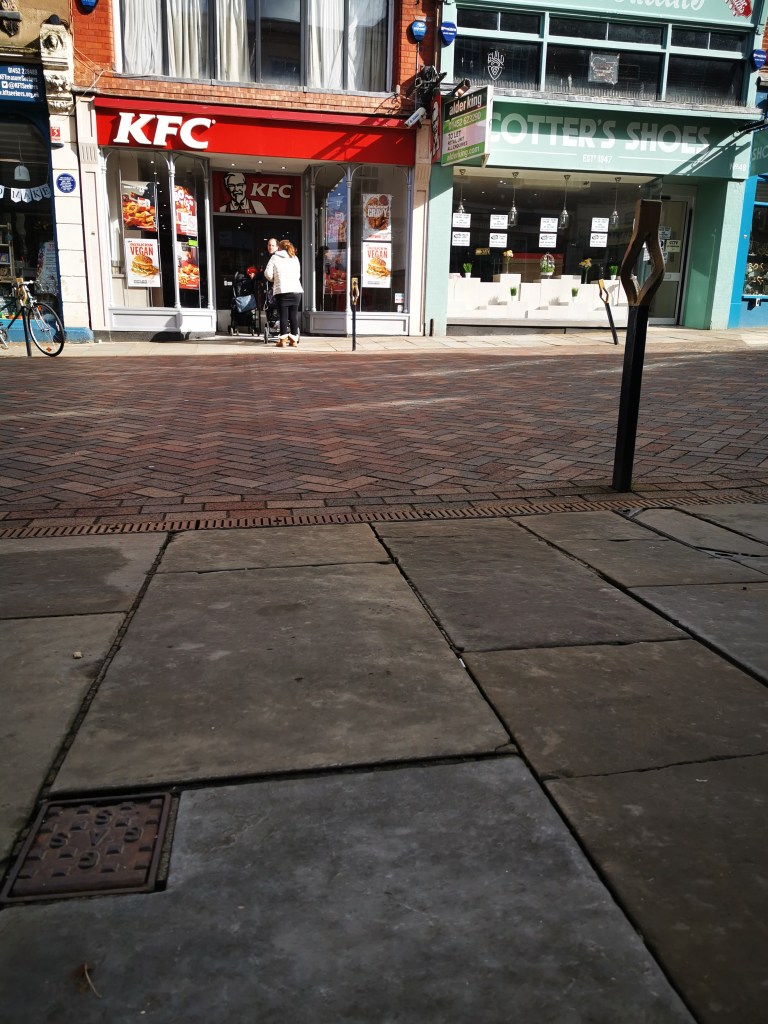
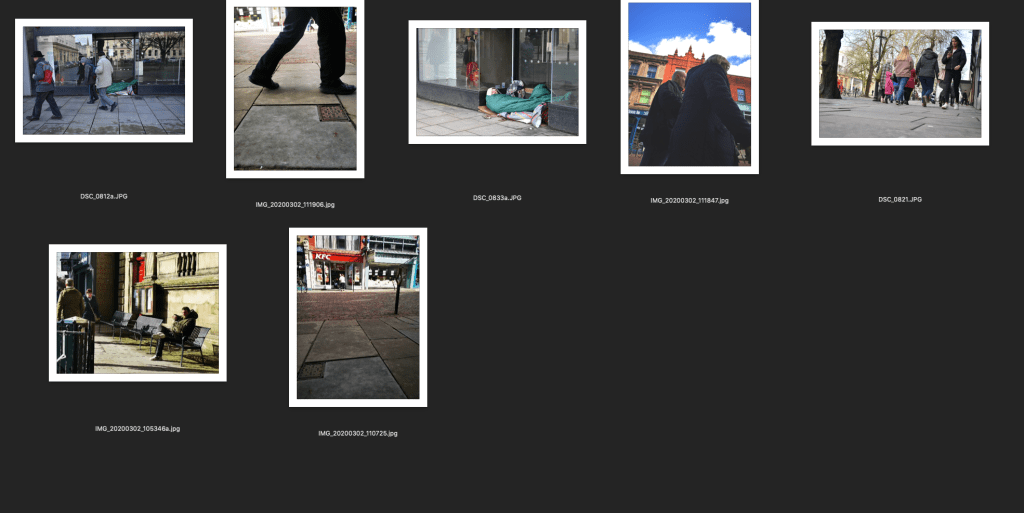
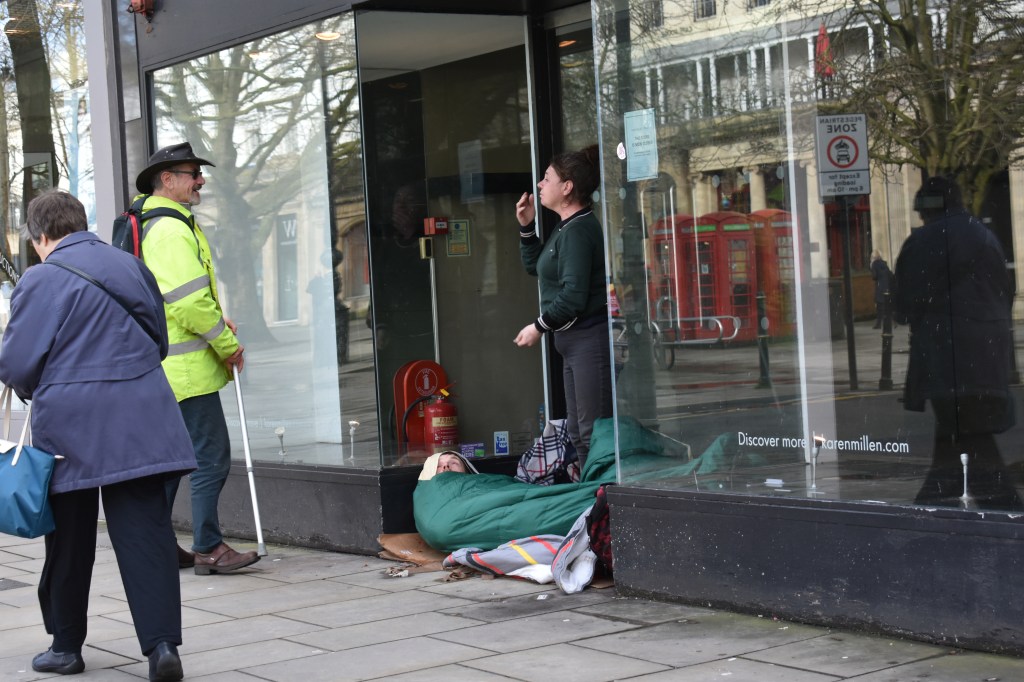
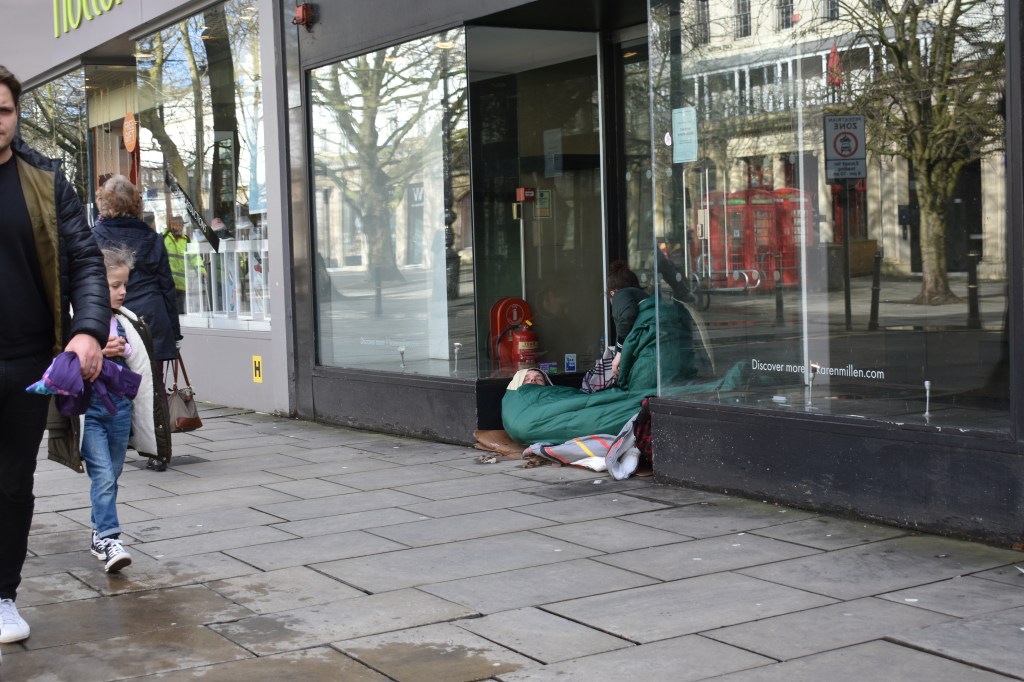
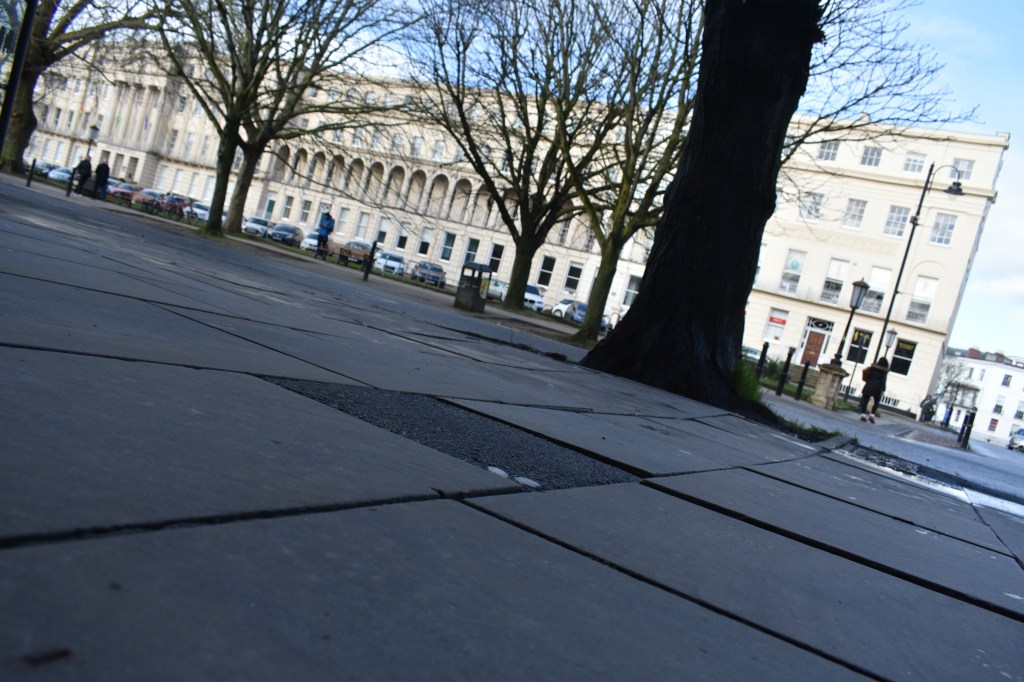
The photographs are taken from the view point of a passer by on the street (landscape). The second set of images is from a the perspective of the homeless person (portrait). The images were taken from a lower perspective in an attempt to reflect their view of the world from a sitting or lying position. The images differ in colours, in the prefix name on the image entitled “The Public View” these are more colourful and more subjects are included in the image, a more positive, ordinary feel to these images. The set “The Other Side” shows more concrete pavement and people from a completely different point of view, hardly every seeing people’s faces as they look away or avoid eye contact. (See link in Bibliography for a full explanation of how the shots were taken)
Context : Documentary – ways of seeing – giving back power to the subject (photovoice) – challenging previously help assumptions of the genre
My work was inspired by the work of Julian Germain called “No Mundo Maravilhoso Do Futebol” and Anthony Luvera’s “Taking Place” exhibition that incorporates his work from a project called “Frequently Asked Questions”. The power is put in the hands of the subject as to the outcome. The subjects have produced the images that depict “the other side of the story” (See links in bibliography for more information on the works of Julian Germain and Anthony Luvera).
Images
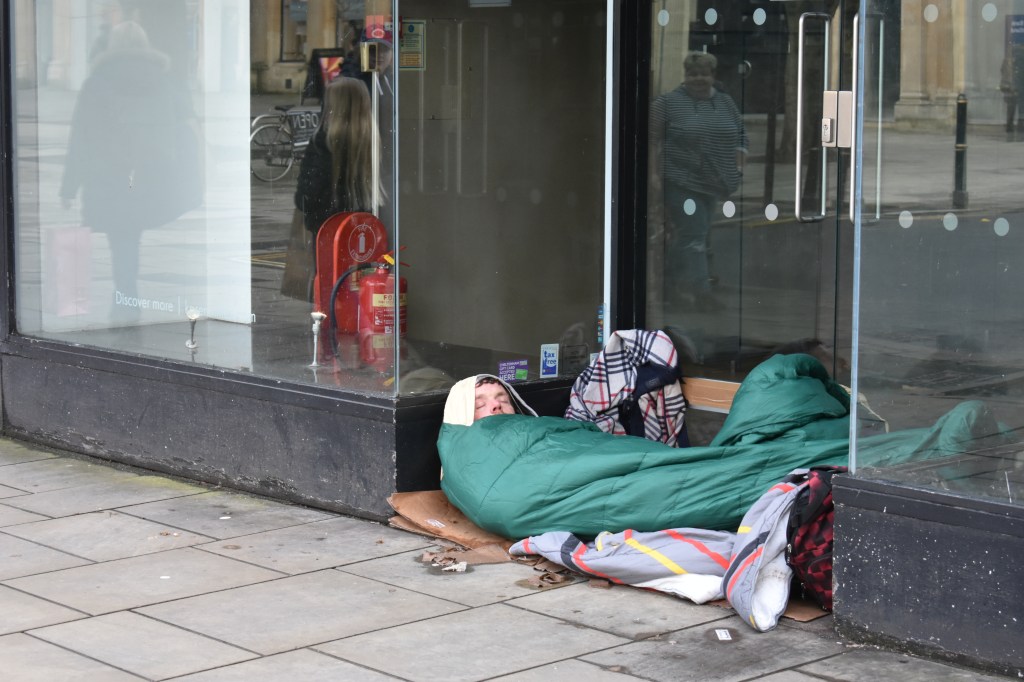
The Public View JS001 The common situation when a passer by encounters a homeless person is to either ignore them or stare The Other Side JS002 A common site at a sitting position on the street for a homeless personThe Public View JS003High Street JS004The Public View JS005 a common issue today is the mobile phone, people are no longer present and don’t notice the plight of the homeless at allThe Public View JS006 This man was opening a bottle of wine at 10am. A common site by the public is alcohol and drug misuse and therefore can be unfairly judged or looked down uponThe Other Side JS007 Grey concrete is the immediate environment for a homeless person, cold, hard and uncomfortable, a good analogy for the life they have to endure. There is also the view of life “on the other side” where a family can be seen entering a fast food restaurant.
Anthony Luvera. 2020. Anthony Luvera: Taking Place – Anthony Luvera. [online] Available at: <http://www.luvera.com/taking-place/> [Accessed 1 April 2020].
Feedback from my tutor about assignment 1 suggested further reading into the work of diCorcia- his method was to set up a camera a distance from where he is located and use a remote control to operate it, so people are photographed without their knowledge in a completely natural state
The main points I noted from watching the youtube video were :
The method of making work was to :
Set up the lighting rig and the scene ( the dramatic elements)
Use a polariod with actors and construct the scene in advance and test the result
Let the subject walk into the frame – these can be either known or unknown people
I classify people into different archetypes, most of the time they are not like that but I manipulate them to be like that.
To photograph people in the street effectively you have to sensitise yourself to the subtle clues
A photo captures a moment of truth and diCorcia operates to disrupt this completely
Often he didn’t know his subjects because of his methodology
The interior of a person is very different to the exterior, “life is a performance”
Because of the physical distance from which the images are taken, this gives the viewer alot of authority to interpret and experience the images in the way they want to.
The eye level cinematic approach to making his work is what draws the viewer in and makes them more real and engaging
The idea you can manipulate people and the world in this way is an interesting and compelling motivation for me.
For my own work: this was a very quick diagnostic assignment, diCorcia took over 3000 images to make a series of 17 – so lots more work and photos needed to be able to create something I am happy with
Setting up with a tripod, perhaps at a cinema style level which is square and a level aspect would give more impact – use a remote for taking the shots
Think about lighting, this has a huge impact on the feel of the image
Street photography has become more difficult over the years in the UK with an increasing amount of suspicion around the intent when a photographer is seen on the streets with a large, obtrusive camera. The duty of care over children and the use of their images on the internet has also become an issue, however, a public space is a space where it is legal to take photographs in the UK, for now anyway.
My approach to making this work was to simply stand at a distance from my subject and photograph the buildings next to them so the camera was not facing them directly. After a while my subject became used to me and thought I was not photographing them. I would move my camera occasionally towards them and take the shots quickly as people entered the frame, then move it back towards some buildings again. This took about twenty minutes and some patience. I wanted to capture the same scene but different reactions from people walking by, hence what appears to be a similar photo, but is in fact not because of the interactions that are going on within the frame between those on the margins of society and those who are not.
Ideally I would have liked to introduce myself to the subjects and asked their permission, but in this instance I felt the purpose of my shots were totally in my interest and not theirs. Reflecting on the situation, the activity could have been mutually beneficial where I could pay them cash perhaps? There is still no guarantee that this approach would have been received well.
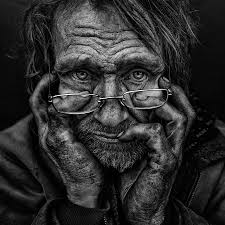
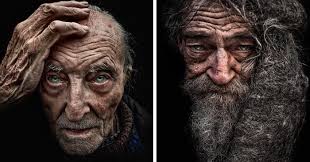
I am interested in social change for the better for all people and have a particular empathy for the homeless, I admire artists such as Anthony Luvera and Lee Jeffries who spent time with the people and treated them with dignity and respect and built up mutual trust before they embarked on a collaborative photography project. The projects also generated income for better support for them and also changed the way councils are obligated to support the homeless in the UK. This, ideally is how I would want to approach an activity such as this, but since it was just for an assignment at this time I chose the anonymous route this time.
Feedback from my tutor on this assignment was to link this blog to my assignment in its bibliography so there is a better understanding by the reader about how I made the work.
For my own work: this was a very quick diagnostic assignment, diCorcia took over 3000 images to make a series of 17 – so lots more work and photos needed to be able to create something I am happy with
Setting up with a tripod, perhaps at a cinema style level which is square and a level aspect would give more impact – use a remote for taking the shots
Think about lighting, this has a huge impact on the feel of the image
Understand fully the different street photography techniques and with practice and experience develop a style and approach that reflects my values and interests, currently I prefer the collaborative way in that the process has a positive impact on everyone involved, however, the practicalities of this approach at present inhibit me.
Additional feedback is to research the work of :
Street Photography Alternatives: Placing the camera (on a tripod) and allowing people to walk into the frame (might help less conspicuous when making the ’objective’ images/ Passer by • David Campany. 2020. ‘Anonymous And Incognito: Walker Evans’ – David Campany.[online] Available at: https://davidcampany.com/anonymous-and-incognito-walker- evans [Accessed 23 March 2020].
• Lorca diCorcia, P. (2014). The Hepworth Wakefield: Photographs 1975 – 2012 . [online] Available at: https://www.youtube.com/watch?v=So_FK4qnz5Q [Accessed 21 March. 2020].
Tutor feedback has been really comprehensive with a great deal to digest, rework and read up on which is really positive for me because this learning experience, with some hard work will improve my understanding of this subject greatly.
Restructuring The Explanation Of My Work
This is the first rework that needs to be done as feedback was that my original explanation of the work I made was disjointed : my tutor has suggested the following :
Content : Homelessness
Form: (The shape of content, How it is composed, arranged and constructed visually) Light, colour, texture. Strategy of Point Of View shots presented at Landscape/Portrait dichotomy format images to allude the “two sides of the story”
Context: Documentary “ways of seeing” and giving power back to the subject (photovoice) – challenging previously held assumptions of the genre itself (reformist and paternalist ways of looking down upon destitution)
This is really useful because I now have an example of how I will approach my next explanation of Assignment 2.
Expression And Analysis Of Images
Relate the images to Barret’s different contexts before further study on representation as a process. Reading up and understanding analysis methodologies will help me explain and describe the images to an audience who has no prior information about the work I have produce. (see link in bibliography for notes taken from reading Barret’s text)
Make keyword notes next to the images you submit – each image has an objective and need to remember that viewers are coming into the images cold and not have the background to what they are so they need to be shown.
At this level it is semiotic analysis and then level 2 it goes deeper with how this affects the viewer – Gillian Rose’s Book Visual Methodologies is good to dip into – get used to this now in preparation for the next level
Extract From A Link Sent by my tutor on reading photographs (see bibliography for the link) :
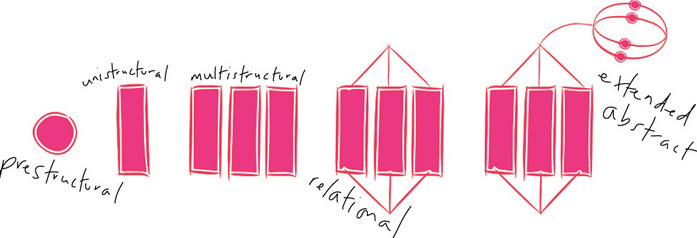
Prestructural: the student learns some unconnected information. Unistructural: simple obvious connections are made but their significance is not fully grasped. Multistructural: several connections are made, but the meta-connections between them are missed, as is their significance for the whole. Relational: the student is able to appreciate the significance of the parts in relation to the whole. Extended Abstract: the student is able to make connections not only within the given subject area, but also beyond it, able to generalise and transfer the principles and ideas underlying the specific instance.
Editing And Sequencing
My tutor has helped me edit and sequence my submission which has been hugely helpful in improving my next assignment. He said that it has taken him 10 years of hard work to get to be able to do this so I need to practice. He has also very helpfully given me a suggested process to use :
Contact sheet – edit out the technically imperfect (print out and annotate)
Small jpegs to edit ( 6×4″ prints) to edit – photograph the desired layout and sequence or create a PDF like the example sent to me by my tutor)
Naming the files in their preferred sequence for submission to tutor
Revision before assessment
My tutor has made a suggestion to the re sequencing and has suggested that the view of the onlooker is landscape and the view from the homeless person’s side should be portrait – this is relating to a person and so it has synergies.
Jorg Colberg 2012 research into editing and sequencing is needed and set up a zoom meeting for help from my tutor for this before submitting my next assignment (see link in bibliography below for research carried out)
Suggested sequencing from my tutor, I didn’t think about landscape/portrait and how this would appear to the viewer, something so obvious now that it has been pointed out to me. I would like to submit my next assignment in this format so my tutor can see how I would want the images presented visually.
Learning Log and Research Structure
When writing blogs on learning log – don’t make it hard for the assessor to find out what you have researched – the student needs to show the work and not tell – make links to other parts of the website to other blogs to explain why certain points are being made and why its relevant. I have done this in this blog so I can start as I mean to go on and have included in the biography below where I have done additional research or reading relating to a particular point.
Outline in the research and analysis in this order:
Content : different ways to depict / contrasting practitioners (analysis in terms of genre and function)
Documentary impulse from history ie. photojournalist “outside looking in”
Codes : use of vantage point : point of view shot ( cinema studies)
Expanded context “Photo Voice” (Germain et al, allowing the poor to represent themselves or at least show how/what they see
My work needs to be less speculating and more showing research as reasons for thinking or doing certain things – rather than telling
Conclusion
My first feedback session has motivated me to work on suggested areas and make the next assignment better as a result. There is a great deal of reading and research needed which needs to be planned in and done so I can improve.
This assignment is designed to give your tutor a feel for your work and won’t count towards your final grade if you decide to have your work assessed. However, the assessors may wish to see it so that they can gauge your progress across the course. Create at least two sets of photographs telling different versions of the same story. The aim of the assignment is to help you explore the convincing nature of documentary, even though what the viewer thinks they see may not in fact be true. Try to make both sets equally convincing so that it’s impossible to tell which version of the images is ‘true’. It might be interesting to consider the project as evidence for a court case. What conflicting stories can you make your images convincingly tell? Would it stand up in court? Choose a theme and aim for 5–7 images for each set, depending on your idea. Discuss this with your tutor. Here are a few ideas: • You could interpret this brief by showing the same scenario from two different angles. Does this alter how we read the situation? • You may wish to create an alter ego by using snapshots of yourself or a friend. This could involve photographing them in two very different and potentially conflicting personas. • You could make a parody of a dating website profile picture. Create different versions of the same person looking completely different in each one. Which one represents them best and how can we know? Or you may prefer to use your own take on the theme. However you choose to interpret the brief, ensure the images are candid and ‘taken from real life’. Be experimental and take some risks. Perhaps you could make a list of ideas and choose the most challenging or absurd option to stretch yourself. Send your sets of images to your tutor by the method you’ve agreed. Include an introduction of 300 words outlining what you set out to do and how you went about it. Also send to your tutor the relevant pages of your learning log or your blog url. It’s good to get in the habit of printing your work so try to send prints to your tutor where possible. This is not obligatory but will help when it comes to assessment. Developing your prints in order to achieve the best results is a long process so it’s best to start now.
Initial Response To The Brief
Having studied the first unit and now understand the differences between witness photography, reportage, documentary photography and Art photography and realising that an image is not necessarily the truth but depends on the context and also how the viewer sees and interprets the image. The idea of introducing different subjects, composition and several other factors to create two different versions of the same story is exciting in a conceptual way but also creatively in the form of art photography. Two sides of the story or different vesions, selective editing can create different versions of the truth. This takes place around us all the time but I have never considered it until now. Social media photography is a perfect example of this concept, where by the power of selection, only the best photos are taken and then chosen to be displayed, giving a very false impression of the reality of the life of an individual.
Planning
Time management is always the challenge. I knew I would have to go out two or three times to take enough shots for this assignment. Street photography like this also has an element of chance and uncertainty since we are dealing with a live dynamic situation. Each time I visit an area to shoot could result in very different results, and possibly nothing at all. Unfortunately the issue of homelessness is never far from us so shooting opportunities will certainly be available.
Research/Inspiration
After an initial discussion with my tutor about my interest in social documentary and I mentioned I was inspired by the work of Anthony Luvera after hearing him speak at the Photography Symposioum at Birmingham City University last year in October. Anthony worked worked with the homeless and has helped highlight their plight and has even changed laws around safeguarding of the vulnerable through photography. Julian Germain was suggested by my tutor as an approach to this assignment, I was also lucky enough to hear him speak about his project in the Brazilian Favelas. The work was called “No Olho da Rua – In the eye of the street – He gave disposable film cameras to mostly the children of the favelas and asked them to take the photographs, this is a great example of “two sides of the story” since the subject becomes the author and the images are by nature totally different.
Idea
I had ideas about taking photographs of a town where the derelict areas are photographed and the second set where photos of the same town but only the nice parts are taken. Also an idea of photographing a road that is being repaired, one set just the road in a bad state of repair but leave the diggers and other related objects out of the photo, then a second set with all the construction activity, by omitting vital elements in one set it would tell a totally different story. Social media is a great one to use as an example too. There was also an idea to photograph less stereotypical things on my recent skiing holiday to Norway, for example, our very messy bedroom, the very wet gloves all competing for space on the dryer in our cabin and others, the car stuck in the snow etc.
Conclusion
I enjoyed preparing for this assignment and I am interested in social documentary and in particular the people who are vulnerable, on the margins of society who are in need of help and support. Choosing the homeless is in line with the photographers I am drawn to like Julian Germain, Anthony Luvera and also Lee Jeffries.
This assignment is designed to give your tutor a feel for your work and won’t count towards your final grade if you decide to have your work assessed. However, the assessors may wish to see it so that they can gauge your progress across the course. Create at least two sets of photographs telling different versions of the same story. The aim of the assignment is to help you explore the convincing nature of documentary, even though what the viewer thinks they see may not in fact be true. Try to make both sets equally convincing so that it’s impossible to tell which version of the images is ‘true’. It might be interesting to consider the project as evidence for a court case. What conflicting stories can you make your images convincingly tell? Would it stand up in court? Choose a theme and aim for 5–7 images for each set, depending on your idea. Discuss this with your tutor.
Send your sets of images to your tutor by the method you’ve agreed. Include an introduction of 300 words outlining what you set out to do and how you went about it. Also send to your tutor the relevant pages of your learning log or your blog url. It’s good to get in the habit of printing your work so try to send prints to your tutor where possible. This is not obligatory but will help when it comes to assessment. Developing your prints in order to achieve the best results is a long process so it’s best to start now.
Two Sides Of the Story
Documentary photographs can contain different versions of reality, depending on the thought process, the narrative the photographer has in mind and what outcome or objective the work aims to achieve. The two sets of images I have made are inspired from the introductory discussion with my tutor about my interest in social documentary photography. We both have had experiences around the work of Julian Germain, I have attended a talk where he presented his work on the lives of the people in Favelas in Brazil called “No Mundo Maravilhoso do Futebol 1995 – 2002”. Julian Germain gave instant film cameras to the people who lived in the favelas and asked them to take photographs for him, the images produced were the “other side of the story” and therefore less stereotypical images and often less than perfect exposure, however,this added to the narrative.
I have made work showing how the public view the homeless on the street, the photographs are taken from the view point of a passer by on the street. The second set of images is from a the perspective of the homeless person, taken lower down with what they would see from a sitting or lying position. The images differ in colours, the public view are more colourful and more subjects are included in the image, a more positive, ordinary feel to these images. The set “The View From The Other Side” shows more concrete pavement and people from a completely different point of view, hardly every seeing people’s faces as they look away or avoid eye contact.
Image 0832a is one that stands out for me because of the interaction between both sides, the look of hope on the man’s face who is in his sleeping bag is one of desperation and hope which I find very sad. This is a common image seen on the streets of Britain, I do prefer the set of images taken from the perspective of the homeless individual,these leave the viewer to find a meaning beyond the initial visual.
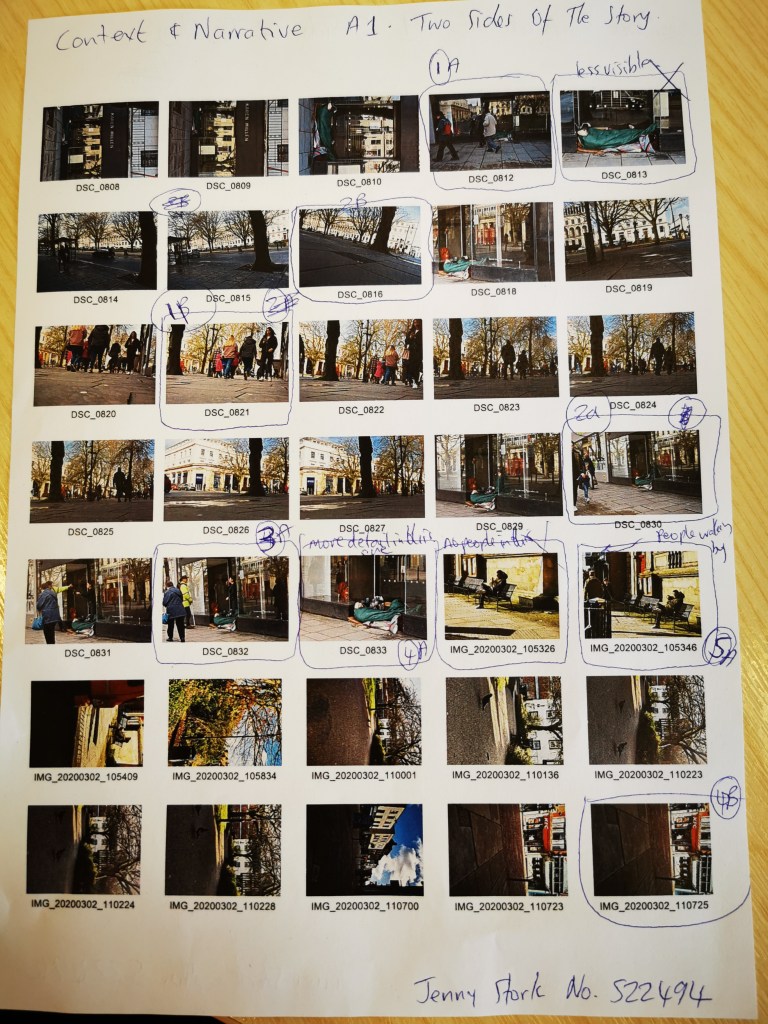
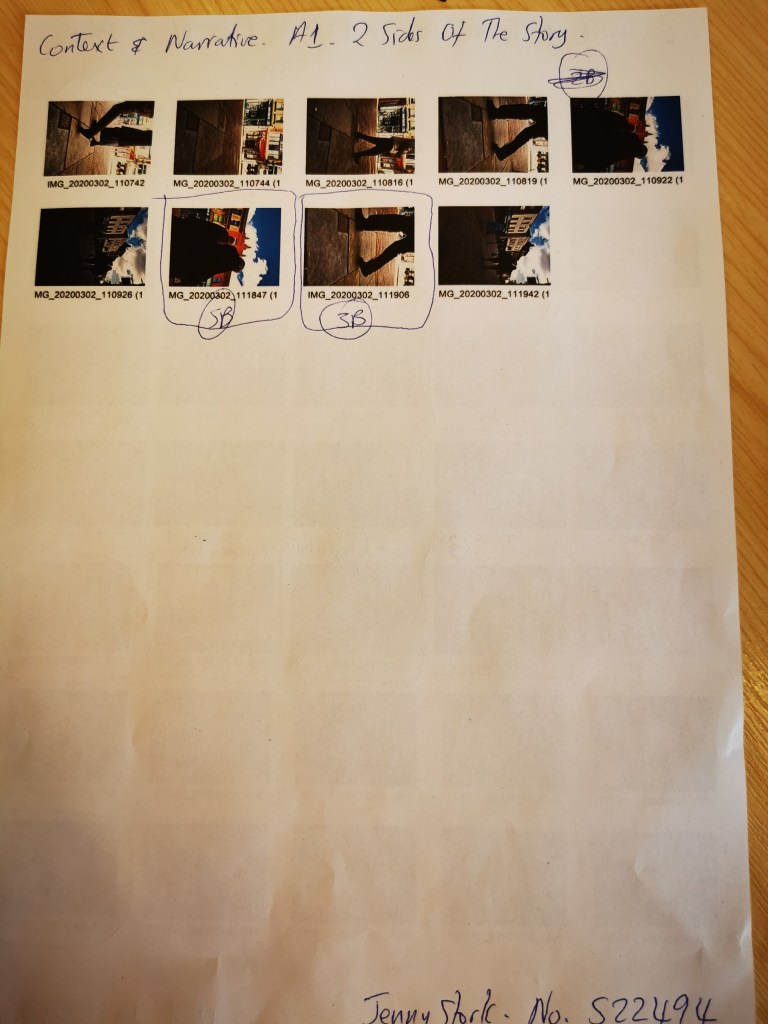
Annotated Contact Sheets show my thought process for selection of the images
The images with the letter A next to them are from the public point of view – the ones with the letter B are from the viewpoint of the homeless person – the other side of the story The images with the letter A next to them are from the public point of view – the ones with the letter B are from the viewpoint of the homeless person – the other side of the story

 Jenny Stork: Photography 1: Context & Narrative