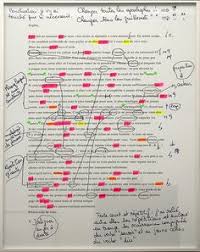
Rip out an advertising image from a newspaper supplement and circle and write on as many parts of the image as you can. Comment on what it is, what it says about the product and why you think it’s there. You could use this as the basis for your assignment if you feel it’s taking you somewhere interesting. Or you could adopt this method for your assignment preparation. Come back to this exercise when you’ve reached the end of Part Four and see if you can add anything to your analysis.
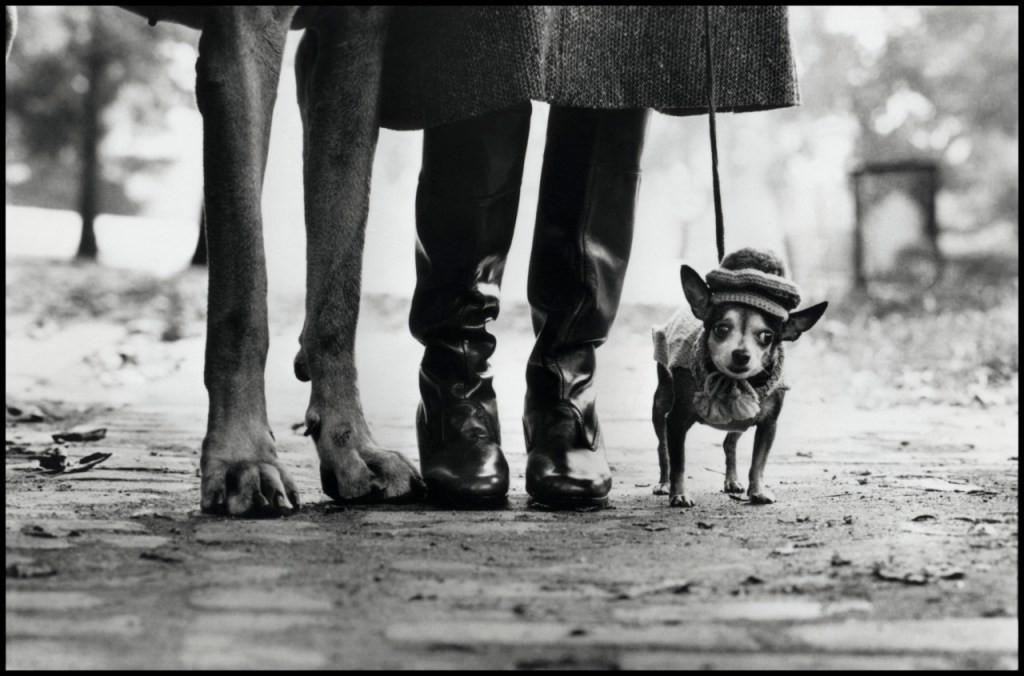
USA,New York city. New York, 1974. Felix, Gladys and Rover.
Before you read any further, look carefully at Erwitt’s image and write some notes about how the subject matter is placed within the frame.
● How has Erwitt structured this image?
Erwitt has ensured the smallest subject is what is being focused on by cutting the others out the frame, yet still including parts to ensure a balance and perspective. By the photographer coming down to the level of the smallest subject it makes it more prominent.
● What do you think the image is ‘saying’?
Even the smallest dog is important and has a place in the world in a dignified way.
● How does the structure contribute to this meaning?
By cutting out the larger dog and the human from the image it places more importance on the smallest dog where it is seen in it’s entirety. It forces the viewer to focus on this dog alone whereas in another structure the smallest dog would have been lost
● Did you spot that the picture is framed in stages of three?
The bottom third is the foreground, the middle is the subject matter and the top shows the subject and the background. This element of three is repeated in the number of subjects and the horizontal thirds are balanced by the vertical thirds of the small dog and other subjects’ legs. This use of three and the horizontal and vertical lines make the image appear visually complete. You get the impression that what’s within the frame is the whole picture, but of course there were bodies and heads and the rest of the larger dog just outside the viewfinder. This leads us to the photographer’s decision to crop at a particular point. This was a witty decision but, more importantly, we’re reminded that it was a decision. What we see of the situation very much depends on the photographer’s point of view. By placing the small dog as the main focus, Erwitt emphasises its small stature. The size of this dog probably means that it’s often overlooked, especially in relation to its larger friend, so Erwitt’s decision to make it the main focus may tell us something about him as a person.
● Does he like to help the ‘underdog’? ● Does he prefer dogs over humans? ● Is he making a statement about giving everyone a voice? ● Or is he just making a joke?
We can’t answer all these questions from one picture, but if you read it as part of the whole series Dogs, it’s clear that he has a special fondness for canines and sees their role in society as an important one. There’s another important difference between different types of language. In spoken or written language, the information is given in a certain order, allowing the author to build anticipation or shock the reader. A photograph, on the other hand, gives all this information at the same time and how this information is processed by the viewer is outside the photographer’s control. For example, one viewer of the Erwitt picture might be very interested in locating the park as Central Park while another might focus on the breed of the dogs. All Erwitt can do is present the information; the way it’s read is taken on by the viewer.
Recreate a childhood memory in a photograph. Think carefully about the memory you choose and how you’ll recreate it. You’re free to approach this task in any way you wish.
Does the memory involve you directly or is it something you witnessed?
Will you include your adult self in the image (for example, to ‘stand in’ for your childhood self) or will you ask a model to represent you? Or will you be absent from the image altogether? (You’ll look at the work of some artists who have chosen to depict some aspect of their life without including themselves in the image in the next project.)
Will you try and recreate the memory literally or will you represent it in a more metaphorical way, as you did in Part Two?
Will you accompany your image with some text?
In your learning log, reflect on the final outcome. How does the photograph resemble your memory? Is it different from what you expected? What does it communicate to the viewer? How? It might be interesting to show your photograph to friends or family members – perhaps someone who was there at the time and someone who wasn’t – and see what the image conveys to them.
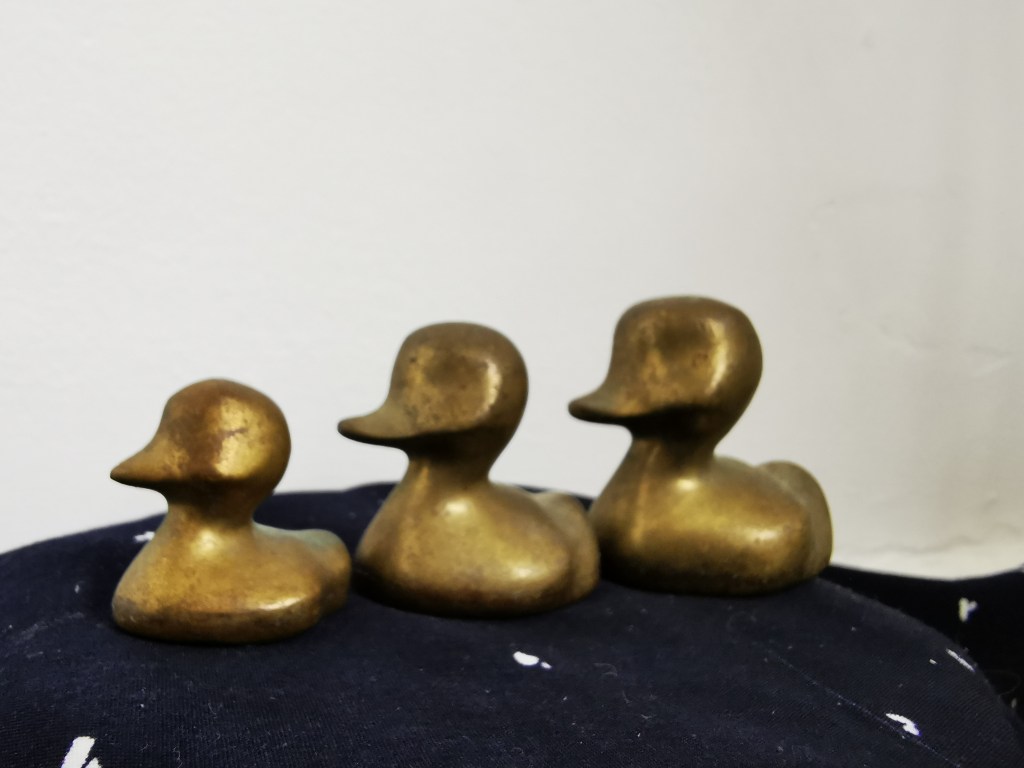
I chose to use two objects from my childhood that bring back memories for me of my mother when I was young. The material background is a dress once owned by my mother who passed away fourteen years ago. She would frequently wear it when I was a child, and when I last saw her I commented on how lovely the dress was so much that she gave it to me. From that day on, now some twenty years ago, I have been striving to lose weight to be able to wear it one day, I fear that day will never come. The dress now hangs in my bedroom as a memory of her. The three brass duck ornaments were once in my childhood home and I was given them when my Mum died. These ornaments my Mum especially treasured and instantly bring back memories of my time with her and how she used to tell me how much she loved to collect brass ornaments and which one she next wanted to buy to add to her collection. This photograph of a childhood memory is recreated in a literal way rather than metaphorically and the image would have to be accompanied by some text for it to be meaningful to anyone else but me.
Childhood memories, brass ornaments from my childhood home on a dress my Mum used to wear when I was a child.
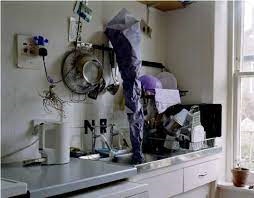
Go to the artist’s website and look at the other images in Shafran’s series. You may have noticed that Washing-up is the only piece of work in Part Three created by a man. It is also the only one with no human figures in it, although family members are referred to in the captions.
● In what ways might a photographer’s gender contribute to the creation and reading of an image? ● What does this series achieve by not including people? ● Do you regard them as interesting ‘still life’ compositions? Make some notes in your learning log.
Gender plays a part in what a person chooses to photograph and how. Women tend to bring emotion and people into their work, although some very talented male photographers have done the same, Martin Parr, for example, and Daniel Meadows.
The reading of an image could be read differently depending on gender, women tend to look at small details, men are more objective perhaps. Woman like Francesca Woodman and Sophie Calle express their own emotions through the creation of images.
Shafran’s series achieves an opportunity to look into the private spaces in the home of a person which reveals a great deal of information about a person. The everyday objects that are usually not the subject of the photograph but rather a distracting background object are of interest to Sharfran and reveals a great deal about a person. His work reveals a house that is in it’s normal state, something visitors rarely see because it would all be tidied away before they visit.
I do regard Shafran’s work as interesting still life compositions because it is not what would traditionally be considered an attractive photograph and therefore catches my attention. Unusual subject matter is interesting, particularly when there is a lot going on in the photograph which makes you return to it several times and discover something new that you didn’t notice before.
Is there any sense in which Lee’s work could be considered voyeuristic or even exploitative? Is she commenting on her own identity, the group identity of the people she photographs, or both?
Would you agree to Morrissey’s request if you were enjoying a day on the beach with your family? If not, why not?
Morrissey uses self-portraiture in more of her work, namely Seven and The Failed Realist. Look at these projects online and make some notes in your learning log
Notes:
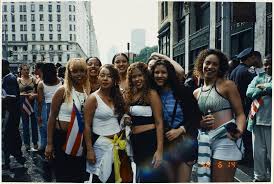
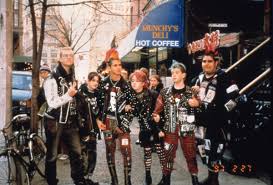
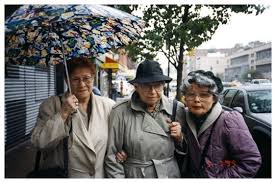
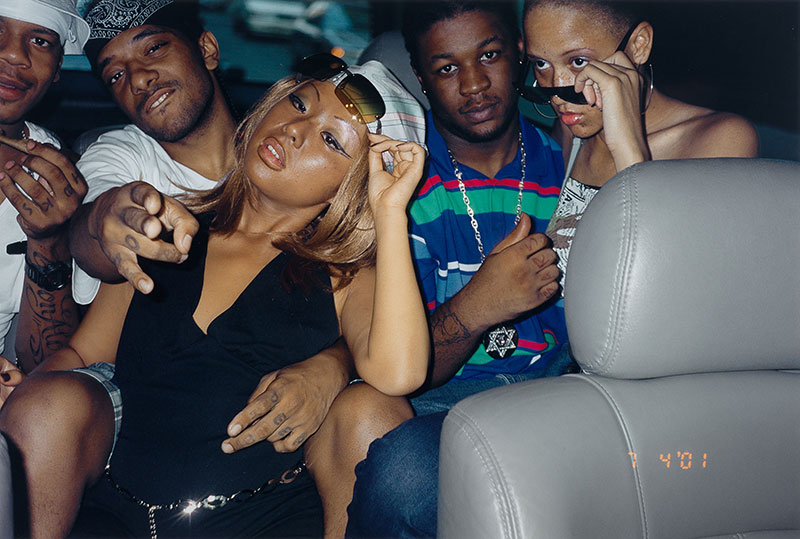
Nikki Lee, Korean born photographer who studied in America and now lives in Seoul. She is best known for her “Projects” series (1997-2001) where she dresses up as different personas such as a skateboarder, school girl, punk, elderly person and so on.She mimics their style and mannerisms in the images. Photos are taken with a disposable or small camera to put people at ease. The work is candid and familiar, the work of an unassuming amateur to give the feeling of authenticity. There are digital date stamps on each image to add to the perceived authenticity of the work.
The modern, potentially similar version of self representation is what images we choose from our life to add to social media and which ones we choose not to show. A collection over time of a certain theme of images the author has chosen creates a view that is not an accurate account but what the author chooses to show. For example, always happy photos and only photos on day trips or holiday creates an image of a jet set lifestyle. Filters used on Instagram and Snapchat are also a form of self representation, some images on social media look nothing like the person they are supposed to be.
Nikki Lee – The Schoolgirl ProjectThe Hispanic ProjectThe Punk ProjectThe Seniors ProjectThe Hip Hop Project
Is there any sense in which Lee’s work could be considered voyeuristic or even exploitative? Is she commenting on her own identity, the group identity of the people she photographs, or both?
Her work is in a sense voyeuristic as it gives the viewer a look into the world of a certain group of people, what they look like, how they live and behave,and in what surroundings. She is commenting on how her own identity is not ever static and singular, she is commenting on how in the Western world people can choose their identity, but in the East this is not possible to the same extent.
2. Would you agree to Morrissey’s request if you were enjoying a day on the beach with your family? If not, why not?
I would not be accommodating of Trish Morrissey’s request if it was not planned and was spontaneous because time with my family is precious and I would want to make the most of it. This view is probably because my children are older and I have less time with them now than I did have, I think my view would be different if my children were younger and trips out were a regular activity.
I can understand how people would find this request intrusive, or false or uncomfortable, but I understand the intention behind the work, if people were not properly briefed I think there would be more resistance to such a proposal.
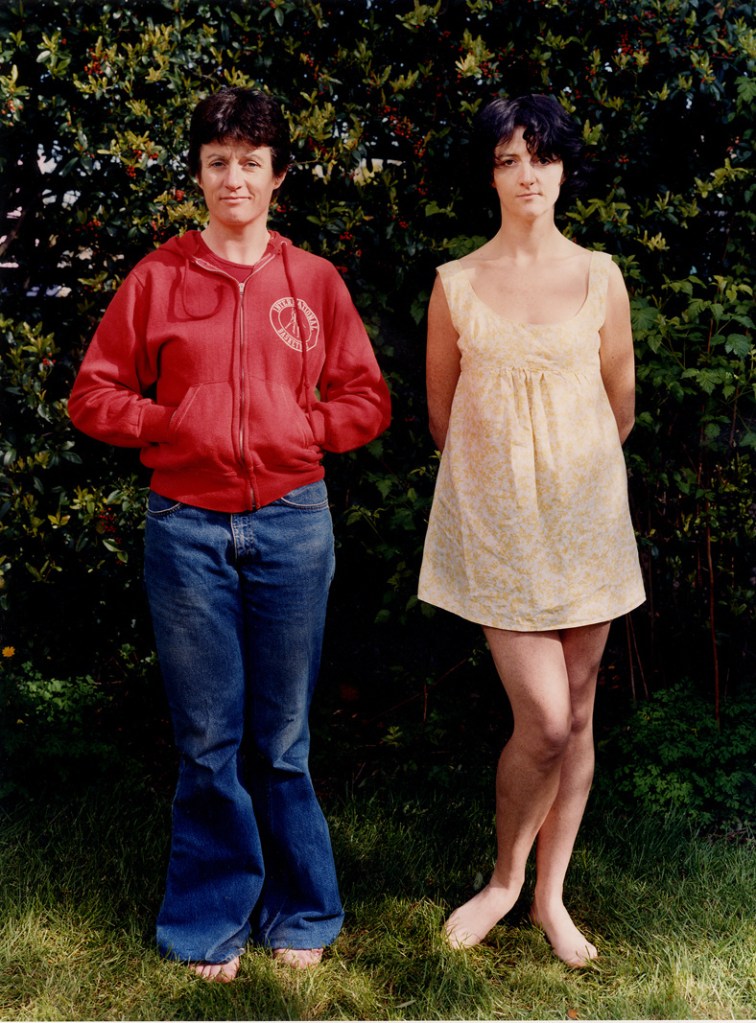
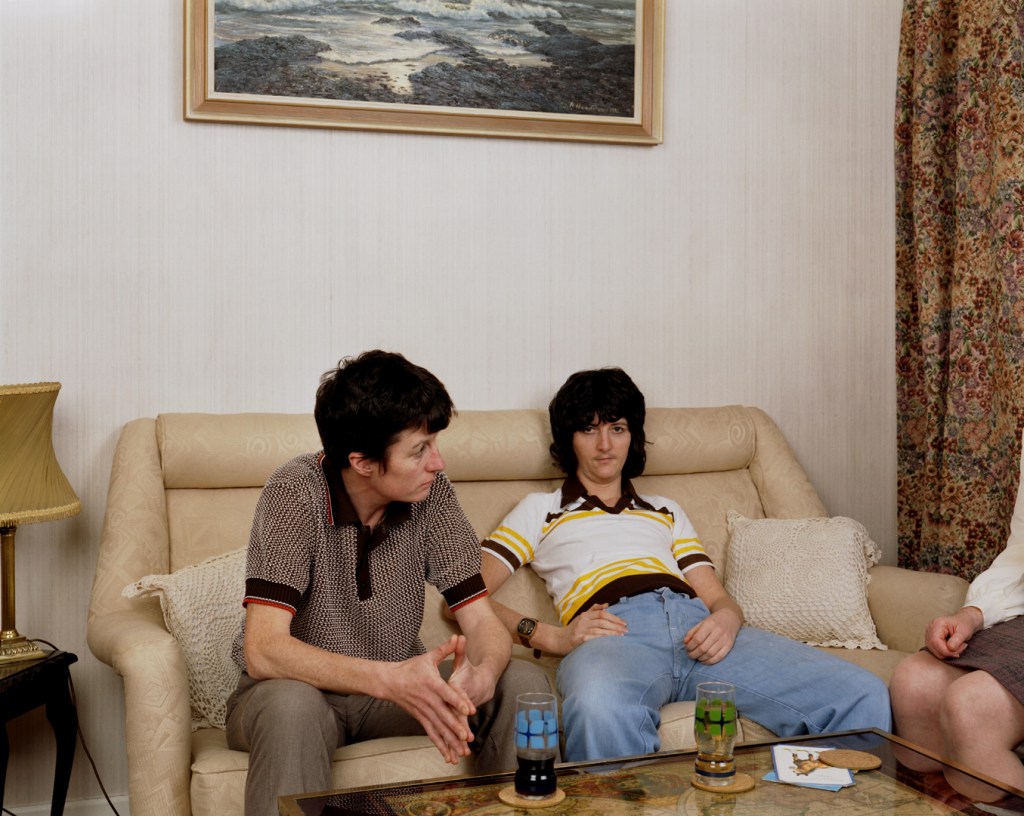
Trish Morrissey uses self-portraiture in more of her work, namely Seven Years and The Failed Realist. Look at these projects online and make some notes in your learning log
Seven years was made between 2001 and 2004 and the images are recreations of what would be found in family photo albums from the 1970s
Morrisey uses her sister as a model as well as herself and they recreate work that looks like a 1970’s 80’s style snapshot but has been taken in modern times. She cleverly recreates the body language that can bee seen in many snapshot images in family albums such as closed eyes and finger smudges across the lens that affects the image. Morrisey even dresses up as her brother to recreate one image.
Trish Morrissey – 7 Years Trish Morrissey – 7 YearsTrish Morrissey – 7 Years
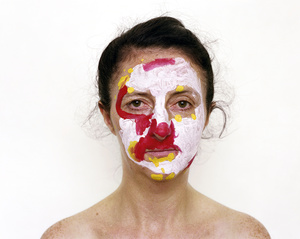
The failed realist – Trish Morrissey
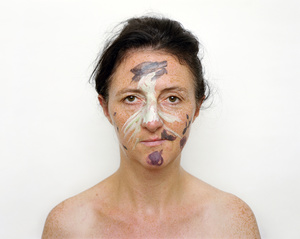
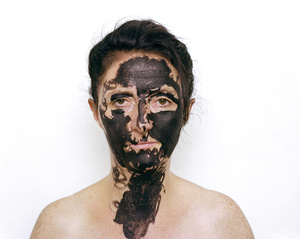
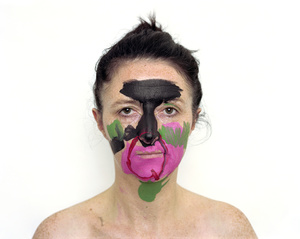
The psychologist Georges-Henri Luquet (1927/2001) referred to the Failed Realist stage as a stage in childhood development. Between the age of 4 and 6, children’s physical development is not capable of visually representing their thoughts or words. This work was made with Morrisey’s daughter in 2011. Her daughter was between 4.5 and 5.5 years old while this work was made. Her daughter painted events or things from recent experiences on Morrisey’s face.
Many artists felt this childlike innocent approach showed direct access to the expressive self and tried to emulate this in the abstract paintings as a “return to innocence” Picasso, Miro and Klee painted in this style with great success.
Trish Morrisey – The Failed Realist – The Tooth Fairy Trish Morrisey – The Failed Realist – Spotty CatTrish Morrisey – The Failed Realist – Penny the LabradoodleTrish Morrisey – The Failed Realist – Superher
Reflect on the pieces of work discussed in this project in your learning log and do some further research of your own. Here are a few questions you might ask yourself: ● How do these images make you feel? ● Do you think there’s an element of narcissism or self-indulgence in focusing on your own identity in this way? ● What’s the significance of Brotherus’s nakedness? ● Can such images ‘work’ for an outsider without accompanying text? ● Do you think any of these artists are also addressing wider issues beyond the purely personal? Make some notes in your learning log.
Notes:
Elina Brotherus – a finnish photographer and video artist, specialising in self portraits and landscapes. An exploration of herself and as a study of her circumstances – an excellent example of using photography as an investigative tool
Annonciation is a word based on Ennunciation which is the announcement of the birth of Jesus to Mary, a virgin birth. The exhibition called Annonciation in 2004 at The Photographer’s Gallery – London – details her IVF treatment over a 5 year period – the title that refers to Mary’s immaculate conception is in direct contrast to her own experiences
Involuntary childlessness is such a taboo subject still and the artist sets out to break this taboo.
In Elina’s video interview below she mentions that she does not like smiles in a photograph because it fixes the meaning immediately, I have often wondered why many artists do this.
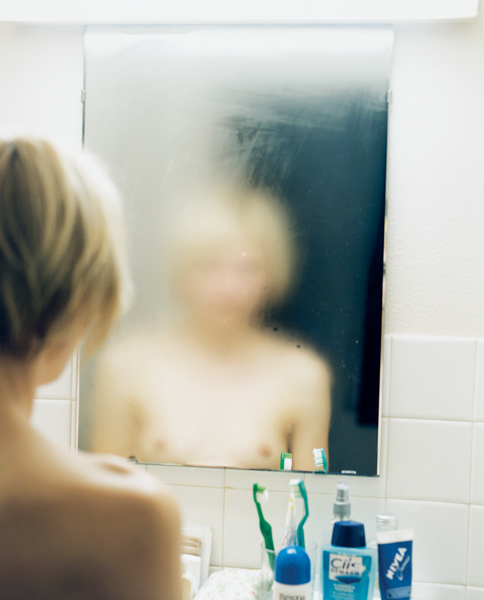
She also uses the body in many of her images but a “showing and hiding” theme such as a steamed up glass showing and hiding parts of the body. An image with a gazing ball is another example
Showing and hiding is a theme in a lot of Elina Brotherus’s work Showing and hiding – Elina Brotherus
Family portraits have become more thought provoking and honest in some photographers’ work like Sally Mann, Elinor Carucci, Richard Billingham and Tierney Gearon – they have moved from the stereotypical nice cute photos expected in this genre to a more realistic portrayal of family.
How do these images make me feel?
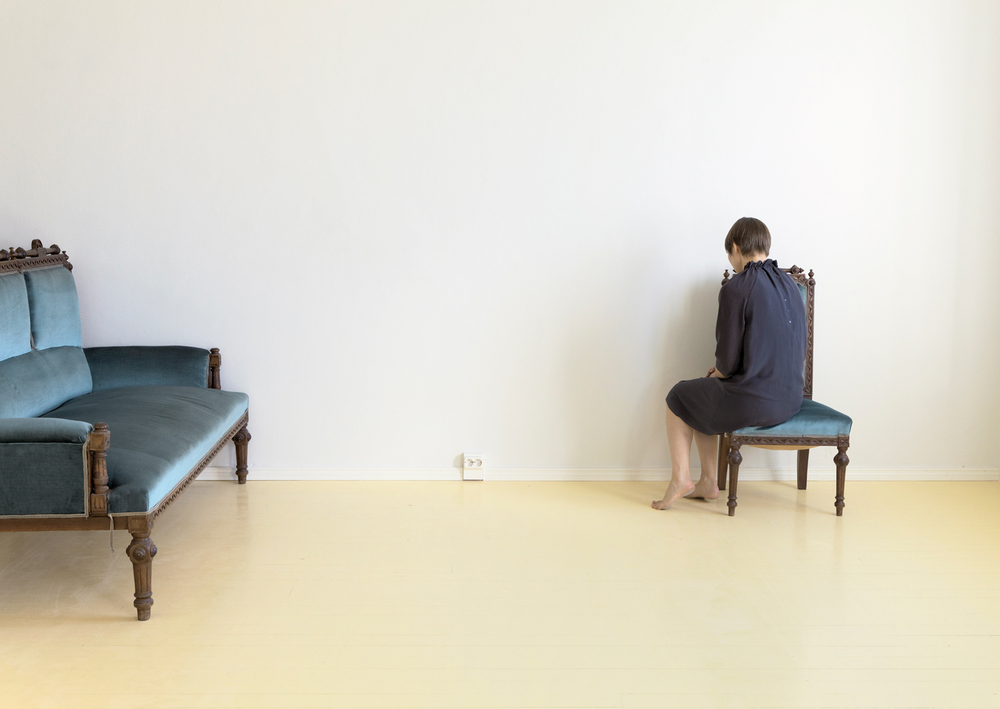
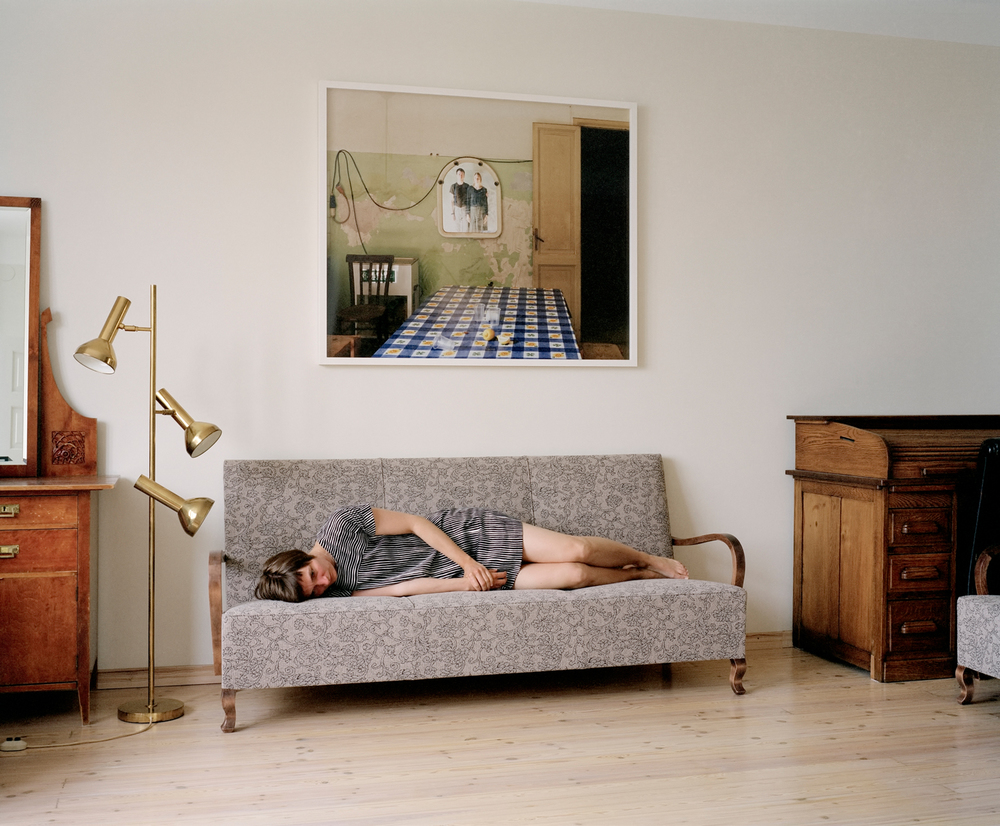
Sadness is the main feeling when looking at her work, the starkness of the interior adds to this feeling but the eyes, sloped shoulders and the artist looking down or her back to the camera portrays negativity. The starkness of the images adds to the sense of loneliness she is feeling and this comes across. The sense of loneliness also comes across with her use of negative space which could be interpreted as voids or literal emptiness in the home where a family should be occupying this physical space.
Annonciation
Do you think there’s an element of narcissism or self-indulgence in focusing on your own identity in this way?
Yes I do think there is an element of narcissism in these images because they are based totally on herself, however, she has made a point that she hopes these images show the outside world what it’s like when infertility dosen’t work for a large group of people who are overlooked in the media. There is an irony that although the work is focused on herself, many people will be able to relate to this and it may highlight their plight, give other people like her a voice, and create a positive outcome in a change of attitude and support for people in this unfortunate situation.
What’s the significance of Brotherus’s nakedness?
It is as if the artist is allowing the viewer into her personal, private space that is hidden from the outside world when she steps out the door of her home. It could be a glimpse behind the curtain not often seen. The nudity is a shock factor that grabs people’s attention, so if the purpose of the work is to do this, the use of her own naked body in the work will help to achieve this.
Can such images ‘work’ for an outsider without accompanying text?
I don’t think it works for an outsider without accompanying text because there is a specific message the artist wants to communicate to an audience and so the text ensures there is no ambiguity and the message is therefore controlled.
Do you think any of these artists are also addressing wider issues beyond the purely personal?
Yes I do believe this. She is addressing the lack of support and awareness of the large group of people who are unsuccessful after receiving fertility treatment. She makes the comment that the media only focus on the rare success stories that are more popular.
Research Task: Francesca Woodman ● Look up the work of photographer Francesca Woodman online. ● What evidence can you find for Bright’s analysis?
Bright’s analysis:
“It is difficult not to read Woodman’s many self-portraits – she produced over five hundred during her short lifetime – as alluding to a troubled state of mind. She committed suicide at the age of twenty-two.”
Bright, S. Auto focus: The self-portrait in contemporary photography (2010)
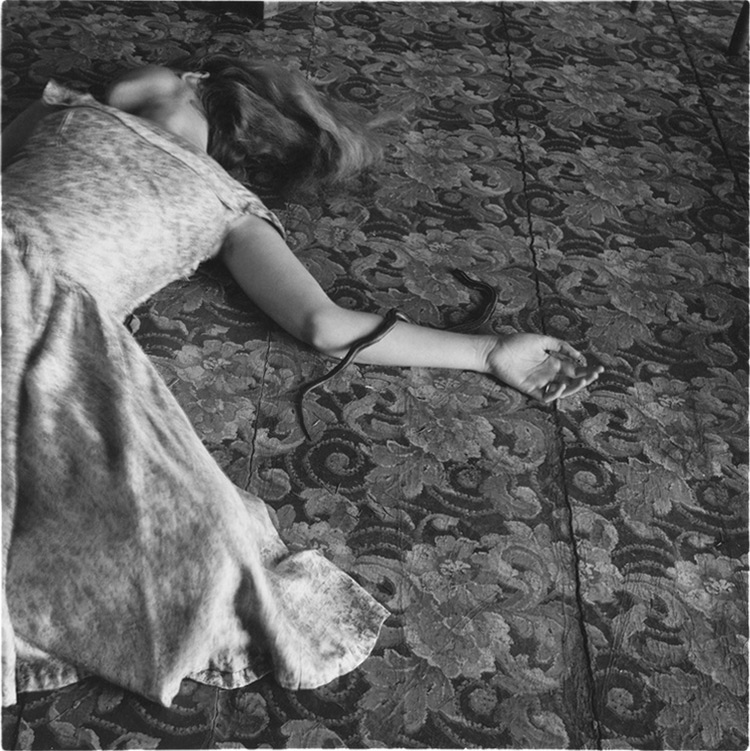
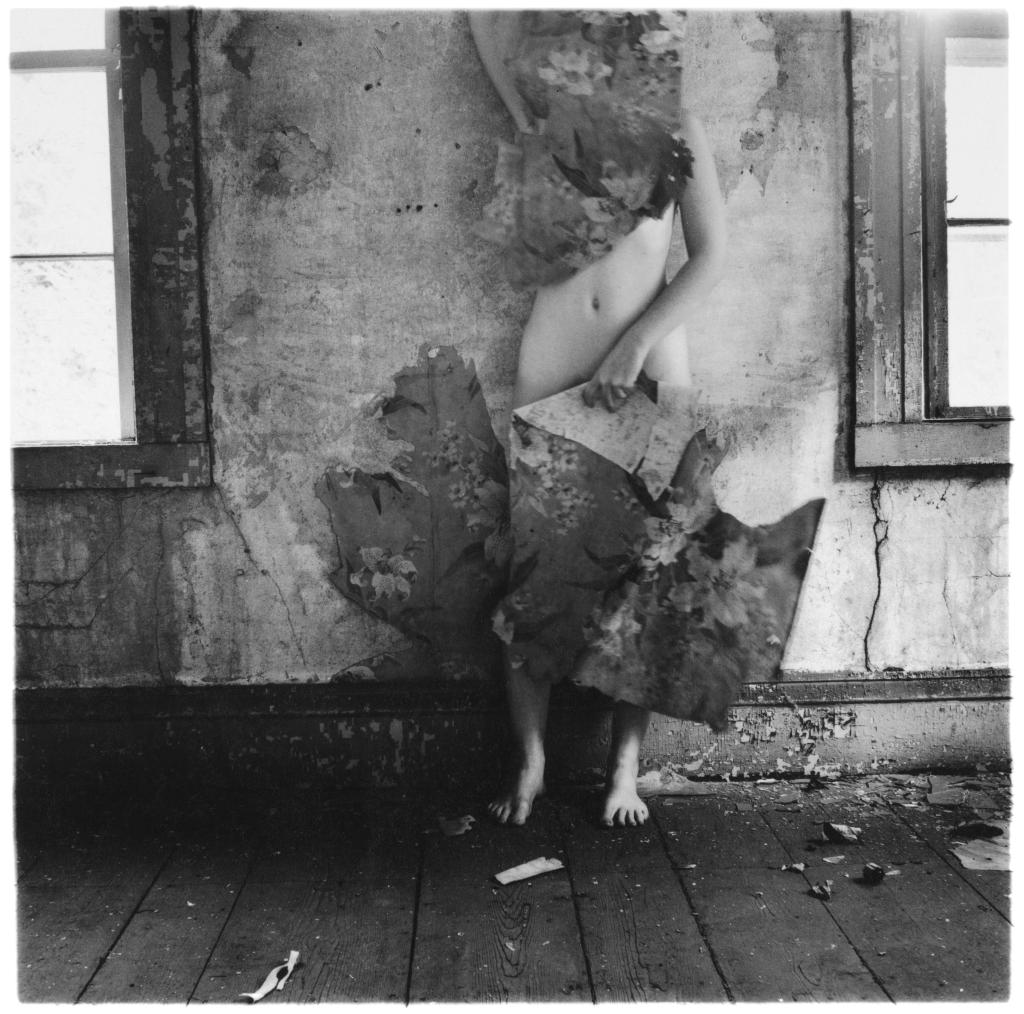
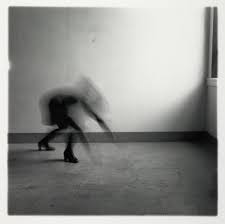
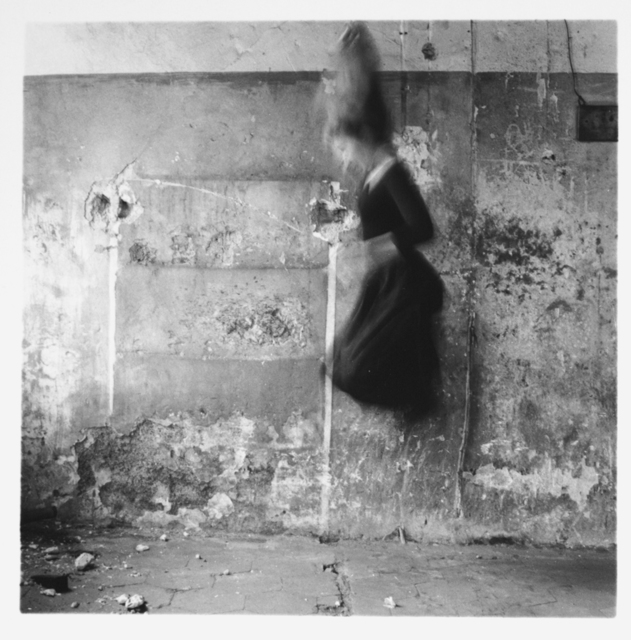
Francesca Woodman (1958–81) explored issues of gender representation and the use of the female body in her work. Self-portraits dominate her substantial portfolio, often portraying dark psychological states and disturbing scenes. She uses her body, locations and props to evoke a sense of surrealism, mystery and vulnerability. In Space 2, (Tate, 2019) for example, her body almost disappears into the blur of movement. This visual strategy recurs in her work and, since her death, has been interpreted as Woodman using photography both to present herself to the camera as an exhibitionist and to help herself disappear.
The work of Fransesca Woodman
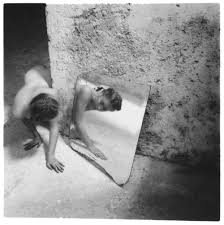
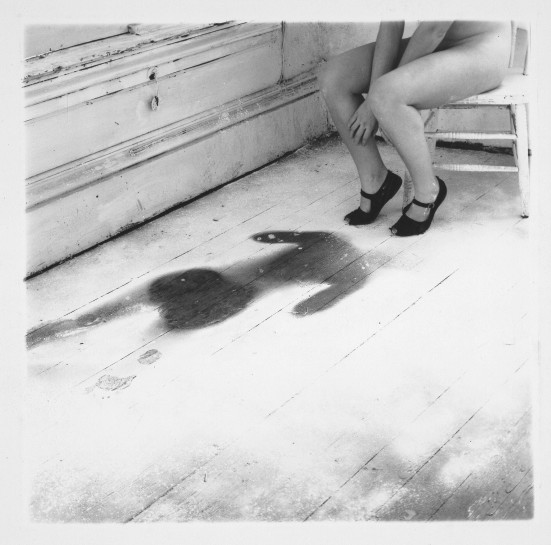
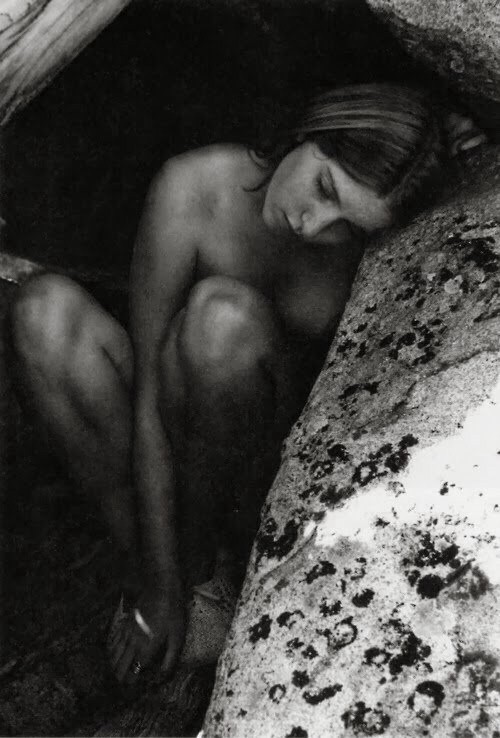
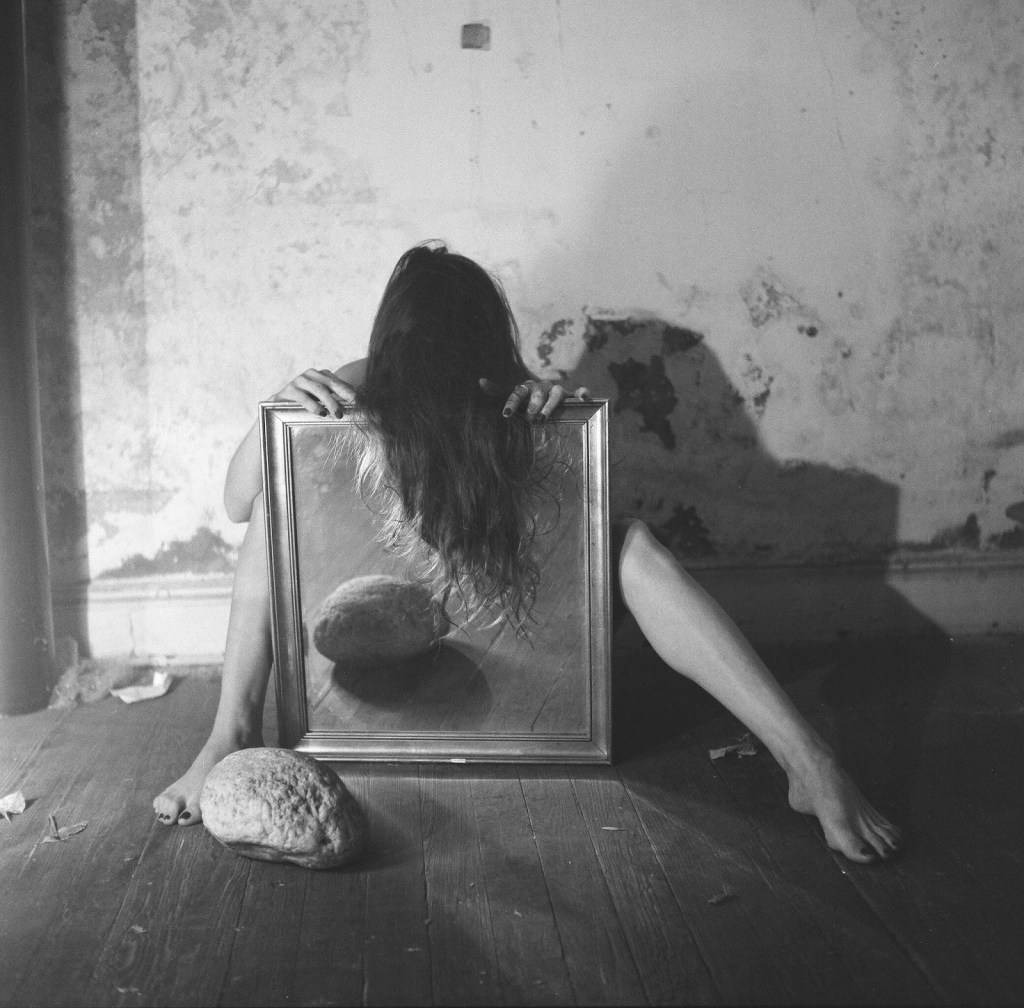
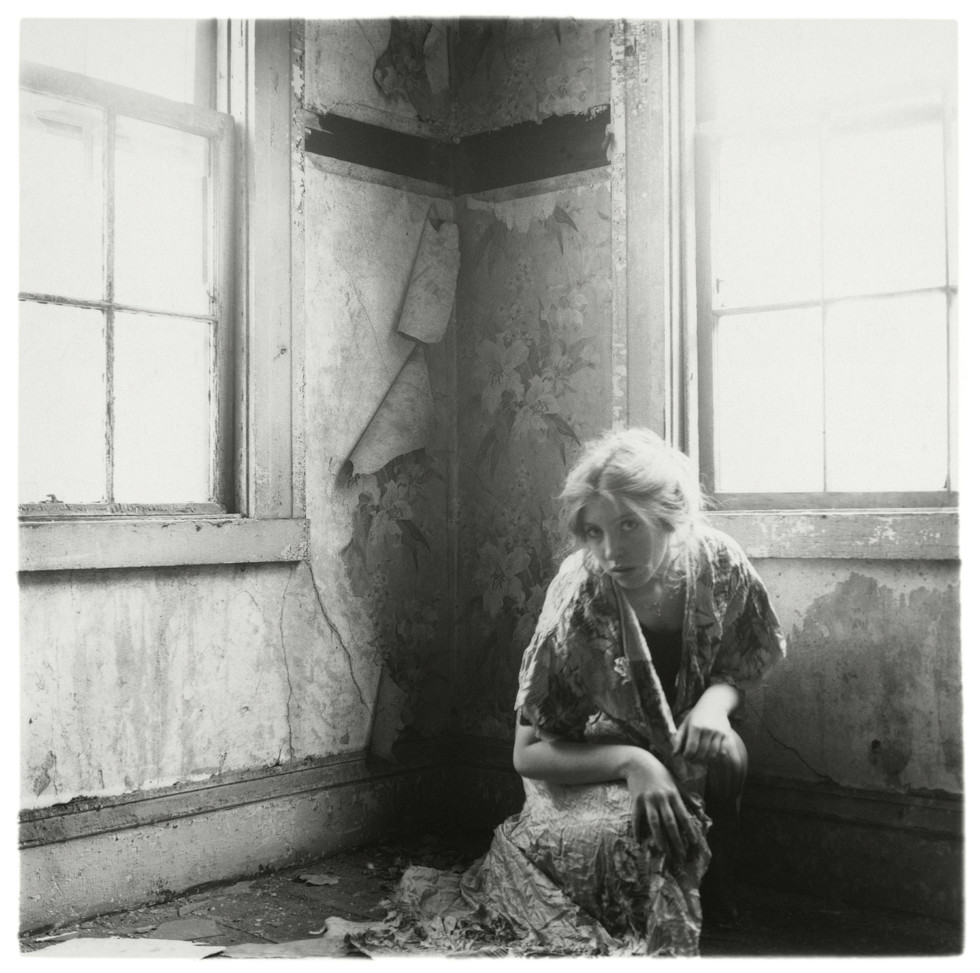
Her work was in black and white and her body is used in many of the images as can be seen in the slideshow below. Her face is hidden in several images and some with her eyes closed, showing how she is sending a message about her state of mind and her body image.
The derelict house with decaying decor also represents her state of mind. The snake shows her vulnerability and perhaps a message that she was in danger.
Blurred images and a focus on her shadow come through in her work where this perhaps eluded to how she felt, as if she didn’t really exist,or a desire to not exist.
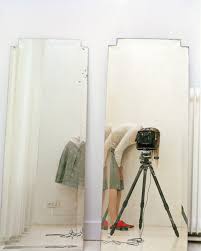
There are several images I found that Woodman made of the female body and the representation of this in a creative way using props such as wallpaper or a mirror.
Choose a poem that resonates with you then interpret it through photographs. Don’t attempt to describe the poem but instead give a sense of the feeling of the poem and the essence it exudes. Start by reading the poem a few times (perhaps aloud) and making a note of the feelings and ideas it promotes, how you respond to it, what it means to you and the mental images it raises in your mind. Next, think about how you’re going to interpret this visually and note down your ideas in your learning log. You may choose to develop this idea into creating a short series of images reflecting your personal response to the poem (or another poem). Write some reflective notes about how you would move the above exercise on. The number of pictures you choose to produce for the exercises and assignments in this course, including this one, is up to you. Try to keep in mind the following tips for knowing when you have done enough/not done enough:
Are the images repeating themselves? Are there three versions of the same picture for example? Can you take two out?
Does each image give a different point of view or emphasise a point you want to make?
Do the images sit well together visually?
Have you given the viewer enough information? Would another picture help?
Poem Choice
The poem I have chosen was written by Maya Angelou. The first time I heard this poem was when it accompanied an opening video clip to the Wimbledon woman’s singles final in 2017 and the focus was on Serena Williams and as a black woman how she has overcome the odds to achieve sporting greatness and achievement. The visual analogy really touched me, so the imagery with the text must have worked well for it to have resonated.
You may write me down in history With your bitter, twisted lies, You may tread me in the very dirt But still, like dust, I’ll rise.
Does my sassiness upset you? Why are you beset with gloom? ‘Cause I walk like I’ve got oil wells Pumping in my living room.
Just like moons and like suns, With the certainty of tides, Just like hopes springing high, Still I’ll rise.
Did you want to see me broken? Bowed head and lowered eyes? Shoulders falling down like teardrops. Weakened by my soulful cries.
Does my haughtiness offend you? Don’t you take it awful hard ‘Cause I laugh like I’ve got gold mines Diggin’ in my own back yard.
You may shoot me with your words, You may cut me with your eyes, You may kill me with your hatefulness, But still, like air, I’ll rise.
Does my sexiness upset you? Does it come as a surprise That I dance like I’ve got diamonds At the meeting of my thighs?
Out of the huts of history’s shame I rise Up from a past that’s rooted in pain I rise I’m a black ocean, leaping and wide, Welling and swelling I bear in the tide. Leaving behind nights of terror and fear I rise Into a daybreak that’s wondrously clear I rise Bringing the gifts that my ancestors gave, I am the dream and the hope of the slave. I rise I rise I rise.
Notes of Feelings as I read the poem aloud
Hope and resilience sums up my feelings on the whole.
Motivated to never give up. A feeling of strength
I can relate to this, a feeling of familiarity that resonates at this time of Covid 19 lockdown restrictions placed on our freedom of movement
“Oil wells pumping in my living room, gold mines in my back yard” signifies wealth that is beyond material objects, these could be instead health, happiness, love, peace and respect. These statements in the poem I also interpret as self pride and self esteem, these descriptions of wealth, although described as in the home and yard can also be synonymous with things that are within the boundaries of the individual that no one else has the ability to alter of affect if the individual chooses this.
Ideas About How am I going to interpret this visually?
Image 1 The Certainty of Nature
Maya Angelou talks of the certainty of the sun, moon and tides, which is the certainty of nature’s cycles. I observe the certainty of nature on my daily walks, blossoming trees where petals will certainly fall, muddy paths that certainly dry as the warm weather arrives. The certainty of nature in my garden where rose bushes come back to life and bloom every year, where grass grows more vigorously in the spring, where birds nest every year. This certainty in a time of unprecedented uncertainty brings an enormous sense of well being and stability.
Image 2 & 3 We all have choices at a time of struggle ( Fork in a path and also joyful positive attitude of people in my family)
“Do you want to see me broken? Bowed head and lowered eyes?” The poet asks the question but knowing that is exactly what they want to see and she defys this with a choice of positive attitude. We have a choice to be positive or negative about a situation beyond our control. We are in control of what attitude we choose. In the face of adversity we can choose to do what the poet has done, to be sexy and sassy and walk like you have all the wealth in the world.
Image 4 Hope – where there is hope there is a reason to continue
Light at the end of a tunnel or light shining through the trees – the rainbows drawn in windows are a symbol of hope.
Image 5 ( Opposites : Good and Bad, Old and New )
The poem is about good and evil and different social groups and opposites in attitudes and behaviours. An image that has dichotomy or opposites in a juxtaposition would be an interesting interpretation to the overarching theme of the poem
Image 6 (Resilience – strong, protective shield, gate, wall that stands the test of time)
This could also be ruins that are still standing or even a small plant growing through a crack in the pavement or through a brick wall or a very old three that has stood the test of time
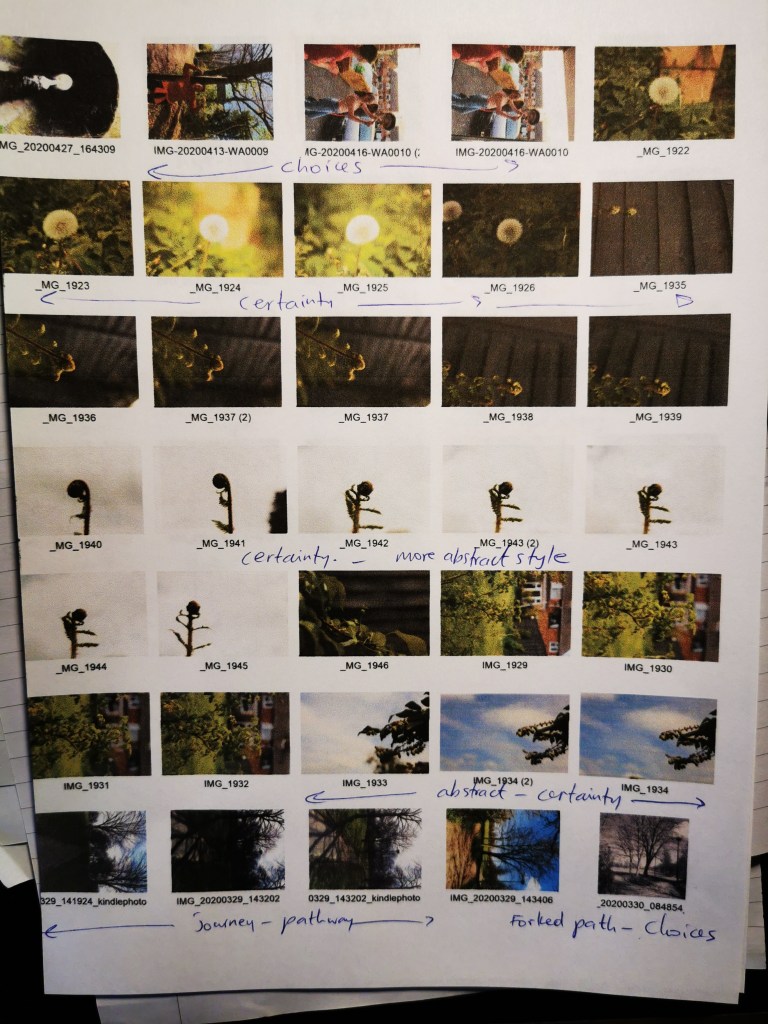
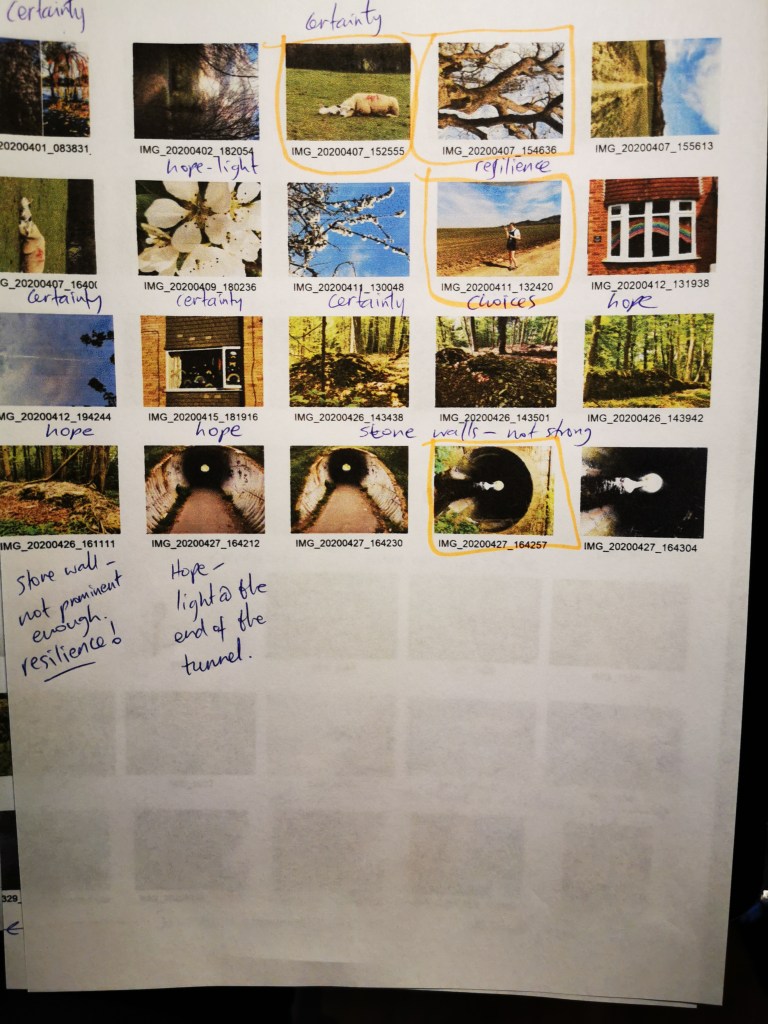
I have annotated the contact sheet to show the different images that relate to the categories or main themes of the poem : certainty, choices, hope, resilience
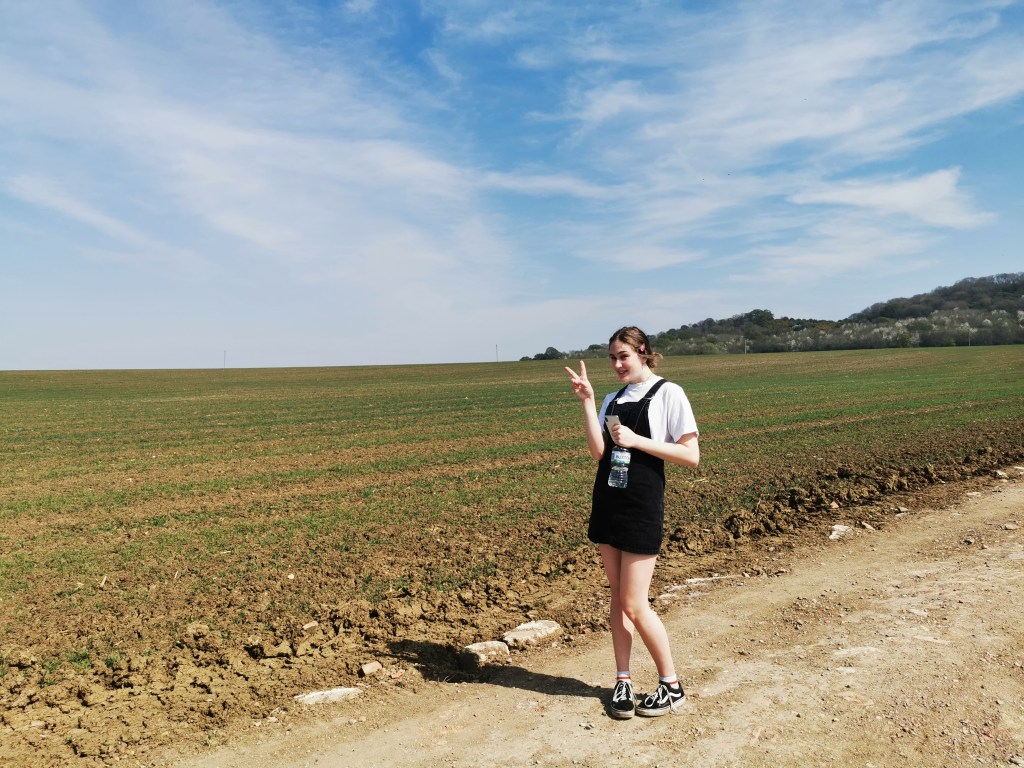
With the choices category I have chosen images of people with a joyous attitude, showing that we can choose our attitude in any situation.
Final Outcome
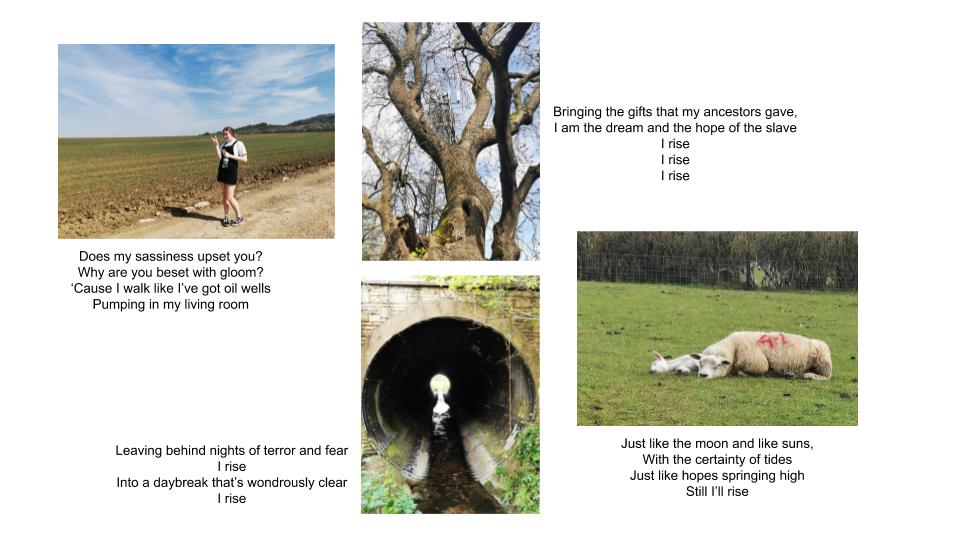
I have taken text from the poem that resonates with each image.
Top Left Image : Does my sassiness upset you? This image shows “choices” where a positive attitude has been chosen through the lockdown period, making the most of what we have, our daily exercise walks and beautiful surroundings to walk in are positives to choose to embrace. The blue sky and sunlight give a positive upbeat feel to the image and the green ties in with the other images, the outdoors theme runs through each image to tie them together. In the poem, for Maya Angelou who wrote the poem, she chose a positive attitude and self pride during times of racism and oppression, and this is what this verse describes.
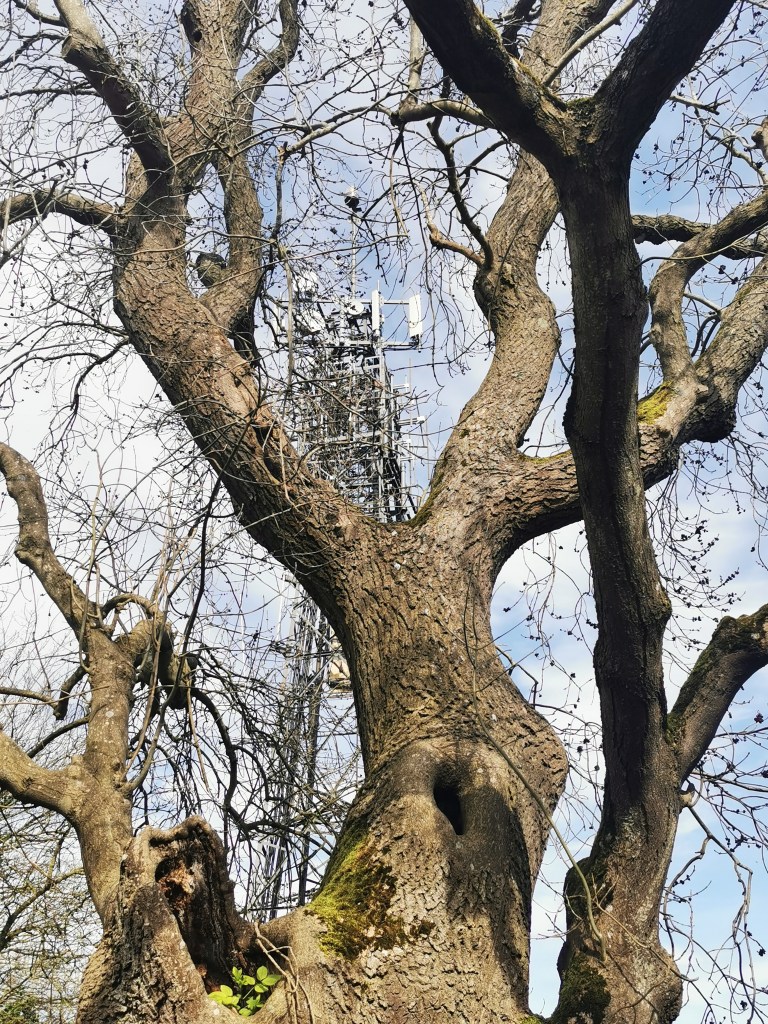
Top Right Image : Bringing the gifts that my ancestors gave I chose a very old, large tall tree to describe “resilience” and strength above all odds. There is a smaller, less significant man made steel mast in the background that signifies the oppressors and how much weaker and of a temporary nature this represents. The text “I rise, I rise, I rise” at the end of the verse signifies the tree rising into the sky as it continues to grow. This image I feel represents the situation we find ourselves in, the small steel structure represents COVID 19 which is smaller, and of a temporary nature compared to the tree which represents resilience and strength.
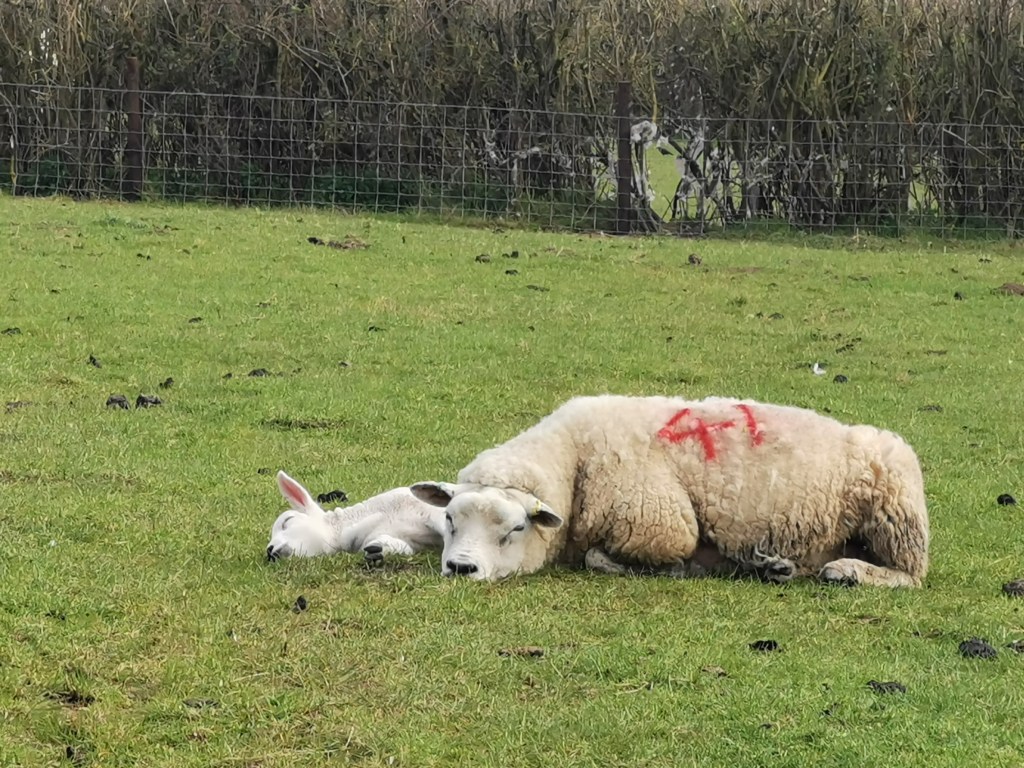
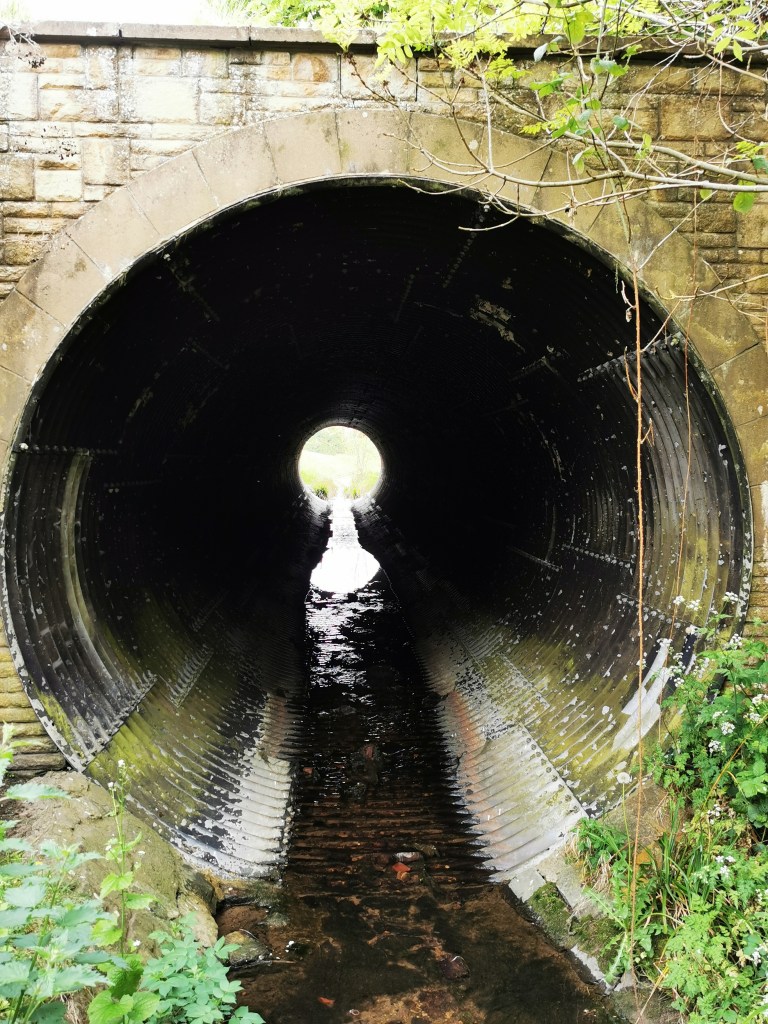
The brown shape of the tree that dominates the image ties in with the ground in the first image (top left) and also the other two images where this brown tone exists in the image of the sheep with bush in the background and the brown colour of the entrance of the tunnel.
Bottom Left Image: Into a Daybreak That’s Wondrously Clear The light at the end of the tunnel in this image signifies “hope” This image has the brown and green tones that ties it visually with the others in the series. This is the disruptor image in the series since it has a large amount of concrete that dominates the image which is different to the others, it also is more abstract than the others in the set. The outdoor element to this image ties it to the others too. The Poem signifies light at daybreak which also signifies hope, the line “leaving behind nights of terror and fear” relates to someone who walks through this dark tunnel and then comes out the other side into the light. Covid 19 lockdown and the situation the virus has created is synonymous with dark unpleasant tunnel but at the end there is normality and light again.
Bottom Right Image: “With the certainty of the tides” – this image is about certainty, every year baby sheep are born and the cycle of nature continues despite the turmoil that is happening in the world – the present turmoil is presently Covid 19 but Maya Angelou’s poem relates to the racism and oppression she endured – despite this she continued her routines despite what has happening.
This image visually connects with the top left image where there are lines running through them, this image has the line where the grass and the bush meet, the top left has a horizon line and a line on the dirt road that are distinctive and visually connect the two. The green and brown tones also connect the images
Does my sassiness upset you? Why are you beset with gloom? ‘Cause I walk like I’ve got oil wells Pumping in my living room.Just like moons and like suns, With the certainty of tides, Just like hopes springing high, Still I’ll rise.Leaving behind nights of terror and fear I rise Into a daybreak that’s wondrously clear I rise Bringing the gifts that my ancestors gave, I am the dream and the hope of the slave. I rise I rise I rise.
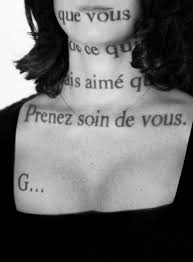
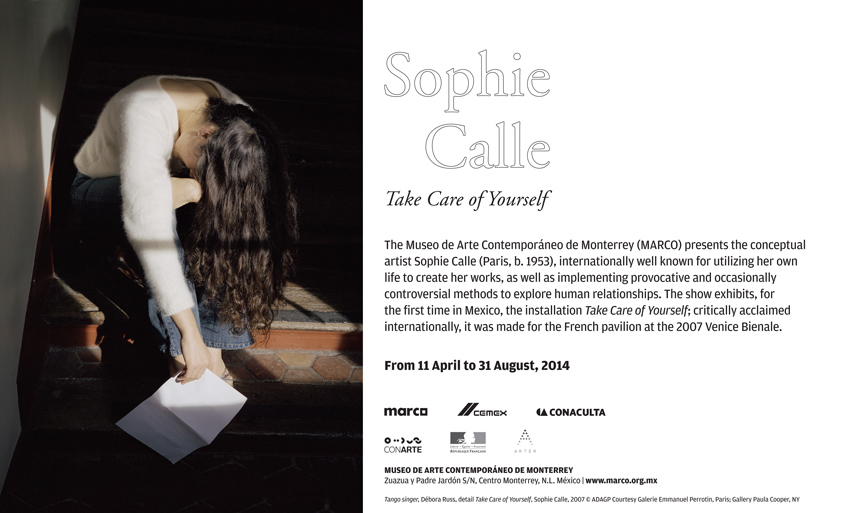
Examples of relay in contemporary photographic practice include Sophie Calle’s Take Care of Yourself and Sophy Rickett’s Objects in the Field (see interview in the Appendix to this course guide) where clashes of understanding or interpretation work together to create a perhaps incomplete but nonetheless enriching dialogue between artist and viewer. Look these pieces up online. Investigate the rationale behind the pieces and see if you can find any critical responses to them. Write down your own responses in your learning log. ● How do these two pieces of work reflect postmodern approaches to narrative?
Post modern approaches to narrative mean that the traditional structure of a story that has a beginning, middle and end is challenged. The notion of authorship control too.
Examples of post modern approaches are
Including fragments of other texts – ambiguous, open ended plots, unresolved endings, reduced, disruptive language.
This approach allows the reader to put themselves into the story, there is a call to the reader to become less passive, for endless possibilities of interpretation for a more enriching experience.
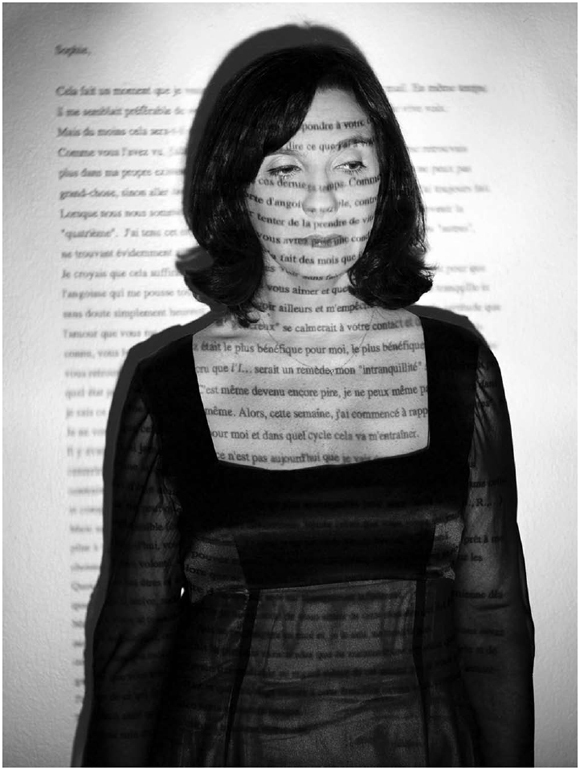
Sophie Calle’s rationale is to use a negative life event and turn it into a positive one through artistic expression using the postmodern narrative approach. The text that is the break up email she received from her boyfriend becomes the work of art, where one of the 109 women who have analysed the email have highlighted certain parts of it to point out grammar errors for example.
Parts of the email text are copied and used on photographic portraits, this is a good example of using a most modern narrative approach (see images below as an example of this)
There is no conclusion to the work, the narrative is open ended for the viewer to interpret. The answers are less important than the forms of engagement of the 109 women from different professions who were asked to review and critique the email message, invited to construct meaning. These forms of engagement are a key creative part of the final body of work since each one approached the critique in their own unique way, depending on their line of work.
Another way to incorporate text into an image-based project is to include interviews or audio. The New York Times has a simple but effective project online called One in 8 Million about the inhabitants of New York. It includes images of people from different walks of life and professions with audio clips overlaid to give a voice to the subject. It is a clever way of celebrating the richness and diversity of a city with such cultural and social variety. Some photographers use interviews and diaries to incorporate text with their images. You can research the following examples by searching on the weareoca website:
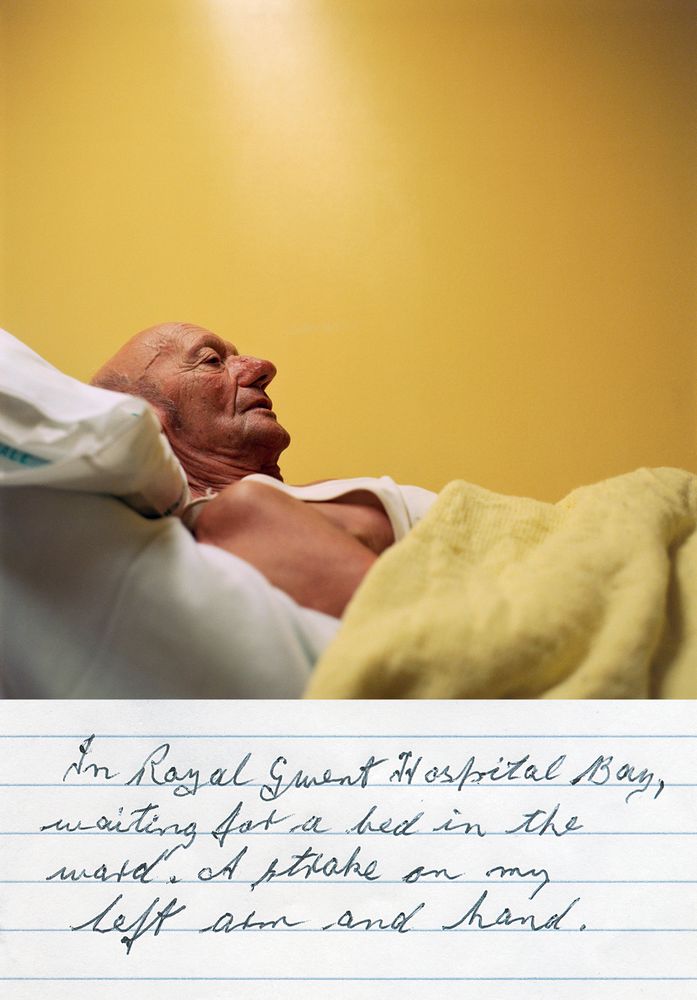
Kaylyn Deveney – The Day-to-Day Life of Alfred Hastings
Who is KayLynn Deveney? From USA, she moved to the south of Wales to study documentary photography and earned a masters and PHD in University of Wales Newport. The Day-To-Day life of Alfred Hastings was her first photography book produced in 2007. In 2008 it was nominated by several institutions across the world for “best photobook”
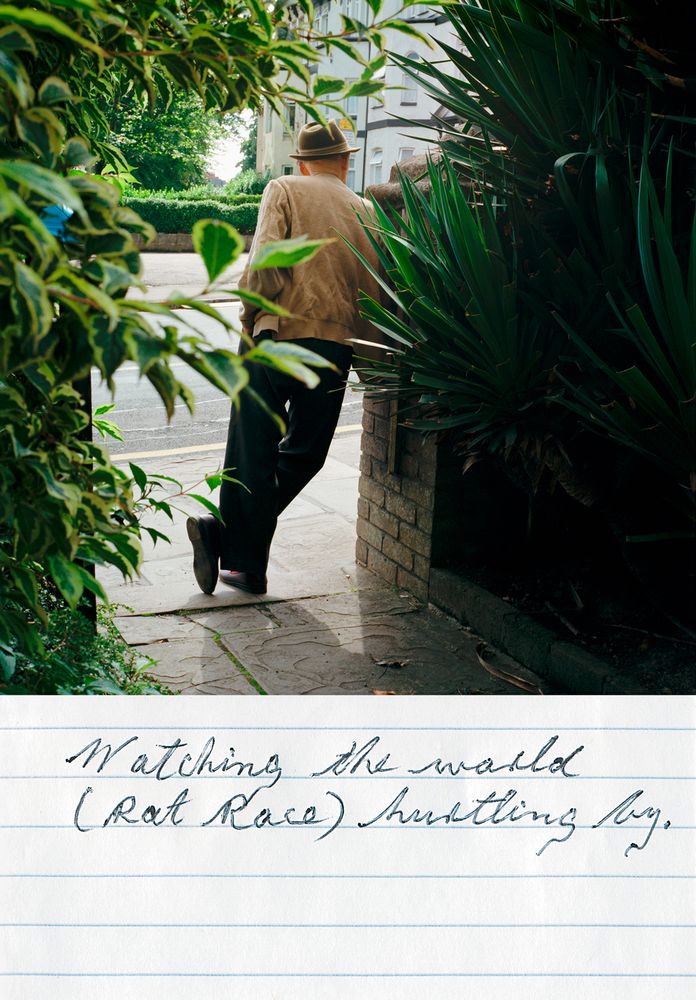
Deveney’s work focusses on addressing the myths of domesticity. She lived near an elderly gentleman called Alfred Hastings and became friends with him and asked if she could work with him to make this work. This module has been focused on the use of text that works alongside an image and how this adds context and meaning and enriches the work. The text in this work has been added by the subject who is not an artist, Alfred Hastings. This work is in collaboration with him and gives him a voice about the way he sees himself and an important visual contribution to the work. The fact that the text is his own handwriting makes it feel to me as more authentic and emotionally draws me in to this work. Alfred Hasting’s description of the photographs gives him a voice and a real sense of his own home surroundings and routines. The text is integral to the work and without it the work would not be as good.
The lined paper that he has written his notes on to describe each image gives an informal diaristic feel to the work, again, making feel more authentic.
Each image shows a very different aspect of his life, for me this kept my interest as I Iooked and read through the work. The images are also different in composition and colours used, but the wording in the same handwriting, by the same person, on the same paper (each containing the same number of lines) is what creates a cohesiveness in the series.
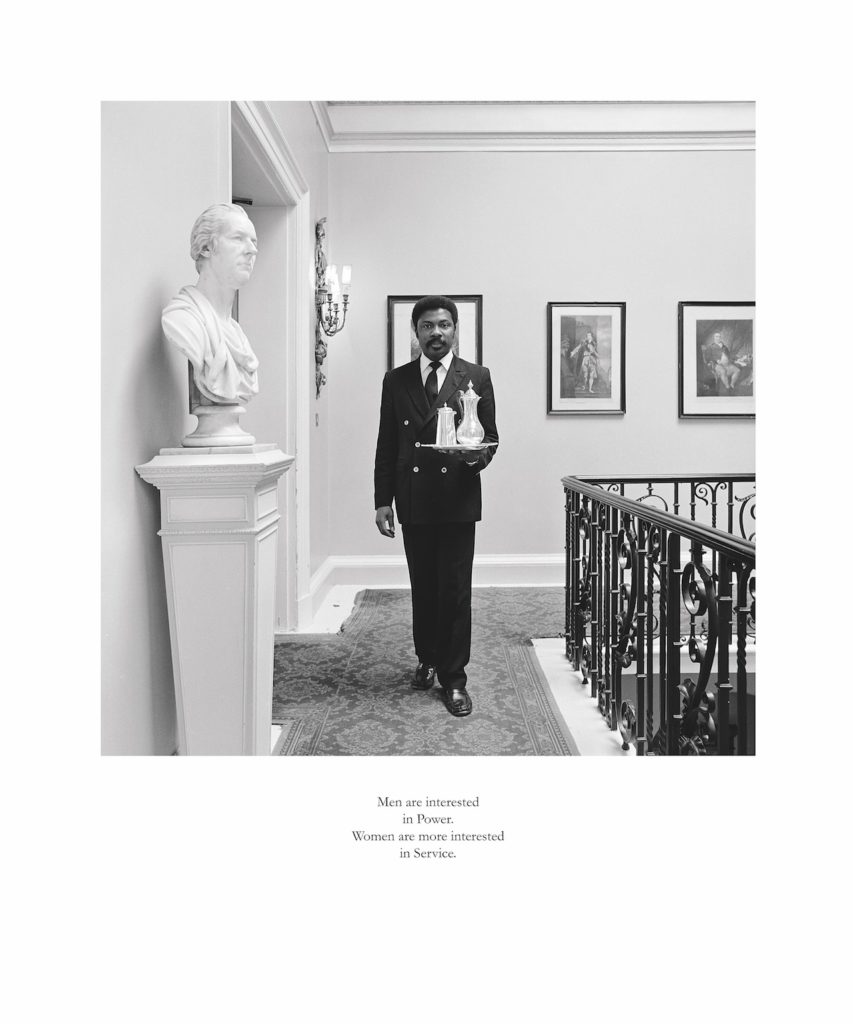
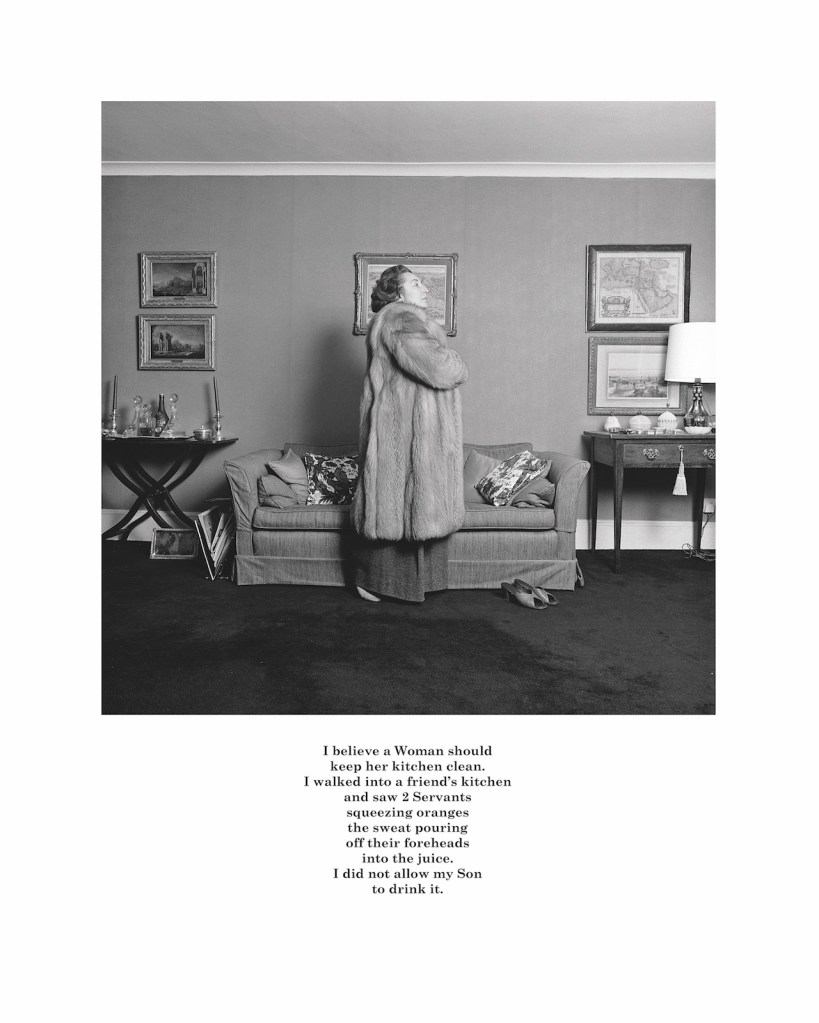
Karen Knorr – Gentlemen (1981 to 1983)
Knorr was born in Germany to American parents, grew up in San Juan, Puerto Rico, studied in Paris, and moved to London in the summer of 1976. She wanted to understand the country she had chosen to live in and reflect on her position as a white upper-middle- class woman in it. “I was trying to figure out who I was and where I stood,” she says. The photographer moved into her parents’ Belgravia maisonette for six months, situating her at the centre of an unfamiliar world inhabited by the British elite.
A series of 26 black and white photographs taken in gentlemen’s clubs in St James in central London with short passages accompanying each image. They were images of gentleman’s clubs in the 1980s and they revealed hidden spaces and what went on in those spaces. The passages are fictitious and written by Knorr. They are based on contemporary news events and parliamentary speeches published in Hansard concerning race, the role of women, and the Falklands War. The photos are staged with actors, employees or friends, so modern contemporary people and text are combined with historical settings of the gentlemans club. It took the artist a year to take the images and make the work.
Karen Knorr – GentlemanKaren Knorr – Gentleman
Karen Knorr – Gentleman
Bibliography
Haber, J., 2020. Haber’s Art Reviews: Sophie Calle. [online] Haberarts.com. Available at: <https://www.haberarts.com/scalle.htm> [Accessed 21 April 2020].
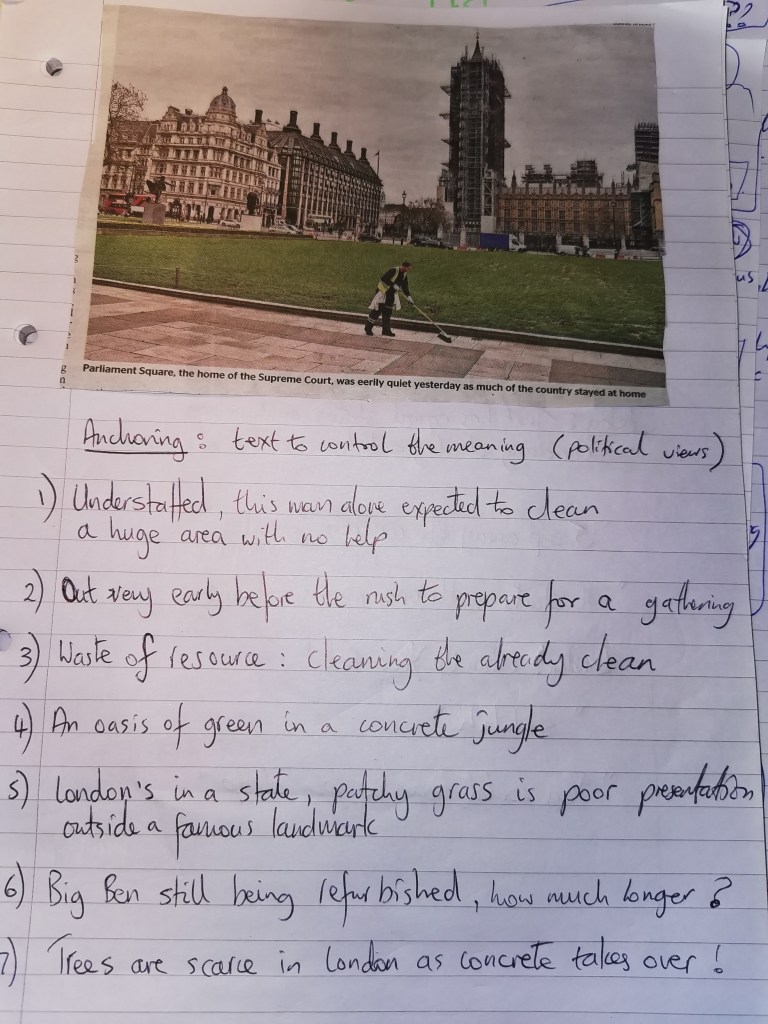
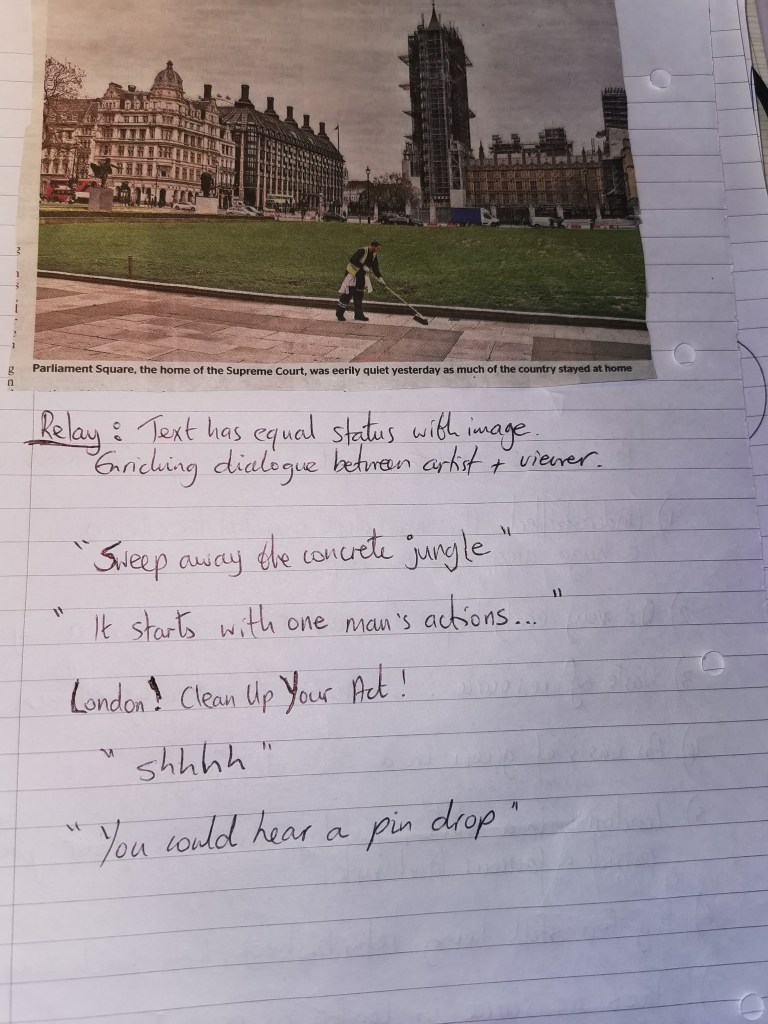
Cut out some pictures from a newspaper and write your own captions.
1. How do the words you put next to the image contextualise/re-contextualise it?
2. How many meanings can you give to the same picture?
Try the same exercise for both anchoring and relaying. Blog about it.
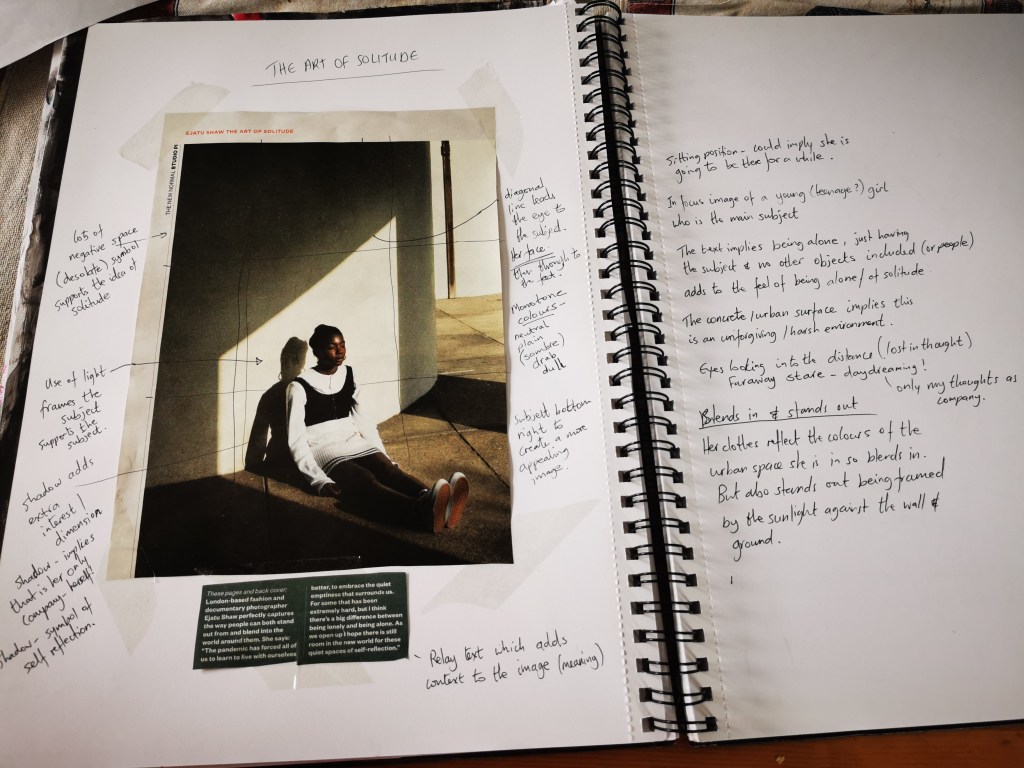
Anchoring Text for an image found in a newspaperRelay text for an image found in a newspaper
Anchoring of words can drastically change the meaning of images as I showed in the first image in this blog where I created several different anchoring captions.
The lack of green space, early in the day when it’s quiet, lack of cleaning resource, Big Ben refurbishment and also the quality of maintenance in the capital are just a few ways the first image can be interpreted with the use of anchoring text. It is easy to see how the same image can be used in different contexts and can have several different meanings. Photographs are often used for political and environmental messages nowadays.
Relay words I found far more difficult to come up with since this involves more thought and deeper creative thinking than that for ways to anchor the image with text. I think relay words, if placed on or near the image in an eye catching font or a handwriting is far more powerful and impactful than anchoring and it could potentially influence political change more than the anchoring text used by newspapers to put across their particular political views, but the newspapers need to appear to be neutral so this would be frowned upon by the audience and alienate certain groups.
Relay text is a method of expression I plan to think about using in my own words. In future assignments I need to think more about the text that accompanies each image and what that image does to the meaning of the work.





 Jenny Stork: Photography 1: Context & Narrative