Unit 2: Ex. 1 The Dad Project

1. How does Bryony Campbell’s The Dad Project compare with Country Doctor? 

Both are work relating to health issues over an extended period of time in a diaristic mode. Both show a carer and the part they play in helping ill people. The particular narrative for each image supports the overall story.

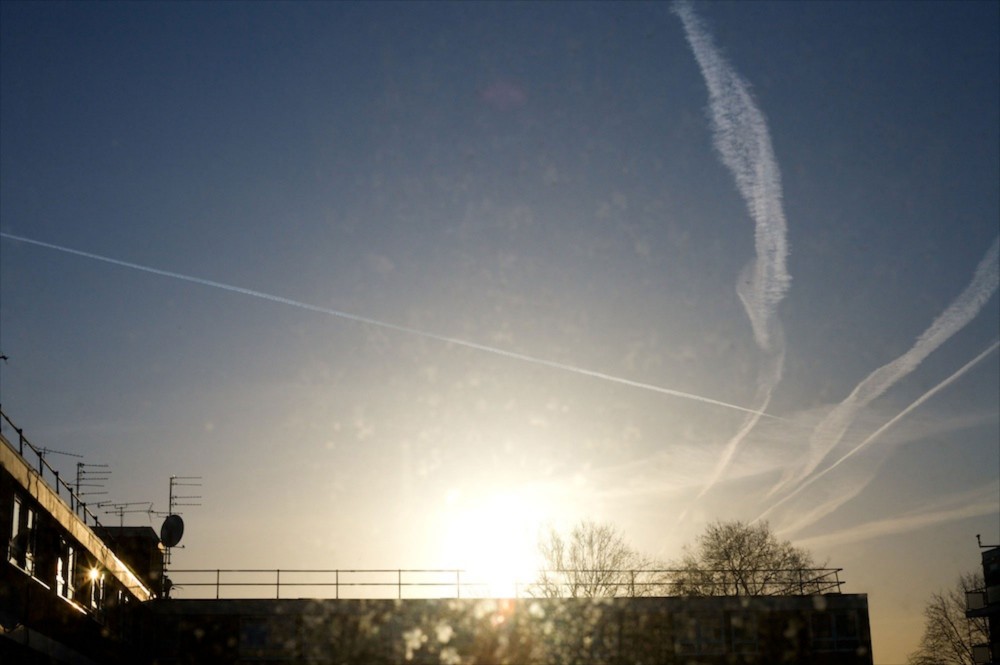
They contrast in a number of ways, Eugene Smith’s is less emotional and more a recording of the facts from a distance where Bryony Campbell’s includes emotional images such at the two below of the blue sky and light which tells adds to the narrativeof how she is feeling.

2. What do you think she means by ‘an ending without an ending’? 

She could possible mean two things, she will see him again one day when she dies, or that he will live on in the work produced in the project and other photographs taken of him that keep his memory alive.

Notes :

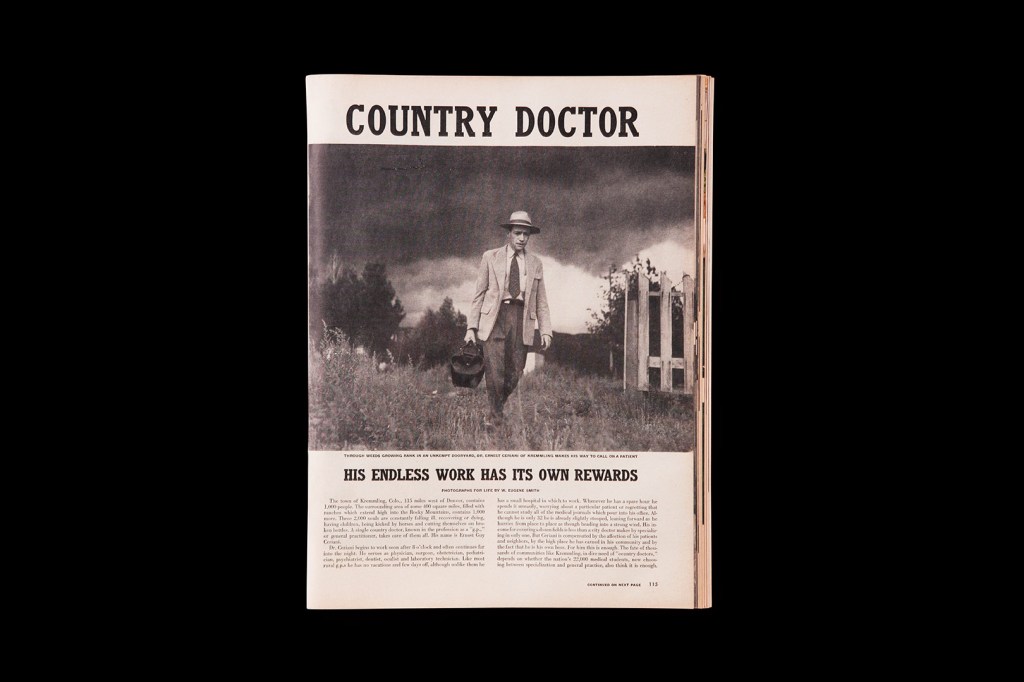
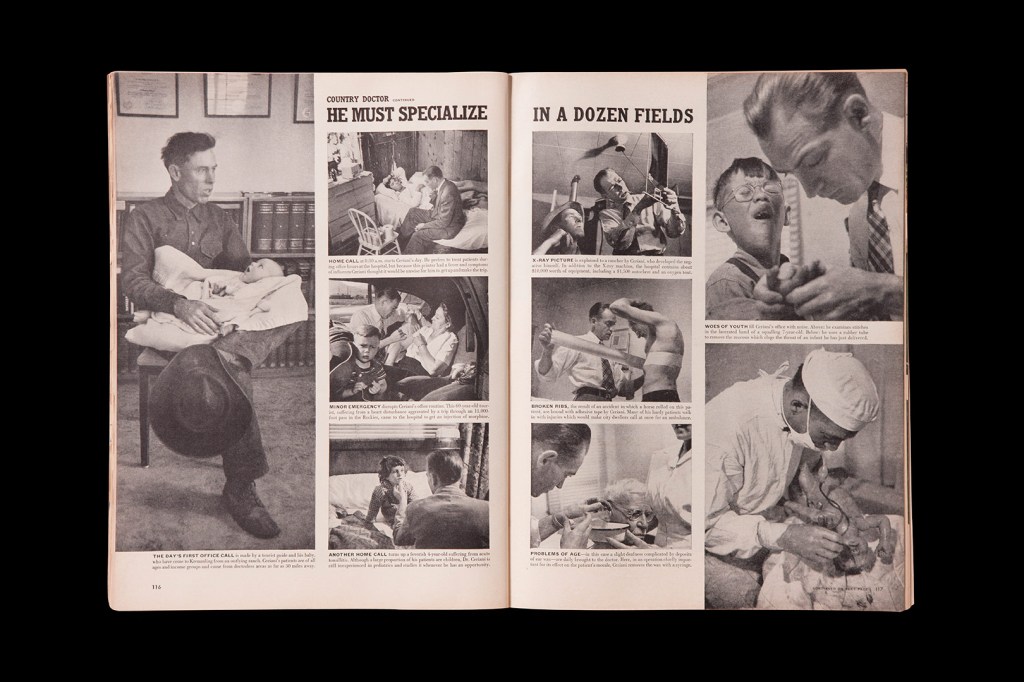
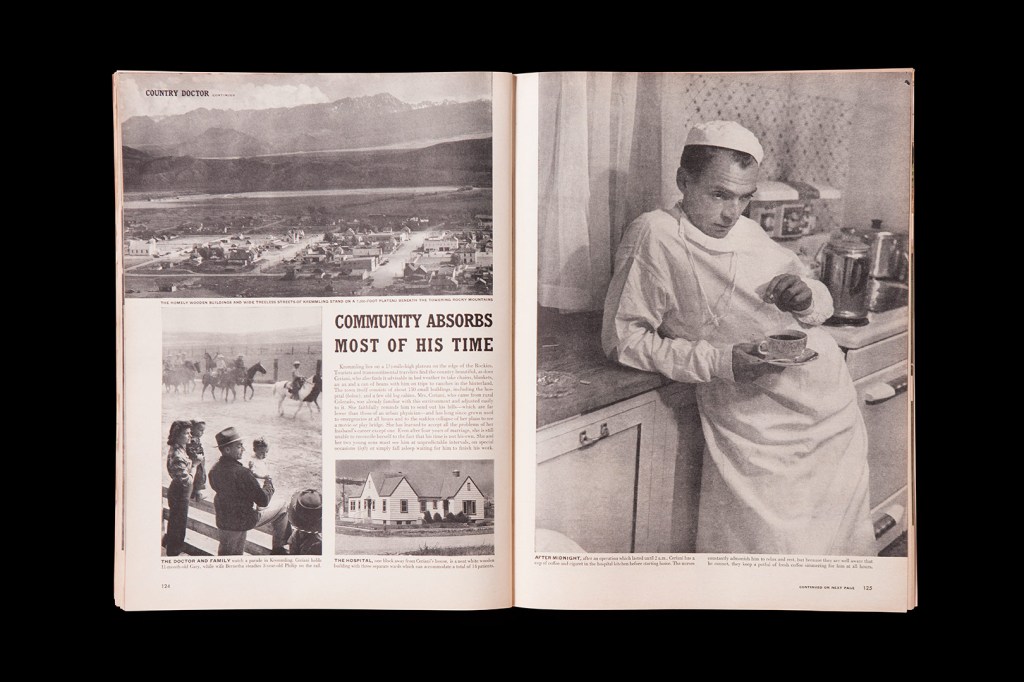
In 1948 W. Eugene Smith made a photo essay for LIFE magazine. Country Doctor chronicles the ups and downs in the life of general practitioner Dr. Ernest Ceriani from Colorado over 23 days. 

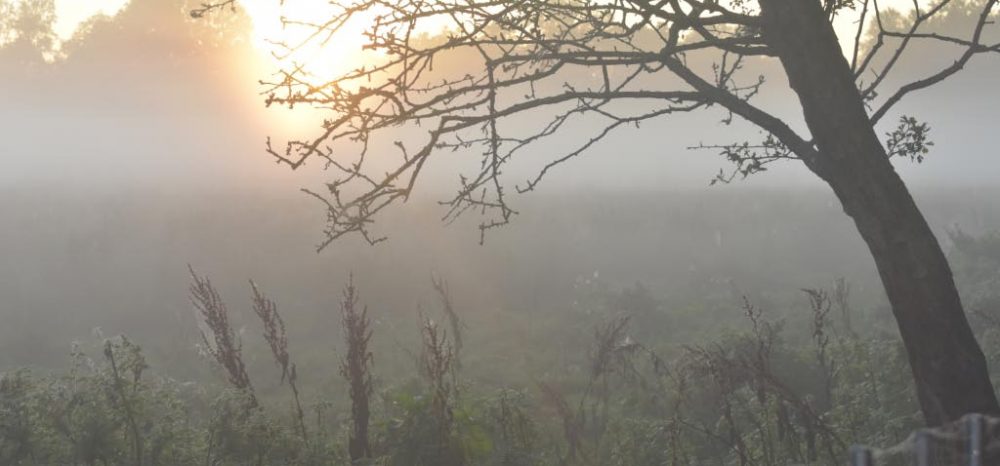
Today we knew he would die soon. I went outside and looked at the sky while we waited for the ambulance. It was perfectly beautiful. Bryony Campbell The Dad Project (2009)

The sunlight supported me this year… Bryony Campbell The Dad Project (2009)
How Eugene Smith’s photo essay looked like when it was published in Life Magazine

Unit 1 Ex4: The Photography As Document: Project 5: The Manipulated Image: Digital Manipulation

Instead of using double exposures or printing from double negatives we now have
the technology available to us to make these changes in post-production, allowing
for quite astonishing results.
Use digital software such as Photoshop to create a composite image which visually
appears to be a documentary photograph but which could never actually be.
To make a composite image you need to consider your idea and make the required
amount of images to join together.
Upload the images and decide which image you’ll use as your main image and
background. Use the magic wand to select sections of image from the others
you wish to move into your background image. Copy via layer and drag into the
background. Do this repeatedly until you have all the pieces of your puzzle in place.
In order to make it more convincing, use the erase tool on each layer to keep the
edges soft and to create a better illusion. Be aware of perspective and light and shadows for the most effective results.
Search YouTube for Photoshop tutorials; there will probably be a suitable upload. If
not, ask your tutor or your fellow students for advice or find a digital technique book
in your library for more specific instructions.
Have a look at Peter Kennard’s Photo Op series for inspiration: https://www.theguardian.com/artanddesign/2013/oct/15/tony-blair-selfie-photo-op-imperial-war-museum

The three people in the bottom left of the image have been added to this photo. A story could be created around hiring a bike and riding along the beach in the Carribean. The bike riding actually took place in Wales Uk.

Unit 1 Ex2: The Photograph As Document: Project 3: Reportage: Street Photography (30 Images)

Find a street that particularly interests you – it may be local or further afield. Shoot
30 colour images and 30 black and white images in a street photography style.
In your learning log, comment on the differences between the two formats.
What difference does colour make? Which set do you prefer and why?

The benefits of colour

  1. Setting and time inferred – warm colours imply Autumn and cool colours imply Winter
  2. Mood – is communicated. Cool implies sadness and lonliness and warm implies tenderness and joy
  3. Emphasise relationships – same colours join subject matter and emphasise relationships – analogous colours

Black and White

  1. Era – choice of B&W or colour suggests an era – B&W is more timeless
  2. Light and shadows – are accentuated, dramatic shadows brought to attention
  3. Wide range of tonal values – if very black to white and greys in image to start with

Make sure you shoot in RAW so you have the choice of colour or B&W – if you only shoot in JPEG and choose the B&W setting the colour information won’t be captured and stored

Most importantly – make sure you know WHY you chose colour rather than B&W

Convert images to black and white when the light, form, or texture in the scene is more compelling than the hues of the subject matter. Black and white is a good choice when the color in a photo serves only as a distraction from the message you want the image to convey.

Notes On Work Produced

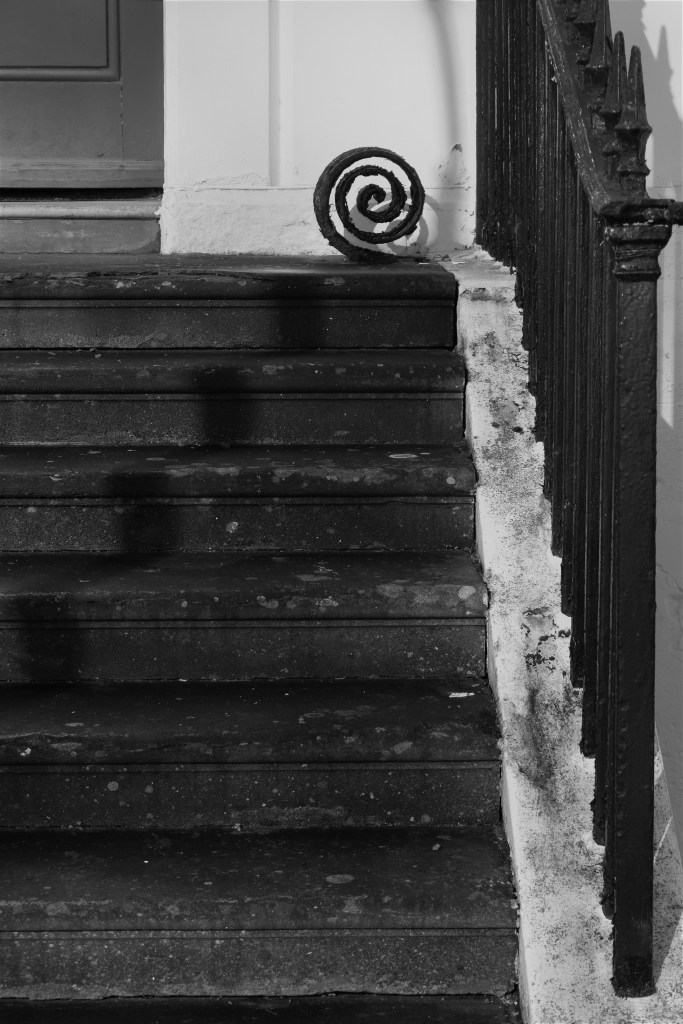
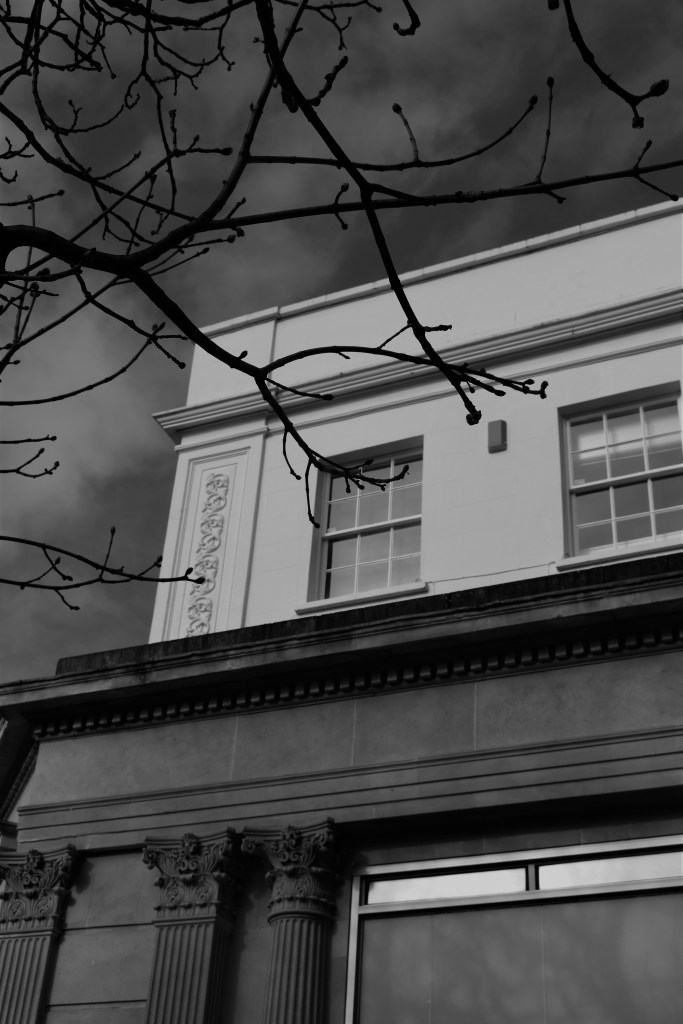
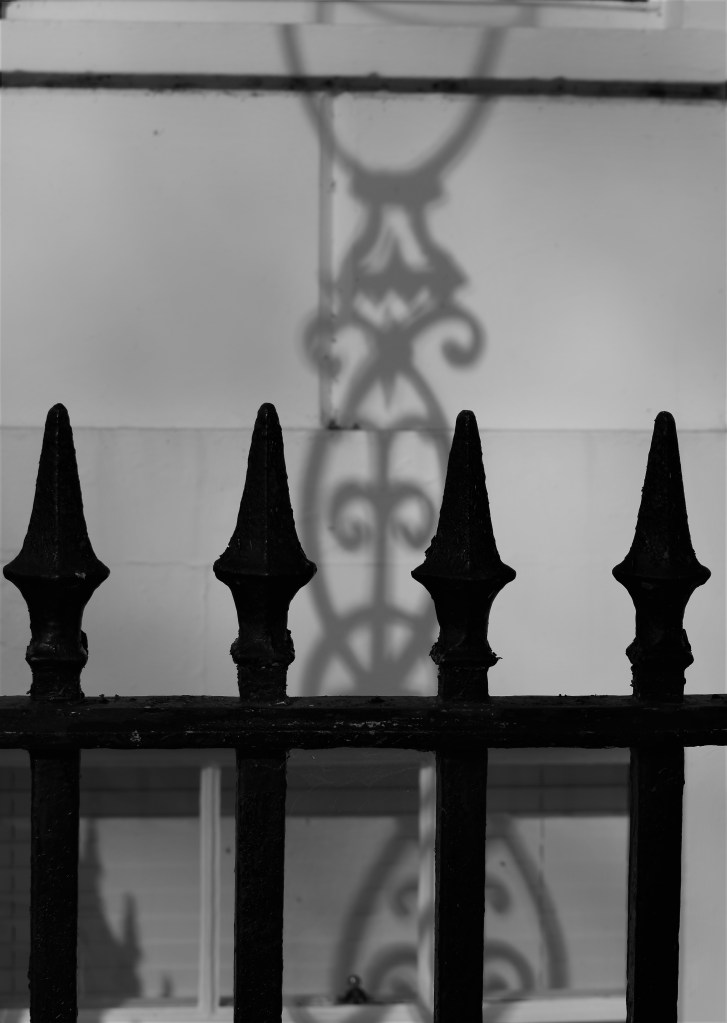
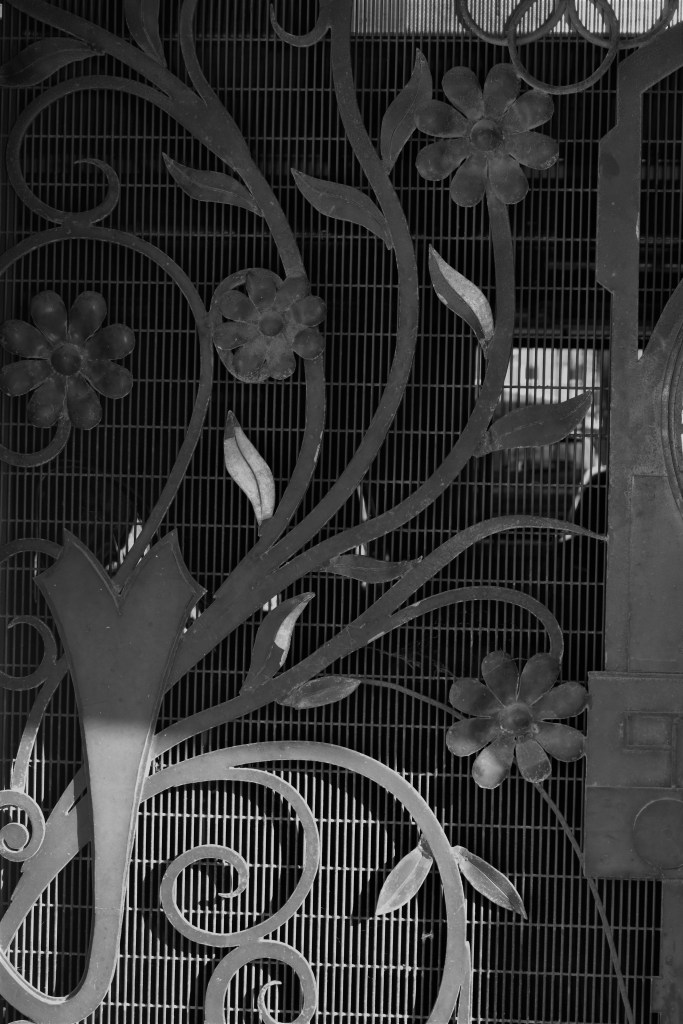
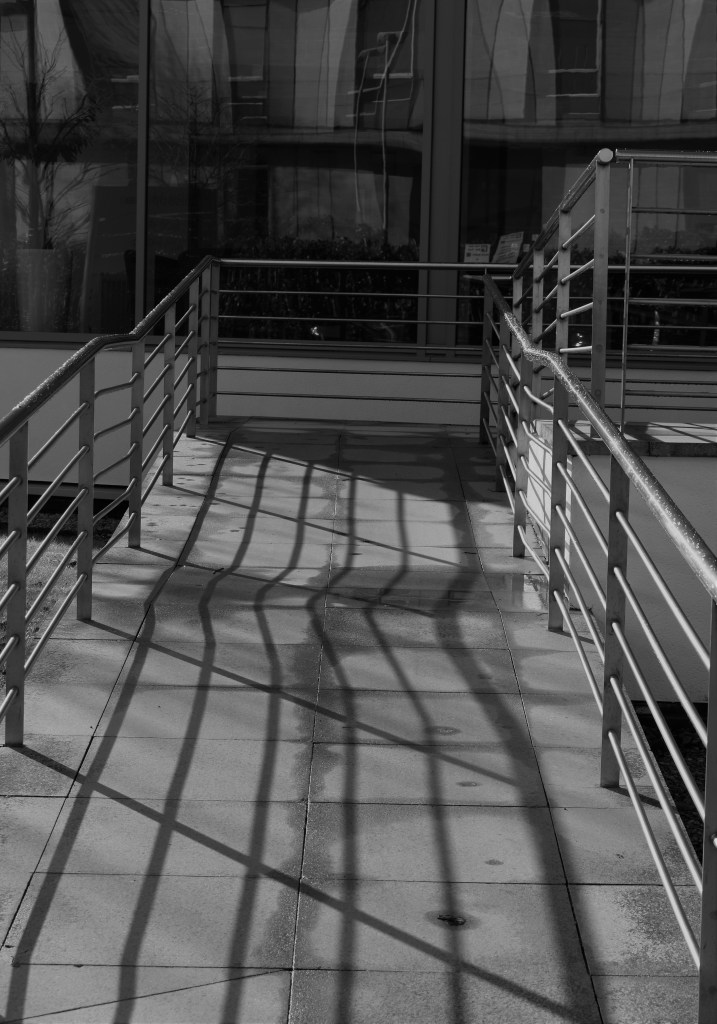
The B&W images taken concentrated on light and form. I really like the ornate ironwork on the Regency buildings in Cheltenham and on a bright day the striking shadows create extra ornate patterns that just improve the look of the building and enhance the existing aesthetics.

The simpler the image, the better B&W works, large striking geometric shapes stand out more if shot this way.

Large, simple geometric shapes lend themselves to B&W, I have tried to keep this simple by only including selected elements in the frame so it’s not too busy
Playing with form and light again helps to create interest
Close up shapes and patterns that are interesting are emphasised further when in B&W – the light falling on the lower third of the image adds interest and draws the eye to this area as a focal point
The shadows have become the main subject of the image – using light and form works with B&W photography
Bradford Industrial landscape lends itself well to B&W. The steam cloud on a grey day looks more dramatic. The geometric buildings show their form better in B&W.
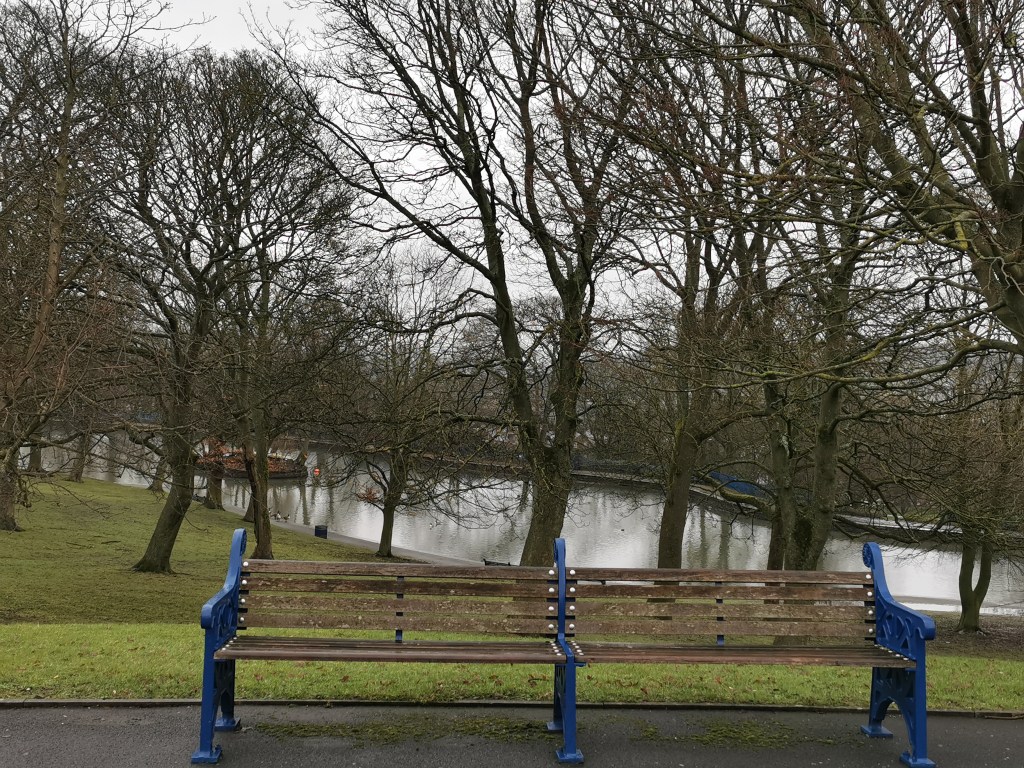
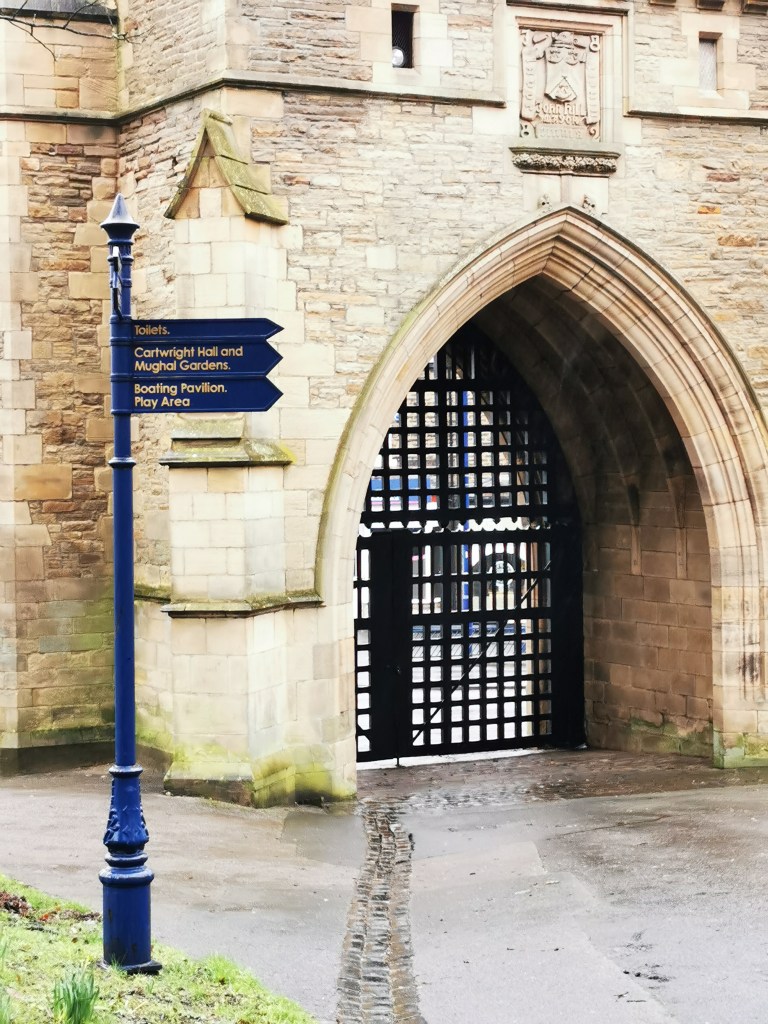
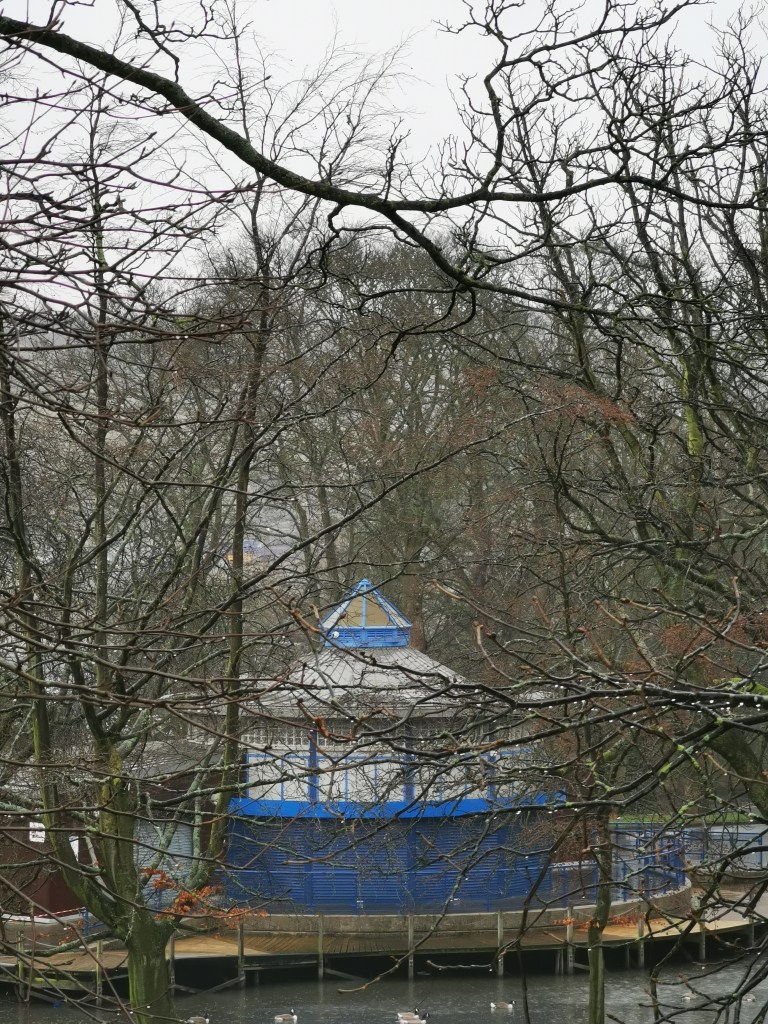
The colour blue connects these images nicely. On a dreary winters day where the park displays dull colouring, making a contrasting colour the subject adds interest
The blue contrasts with other man made features too. There are no other strong competing colours so this works effectively
Bright blue on a dull day in winter adds interest and beauty

Bibliography

Cameras, D. and Guide, B., 2020. Color Vs Black And White Photography – What Makes Sense And When?. [online] Photographyvox.com. Available at: <http://www.photographyvox.com/a/color-vs-black-and-white-photography/&gt; [Accessed 9 March 2020]

Unit 1 Ex3: The Photograph As Document: Project 4: The Gallery Wall, Documentary As Art: Public Order

Look at some more images from this series on the artist’s website.
• How do Pickering’s images make you feel?
• Is Public Order an effective use of documentary or is it misleading?
Make some notes in your learning log.

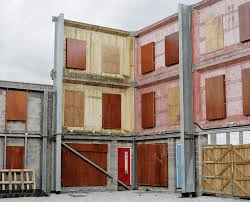
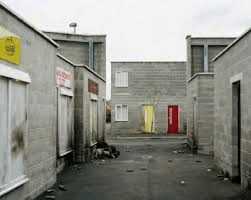
Pickerings images are of desolate fake urban areas where the police practice how they would deal with a violent riot situation. The images are after their training and there are no people in her work which I find quite disconcerting, the areas, although they look deprived are rather clean and clinical which also creates a sense of unease.

I don’t think Public Order is an effective piece of documentary since this training area assumes that riots only happen in urban areas when we know that they also take place in the countryside and different environments to what is described in these images.

I would imagine that since it is a training area that a documentary series of images would be more meaningful if they included people and what they use this area for, it would be less ambiguous and would not leave the viewer to construct the meaning as much as they would in this series.

“Behind Flicks Nightclub 2004” These images don’t make me feel comfortable, they are disconcerting
The lack of people in all these images creates ambiguity which is not documentary

Unit 1 Research: The Photograph As Document: Project 4: The Gallery Wall, Documentary As Art

Look online at Paul Seawright’s work, Sectarian Murders.
• How does this work challenge the boundaries between documentary and art? Listen
to Paul Seawright talk about his work at: http://vimeo.com/76940827 [accessed
24/02/14]
• What is the core of his argument? Do you agree with him?
• If we define a piece of documentary photography as art, does this change its meaning?

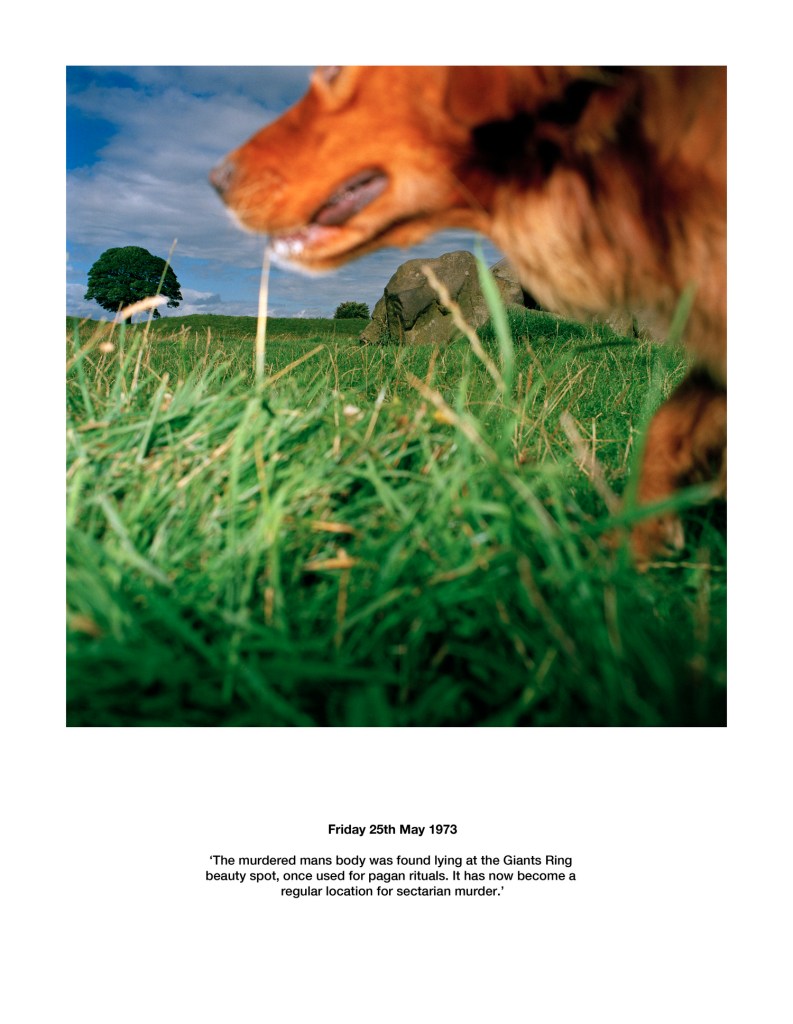
Paul Seawright revisited the scenes of Sectarian murders that took place in the 1970’s and photographed the area in present times, this challenges the boundaries between documentary and art because the images are not obvious in what they mean and the viewer has to come up with the meaning. A documentary photograph would include different elements and subjects within the image and would be taken without thoughtful composition. For example, the photograph below is an area where a murder took place but a dog has been photographed, this is art because if it was a documentary photo the dog would not have been included in the image and it would have possibly been at a wider angle than this.

The core of Seawright’s argument is that if an image is too explicit it is journalistic and if the image is too ambiguous it becomes meaningless to the viewer so the photographer has to strike a balance between the two. The image needs to be ambiguous enough to leave space for the viewer to derive meaning – it needs to be visually engaging and give it’s meaning up slowly to the viewer. Once the viewer knows the context they can resonate with all kinds of ideas associated with the image.

I think documentary photo described as art does change its meaning, the word art implies that there is freedom given to the photographer to include elements in the image that are not necessarily directly related to the story so is not true to the story in the purest sense.

Bibliography

Paul Seawright. (2020). Sectarian Murder — Paul Seawright. [online] Available at: http://www.paulseawright.com/sectarian [Accessed 26 Feb. 2020].

Unit 1 Research: The Photograph As Document: Project 2: Photojournalism: Research: Critical Debates Around Journalism

If you’re interested in the critical debates around photojournalism, try and make time to
find out more about at least one of these critical positions during your work on Part One.
Here are some questions to start you off:
1) Do you think Martha Rosler is unfair on socially driven photographers like Lewis
Hine? Is there a sense in which work like this is exploitative or patronising? Does this
matter if someone benefits in the long run? Can photography change situations?
2) Do you think images of war are necessary to provoke change? Do you agree with
Sontag’s earlier view that horrific images of war numb viewers’ responses? Read your
answer again when you’ve read the next section on aftermath photography and note
whether your view has changed. See also: http://lightbox.time.com/2014/01/28/
when-photographs-of-atrocities-dont-shock/#1 [accessed 24/02/14]
3) Do you need to be an insider in order to produce a successful documentary project?

1) Martha Rosler : Work can be exploitative or patronizing if it is taken from a distance and no relationship is developed with the people involved who are the subject of the story. Anthony Luvera, a British socially engaged photographer made work called “Taking Place” about the homeless. The approach was that the subjects were heavily involved in the process by taking their own images, learning photography so picked up a new skill, and through the process creating self worth and a sense of identity again.
As part of this project, questions were asked of local councils about what provisions are made for the homeless and effective change was made at government level that placed a legal obligation on councils to provide information to the homeless about where they can access basic facilities in the town or city they find themselves in. I am inspired by how this project has made a positive change to how the homeless are treated by local councils.

2) Susan Sontag’s  views that the viewer is becoming numb to horrific images was 39 years ago in her book “On Photography” written in 1981. This was true then but even more so today, but my view is that it is the same image in the same media format shown repeatedly that will numb the senses, so rather than the image numbing the senses, it’s the repetitive similarity that numbs the senses.

I agree that images of war are still necessary to provoke change, but people in today’s digital age take on information in a very different way to the way they used to in the 1960s and 1970’s the time period referred to by Susan Sontag’s book “On Photography” he best way to transmit information today is digitally and in sound bite format or a powerful image, or a combination of both, but the image really does have to be something that moves people, something that stands out as being unique or different – the lifeless body of Syrian refugee boy, Alan Kurdi dead on a Turkish beach was a photo that initiated action, it wa’s shocking and as it states in the Daily Sabah’s online article “Few photos shook the collective public conscience like that of the lifeless body of Syrian boy Alan Kurdi washed ashore in Turkey’s western coast”. Several EU countries including the UK and Germany relaxed laws to allow more migrants to enter. I agree that the same images of war will numb the senses, different images or an image that comes from a different angle either in its narrative or the image or both will still invoke a reaction of empathy and could be used as a vehicle for change. The process of making the images can be a vehicle for change too, socially engaged photographers like UK’s Anthony Luvera involves the homeless in taking photographs of themselves and their surroundings and this has helped raise the public and government awareness of the plight of the homeless around the UK. The difference in the image of Alan Kurdi and also Anthony Luvera’s work with the homeless is that the work breaks down stereotypes and forces us to think of the subjects differently, they are portrayed in a more human way that evokes more of an emotional response from the viewer.

Susan Sontag, despite saying that images of war have numbed the senses, she still makes reference to how a still image is more powerful than video which is moving images as moving images cancel each other out, she uses the example of Nick Ut’s photograph of the screaming napalm bombed Vietnamese child having more of an impact than moving images. Given that the Syrian child, Alan Kurdi’s photograph provoked similar outrage several decades on means that photography of this nature is still effective in creating change.

I find it interesting how Susan Sontag discusses the ethical stance of photography and what we think we “have a right to see” – this seems to have shifted significantly over time where more graphic violent images have become more acceptable viewing.

I enjoyed Susan Sontag’s five reasons why photographs fail (Pg : 23 On Photography) I can see how through these five points she may think that images of war can be less effective than initially intended :

i) “A photograph is both a piece of time and of space. By including or
excluding things its arbitrary boarders both create and break relationships. This temporal and spatial dislocation results in social reality being presented
as small discontinuous particles”.

ii) A photograph only shows us the surface, so it has many meanings
and encourages us to deduce or intuit what the reality was like.

iii) Photography can only give us knowledge of the world if we accept the
world as we see it ‘But this is the opposite of understanding, which starts from
not accepting the world as it looks’. Photographs have a use in giving us
mental picture of things, but they always hide more than they reveal. She
quotes Brecht as pointing out that a photograph of the Krupp works show
very little of that organisation. The ‘amorous function’ is based on looks but
understanding is based on functions, which takes place in time and so can
only be explained in time. ‘Only that which narrates can make us understand’

iv) While photographs can arouse conscience this is only a semblance of
ethical or political knowledge because it is always sentimental (whether it be
cynical or humanist).

v) By duplicating the world in such a comprehensive way it has made the world seem more available than it really is

3) I don’t think it is necessary to be an insider to produce a successful documentary project. I think it is how photographs are taken and the narrative the photo, or series of photographs portray. The plight of wildlife and plastic invading their environment is evidence of this, one does not have to live with and get to know the animals or the people, it may help you get the job done quicker and add a richness to the narrative though. With patience and tenacity and fully understanding the issues at hand through research and talking to people who know about the issue at hand, successful work can be created and a desired response achieved. There is a lot more to a documentary project than simply being on the inside of the story, it is choosing the correct series of images, telling the story with different image types, placing the images in the correct medium at the correct time to name a few considerations that all make a successful documentary project.

Bibliography

DailySabah. (2020). West deaf to migrants’ plight four years after Alan Kurdi’s death. [online] Available at: https://www.dailysabah.com/syrian-crisis/2019/09/02/west-deaf-to-migrants-plight-four-years-after-alan-kurdis-death [Accessed 24 Feb. 2020].

Anthony Luvera. (2020). Anthony Luvera: Taking Place – Anthony Luvera. [online] Available at: http://www.luvera.com/taking-place/ [Accessed 24 Feb. 2020].

Unit 1 Ex1: The Photograph As Document: Project 1: Eyewitnesses? : The Impact Of Citizen Journalism

Find some examples of news stories where ‘citizen journalism’ has exposed or
highlighted abuses of power. How do these pictures affect the story, if at all? Are these pictures objective? Can pictures ever be objective?
Write a list of the arguments for and against. For example, you might argue that these
pictures do have a degree of objectivity because the photographer (presumably)
didn’t have time to ‘pose’ the subjects, or perhaps even to think about which
viewpoint to adopt. On the other hand, the images we see in newspapers may be
selected from a series of images and how can we know the factors that determined
the choice of final image?
Think about objectivity in documentary photography and make some notes in your
learning log before reading further.

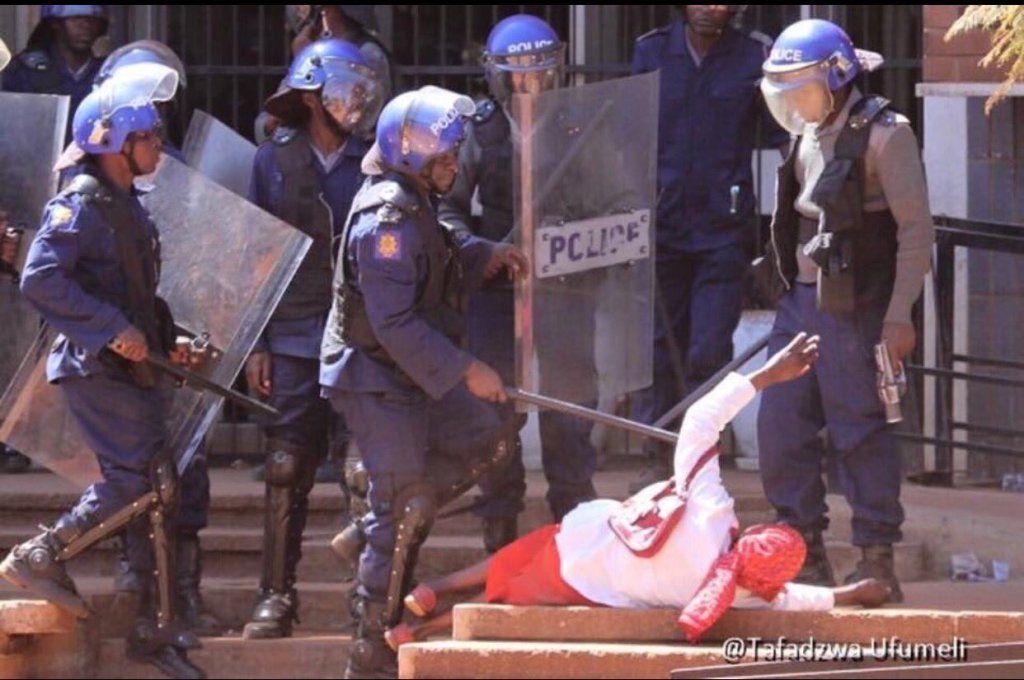
This image shows very clearly an abuse of power with victims being woman and men standing by only being able to watch. This version of reality could have other versions such as what happened to lead to this version of reality? Violence against the police that was unlawful? The use of batons is a version of reality that cannot be disputed however, this is a very obvious abuse of power.
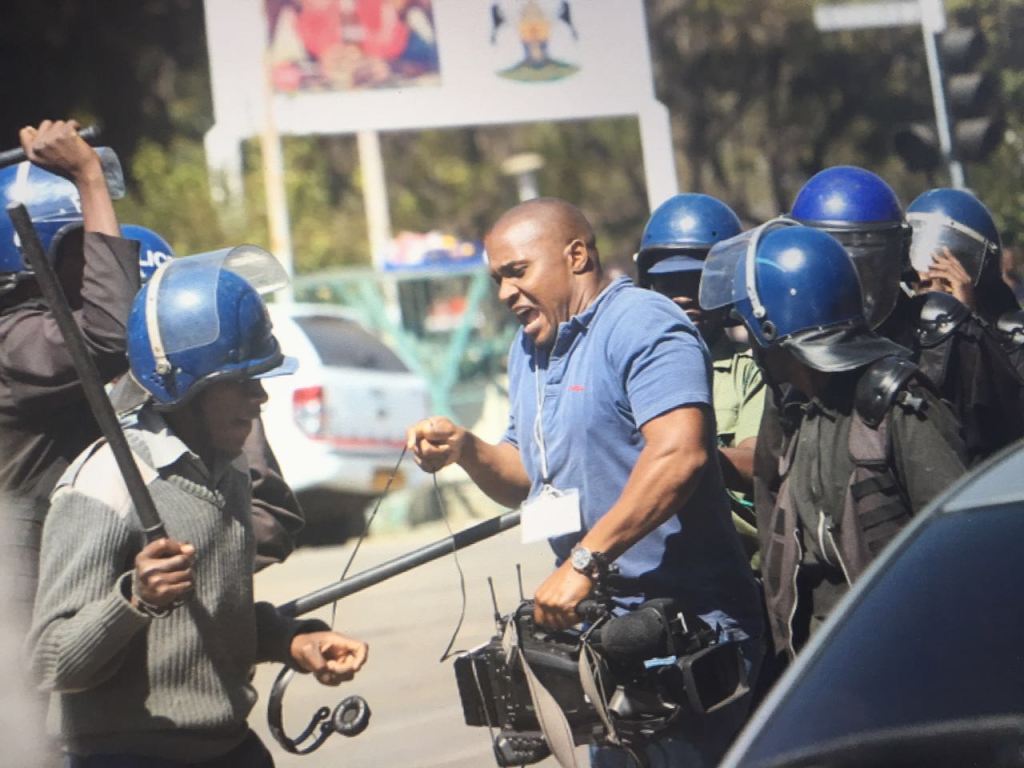
This image gives the impression of abuse of power, where the journalist is greatly outnumbered by police. The cameraman’s expression has been caught well, this adds to the drama and the emotive feel
This image is particularly disturbing because the victim is a woman, what the photographer has allowed us to see in this version of reality is many police and only one victim, giving an exaggerated impression of force and abuse of power. It could be the case that this was the only woman on the street but we have no context to this image, there could be a violent crowd behind her that is being contained by some other means, but we don’t know.

This is the first time I have come across the term “citizen journalism” and it appears I am familiar with this sort of activity but not necessarily the term. I lived and grew up in Zimbabwe where “citizen journalism” is something that has helped to get the truth out to the rest of the world about the corrupt dictatorship government and the abuse of power among the military and the police to enable them to silence protesters. 

Photos taken that expose abuse of power will have an emotional effect on the audience, these images often provoke outrage and anger, in the world of “fake news” and the use of this to promote a cause or an individual, these sort of images create the desired effect of lots of sharing of images and also comments. A strange irony exists around this concept, where the citizen journalist could become the one who is abusing power by circulating shocking images for self promotion rather than highlighting an issue. 

There are pros to this approach in that it highlights injustices and can be a catalyst for positive change, but this approach can be an emotional response by protestors to years of suffering and therefore one sided, so I don’t think these photos can ever be objective. There are also situations where there are violent attacks by ordinary citizens against the police, looting of shops and destruction of buildings and vehicles during these protests, these photos are not taken, or if they are taken, they are not shared to show a balanced approach to the story telling. 

Objectivity in documentary photography, 

Objectivity must be difficult if it is about human or animal suffering of any kind and the nature of the relationship the photographer has with the subject(s), the closer the relationship the more difficult it becomes to remain objective.Photography has become a very powerful medium to communicate human or environmental issues, with this comes the responsibility of the photographer to produce work that is objective. 

It’s important to remember the note from the coursework content, that when we look at an image, we are not looking at the actual scene but a piece of paper with various subjects within it, this is just one version of reality, reality and the image we see before us are very different things and tell very different stories