Recreate a childhood memory in a photograph. Think carefully about the memory you choose and how you’ll recreate it. You’re free to approach this task in any way you wish.
Does the memory involve you directly or is it something you witnessed?
Will you include your adult self in the image (for example, to ‘stand in’ for your childhood self) or will you ask a model to represent you? Or will you be absent from the image altogether? (You’ll look at the work of some artists who have chosen to depict some aspect of their life without including themselves in the image in the next project.)
Will you try and recreate the memory literally or will you represent it in a more metaphorical way, as you did in Part Two?
Will you accompany your image with some text?
In your learning log, reflect on the final outcome. How does the photograph resemble your memory? Is it different from what you expected? What does it communicate to the viewer? How? It might be interesting to show your photograph to friends or family members – perhaps someone who was there at the time and someone who wasn’t – and see what the image conveys to them.
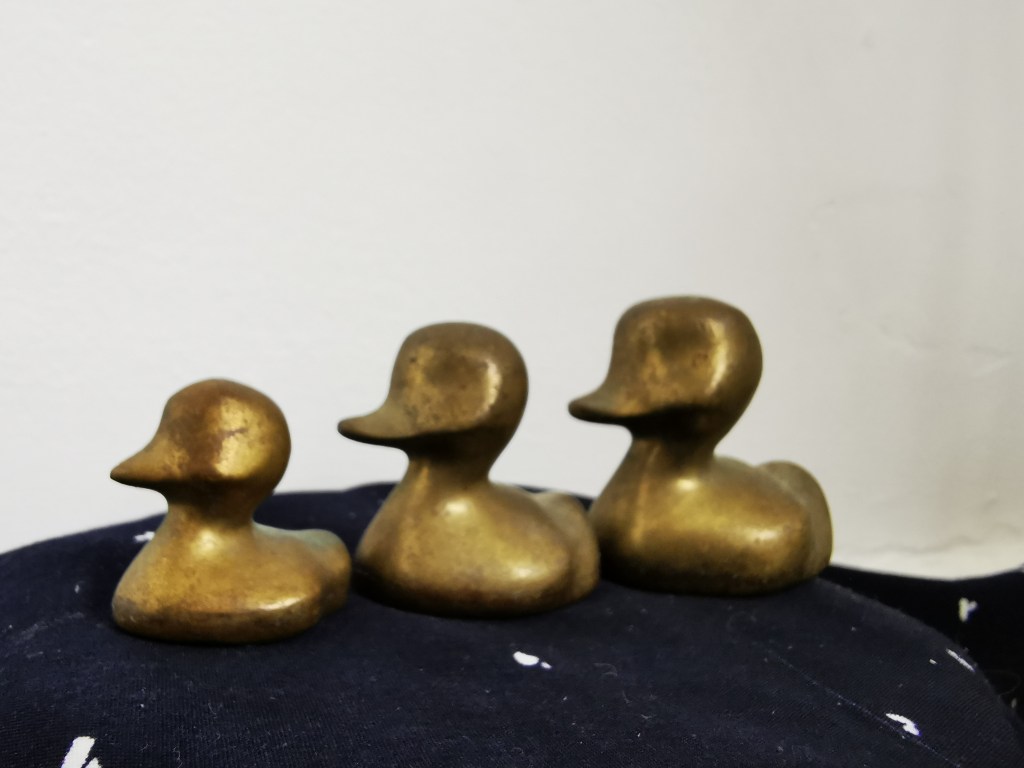
I chose to use two objects from my childhood that bring back memories for me of my mother when I was young. The material background is a dress once owned by my mother who passed away fourteen years ago. She would frequently wear it when I was a child, and when I last saw her I commented on how lovely the dress was so much that she gave it to me. From that day on, now some twenty years ago, I have been striving to lose weight to be able to wear it one day, I fear that day will never come. The dress now hangs in my bedroom as a memory of her. The three brass duck ornaments were once in my childhood home and I was given them when my Mum died. These ornaments my Mum especially treasured and instantly bring back memories of my time with her and how she used to tell me how much she loved to collect brass ornaments and which one she next wanted to buy to add to her collection. This photograph of a childhood memory is recreated in a literal way rather than metaphorically and the image would have to be accompanied by some text for it to be meaningful to anyone else but me.
Childhood memories, brass ornaments from my childhood home on a dress my Mum used to wear when I was a child.
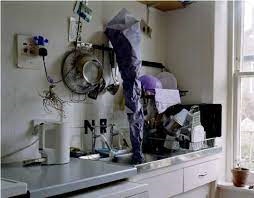
Go to the artist’s website and look at the other images in Shafran’s series. You may have noticed that Washing-up is the only piece of work in Part Three created by a man. It is also the only one with no human figures in it, although family members are referred to in the captions.
● In what ways might a photographer’s gender contribute to the creation and reading of an image? ● What does this series achieve by not including people? ● Do you regard them as interesting ‘still life’ compositions? Make some notes in your learning log.
Gender plays a part in what a person chooses to photograph and how. Women tend to bring emotion and people into their work, although some very talented male photographers have done the same, Martin Parr, for example, and Daniel Meadows.
The reading of an image could be read differently depending on gender, women tend to look at small details, men are more objective perhaps. Woman like Francesca Woodman and Sophie Calle express their own emotions through the creation of images.
Shafran’s series achieves an opportunity to look into the private spaces in the home of a person which reveals a great deal of information about a person. The everyday objects that are usually not the subject of the photograph but rather a distracting background object are of interest to Sharfran and reveals a great deal about a person. His work reveals a house that is in it’s normal state, something visitors rarely see because it would all be tidied away before they visit.
I do regard Shafran’s work as interesting still life compositions because it is not what would traditionally be considered an attractive photograph and therefore catches my attention. Unusual subject matter is interesting, particularly when there is a lot going on in the photograph which makes you return to it several times and discover something new that you didn’t notice before.
Is there any sense in which Lee’s work could be considered voyeuristic or even exploitative? Is she commenting on her own identity, the group identity of the people she photographs, or both?
Would you agree to Morrissey’s request if you were enjoying a day on the beach with your family? If not, why not?
Morrissey uses self-portraiture in more of her work, namely Seven and The Failed Realist. Look at these projects online and make some notes in your learning log
Notes:
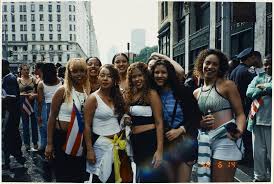
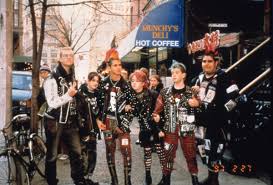
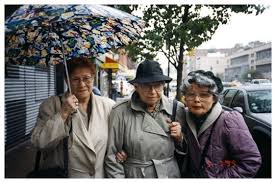
Nikki Lee, Korean born photographer who studied in America and now lives in Seoul. She is best known for her “Projects” series (1997-2001) where she dresses up as different personas such as a skateboarder, school girl, punk, elderly person and so on.She mimics their style and mannerisms in the images. Photos are taken with a disposable or small camera to put people at ease. The work is candid and familiar, the work of an unassuming amateur to give the feeling of authenticity. There are digital date stamps on each image to add to the perceived authenticity of the work.
The modern, potentially similar version of self representation is what images we choose from our life to add to social media and which ones we choose not to show. A collection over time of a certain theme of images the author has chosen creates a view that is not an accurate account but what the author chooses to show. For example, always happy photos and only photos on day trips or holiday creates an image of a jet set lifestyle. Filters used on Instagram and Snapchat are also a form of self representation, some images on social media look nothing like the person they are supposed to be.
Nikki Lee – The Schoolgirl ProjectThe Hispanic ProjectThe Punk ProjectThe Seniors ProjectThe Hip Hop Project
Is there any sense in which Lee’s work could be considered voyeuristic or even exploitative? Is she commenting on her own identity, the group identity of the people she photographs, or both?
Her work is in a sense voyeuristic as it gives the viewer a look into the world of a certain group of people, what they look like, how they live and behave,and in what surroundings. She is commenting on how her own identity is not ever static and singular, she is commenting on how in the Western world people can choose their identity, but in the East this is not possible to the same extent.
2. Would you agree to Morrissey’s request if you were enjoying a day on the beach with your family? If not, why not?
I would not be accommodating of Trish Morrissey’s request if it was not planned and was spontaneous because time with my family is precious and I would want to make the most of it. This view is probably because my children are older and I have less time with them now than I did have, I think my view would be different if my children were younger and trips out were a regular activity.
I can understand how people would find this request intrusive, or false or uncomfortable, but I understand the intention behind the work, if people were not properly briefed I think there would be more resistance to such a proposal.
Trish Morrissey uses self-portraiture in more of her work, namely Seven Years and The Failed Realist. Look at these projects online and make some notes in your learning log
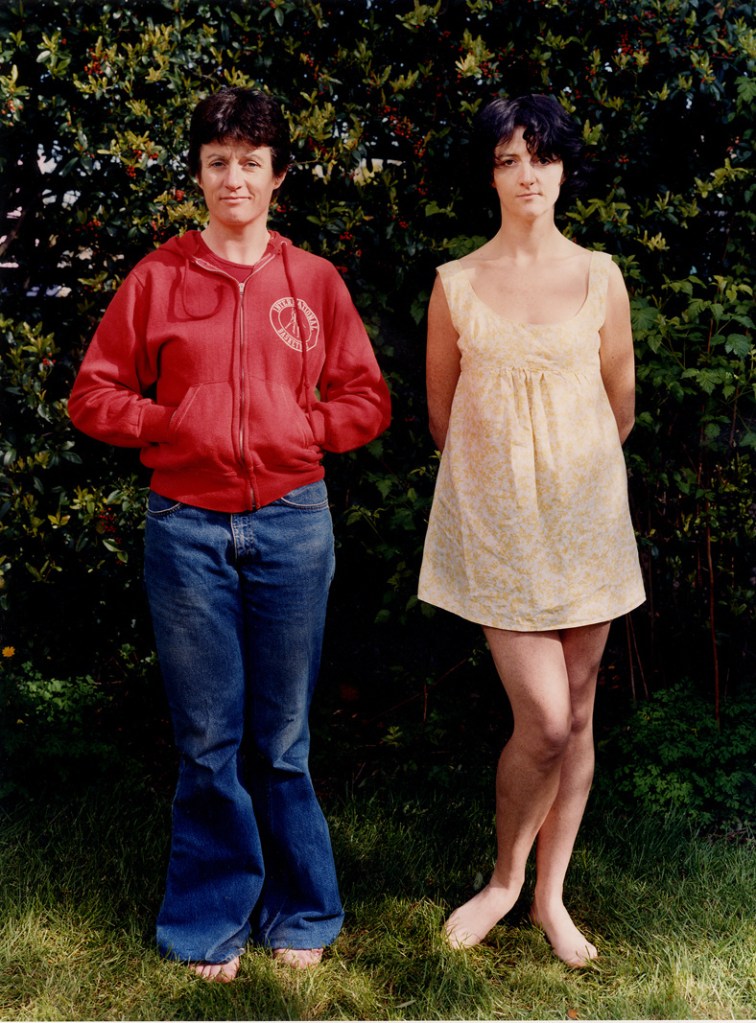
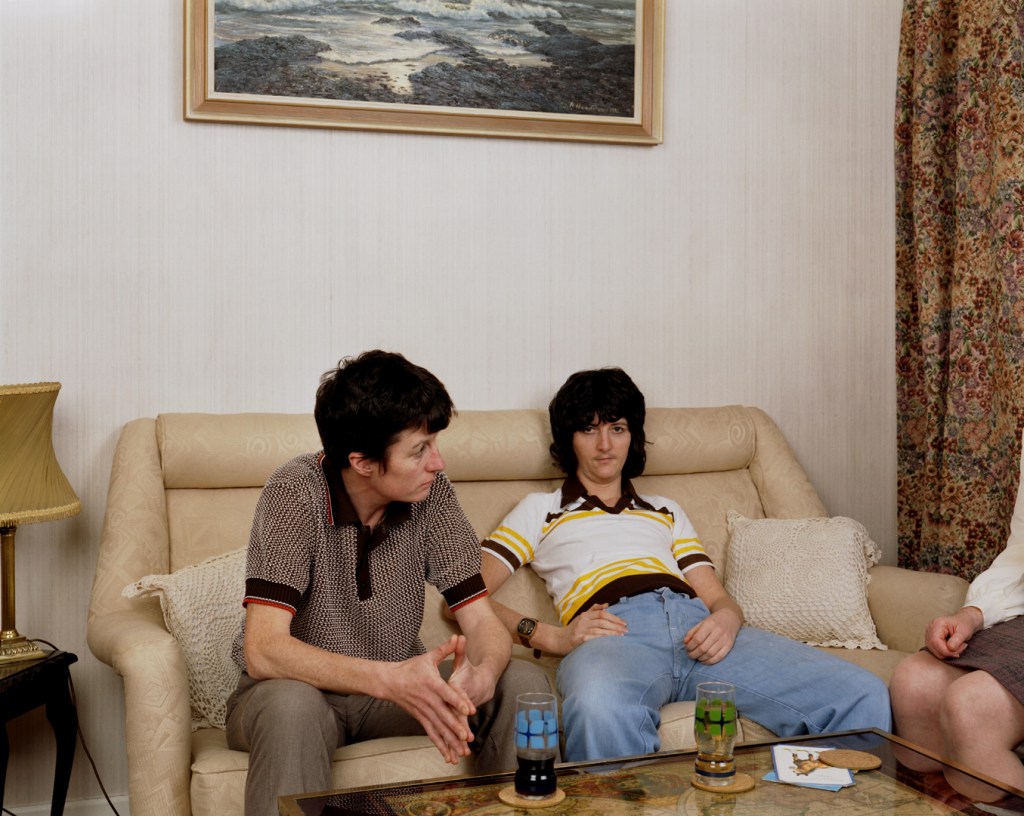
Seven years was made between 2001 and 2004 and the images are recreations of what would be found in family photo albums from the 1970s
Morrisey uses her sister as a model as well as herself and they recreate work that looks like a 1970’s 80’s style snapshot but has been taken in modern times. She cleverly recreates the body language that can bee seen in many snapshot images in family albums such as closed eyes and finger smudges across the lens that affects the image. Morrisey even dresses up as her brother to recreate one image.
Trish Morrissey – 7 Years Trish Morrissey – 7 YearsTrish Morrissey – 7 Years
The failed realist – Trish Morrissey
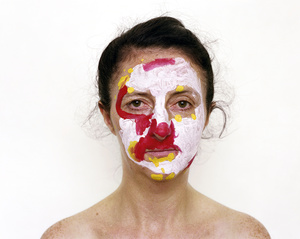
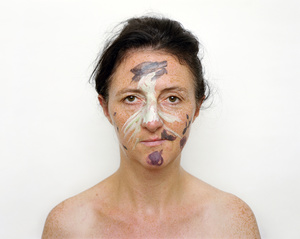
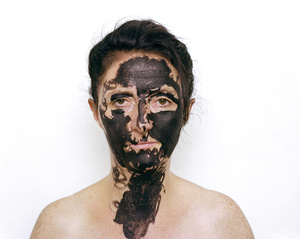
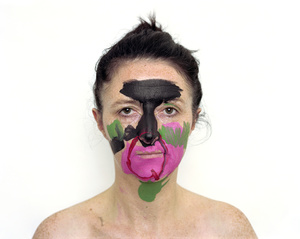
The psychologist Georges-Henri Luquet (1927/2001) referred to the Failed Realist stage as a stage in childhood development. Between the age of 4 and 6, children’s physical development is not capable of visually representing their thoughts or words. This work was made with Morrisey’s daughter in 2011. Her daughter was between 4.5 and 5.5 years old while this work was made. Her daughter painted events or things from recent experiences on Morrisey’s face.
Many artists felt this childlike innocent approach showed direct access to the expressive self and tried to emulate this in the abstract paintings as a “return to innocence” Picasso, Miro and Klee painted in this style with great success.
Trish Morrisey – The Failed Realist – The Tooth Fairy Trish Morrisey – The Failed Realist – Spotty CatTrish Morrisey – The Failed Realist – Penny the LabradoodleTrish Morrisey – The Failed Realist – Superher
Reflect on the pieces of work discussed in this project in your learning log and do some further research of your own. Here are a few questions you might ask yourself: ● How do these images make you feel? ● Do you think there’s an element of narcissism or self-indulgence in focusing on your own identity in this way? ● What’s the significance of Brotherus’s nakedness? ● Can such images ‘work’ for an outsider without accompanying text? ● Do you think any of these artists are also addressing wider issues beyond the purely personal? Make some notes in your learning log.
Notes:
Elina Brotherus – a finnish photographer and video artist, specialising in self portraits and landscapes. An exploration of herself and as a study of her circumstances – an excellent example of using photography as an investigative tool
Annonciation is a word based on Ennunciation which is the announcement of the birth of Jesus to Mary, a virgin birth. The exhibition called Annonciation in 2004 at The Photographer’s Gallery – London – details her IVF treatment over a 5 year period – the title that refers to Mary’s immaculate conception is in direct contrast to her own experiences
Involuntary childlessness is such a taboo subject still and the artist sets out to break this taboo.
In Elina’s video interview below she mentions that she does not like smiles in a photograph because it fixes the meaning immediately, I have often wondered why many artists do this.
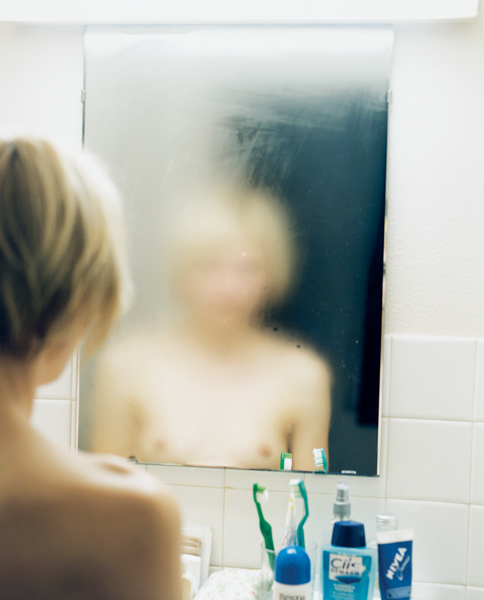
She also uses the body in many of her images but a “showing and hiding” theme such as a steamed up glass showing and hiding parts of the body. An image with a gazing ball is another example
Showing and hiding is a theme in a lot of Elina Brotherus’s work Showing and hiding – Elina Brotherus
Family portraits have become more thought provoking and honest in some photographers’ work like Sally Mann, Elinor Carucci, Richard Billingham and Tierney Gearon – they have moved from the stereotypical nice cute photos expected in this genre to a more realistic portrayal of family.
How do these images make me feel?
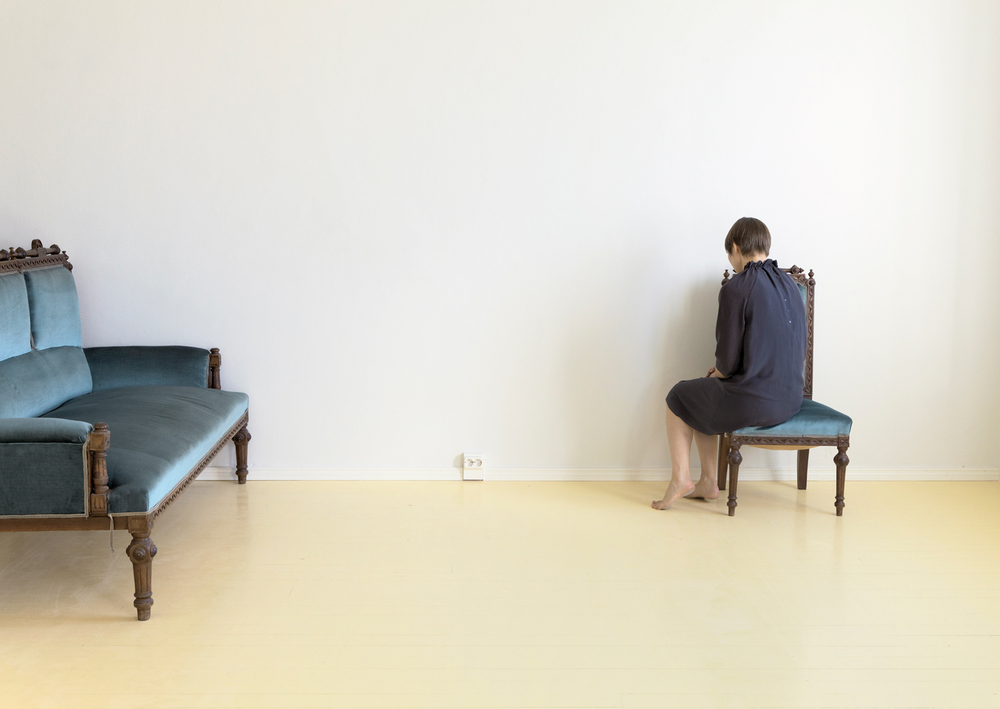
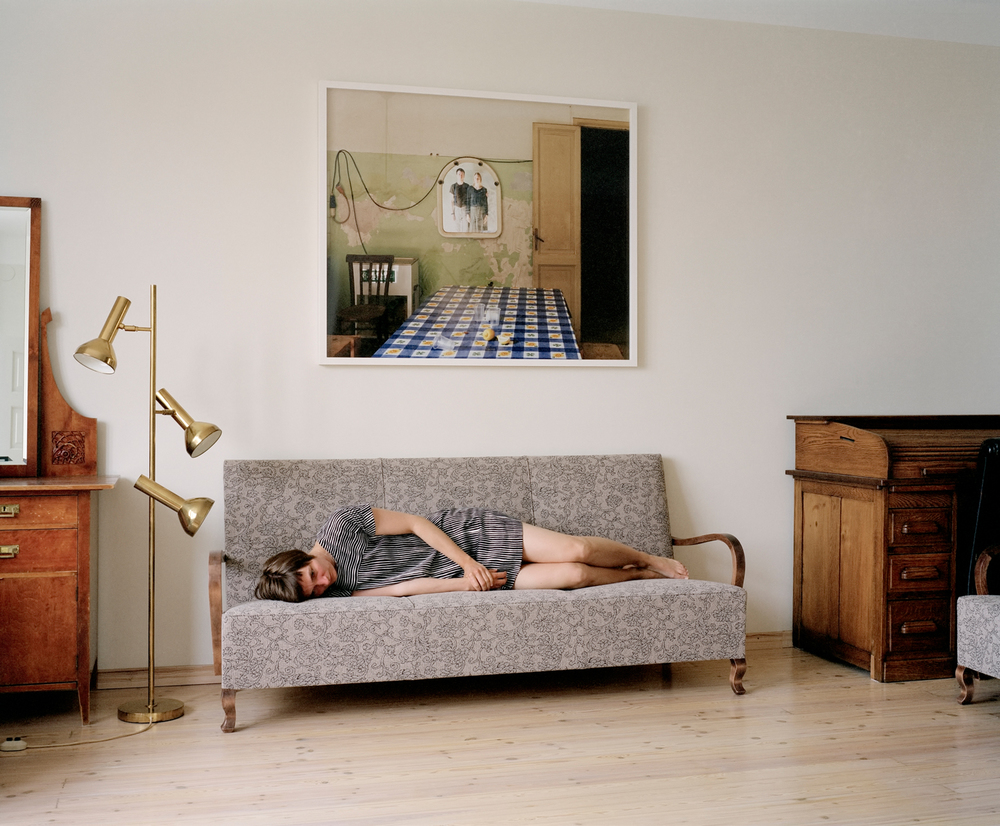
Sadness is the main feeling when looking at her work, the starkness of the interior adds to this feeling but the eyes, sloped shoulders and the artist looking down or her back to the camera portrays negativity. The starkness of the images adds to the sense of loneliness she is feeling and this comes across. The sense of loneliness also comes across with her use of negative space which could be interpreted as voids or literal emptiness in the home where a family should be occupying this physical space.
Annonciation
Do you think there’s an element of narcissism or self-indulgence in focusing on your own identity in this way?
Yes I do think there is an element of narcissism in these images because they are based totally on herself, however, she has made a point that she hopes these images show the outside world what it’s like when infertility dosen’t work for a large group of people who are overlooked in the media. There is an irony that although the work is focused on herself, many people will be able to relate to this and it may highlight their plight, give other people like her a voice, and create a positive outcome in a change of attitude and support for people in this unfortunate situation.
What’s the significance of Brotherus’s nakedness?
It is as if the artist is allowing the viewer into her personal, private space that is hidden from the outside world when she steps out the door of her home. It could be a glimpse behind the curtain not often seen. The nudity is a shock factor that grabs people’s attention, so if the purpose of the work is to do this, the use of her own naked body in the work will help to achieve this.
Can such images ‘work’ for an outsider without accompanying text?
I don’t think it works for an outsider without accompanying text because there is a specific message the artist wants to communicate to an audience and so the text ensures there is no ambiguity and the message is therefore controlled.
Do you think any of these artists are also addressing wider issues beyond the purely personal?
Yes I do believe this. She is addressing the lack of support and awareness of the large group of people who are unsuccessful after receiving fertility treatment. She makes the comment that the media only focus on the rare success stories that are more popular.
Research Task: Francesca Woodman ● Look up the work of photographer Francesca Woodman online. ● What evidence can you find for Bright’s analysis?
Bright’s analysis:
“It is difficult not to read Woodman’s many self-portraits – she produced over five hundred during her short lifetime – as alluding to a troubled state of mind. She committed suicide at the age of twenty-two.”
Bright, S. Auto focus: The self-portrait in contemporary photography (2010)
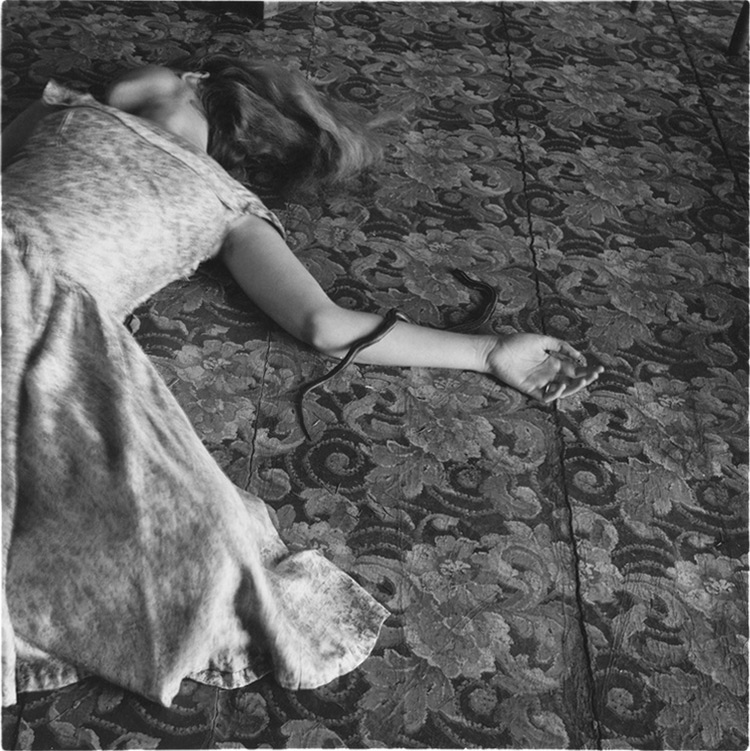
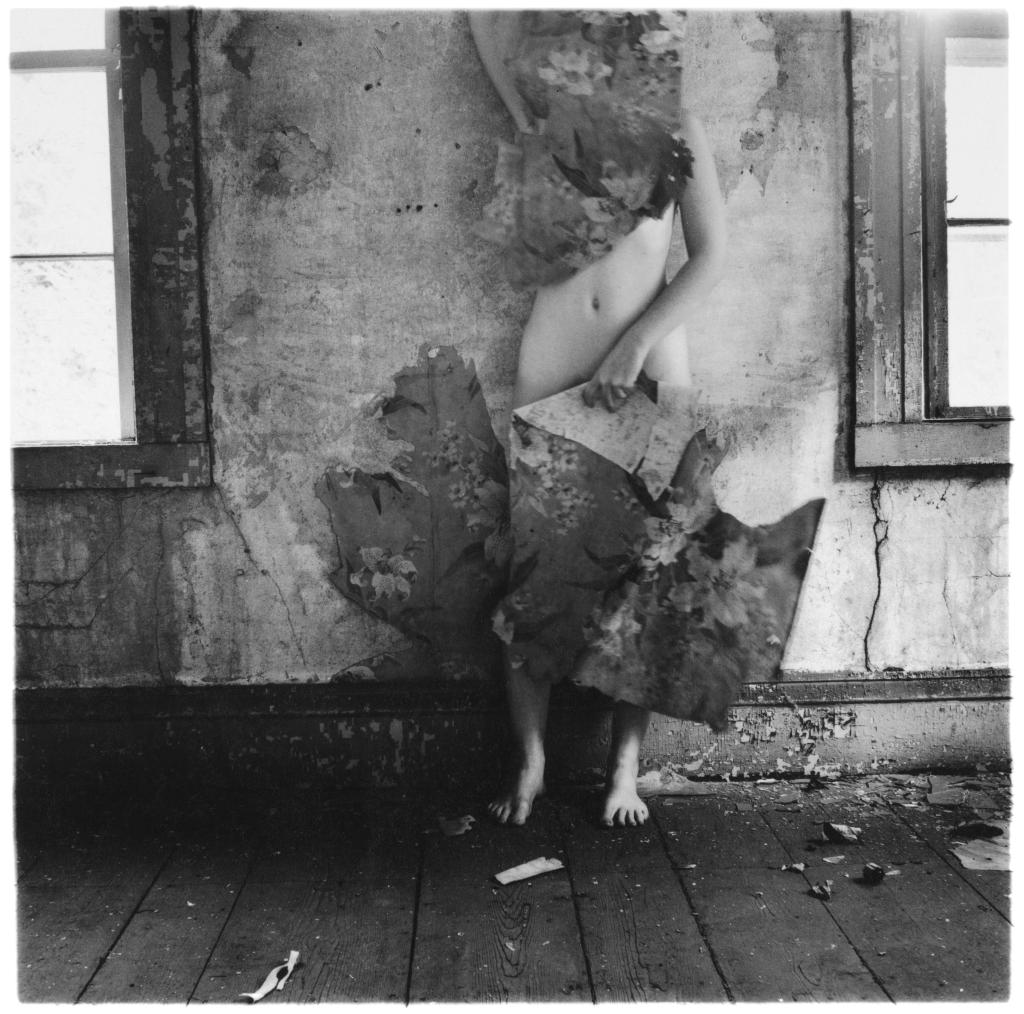
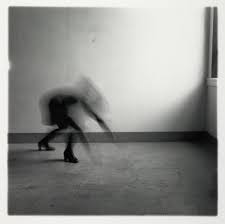
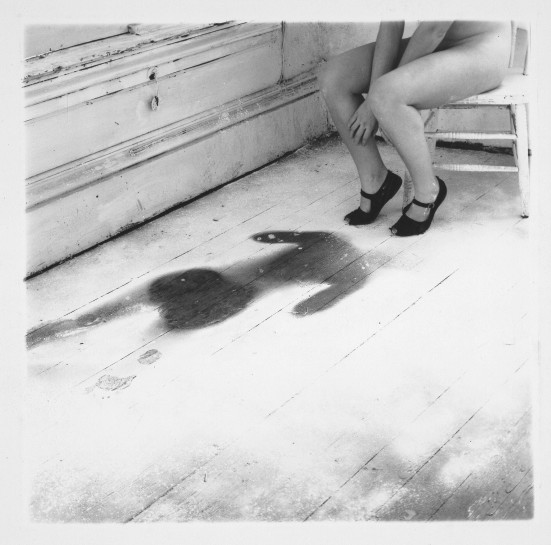
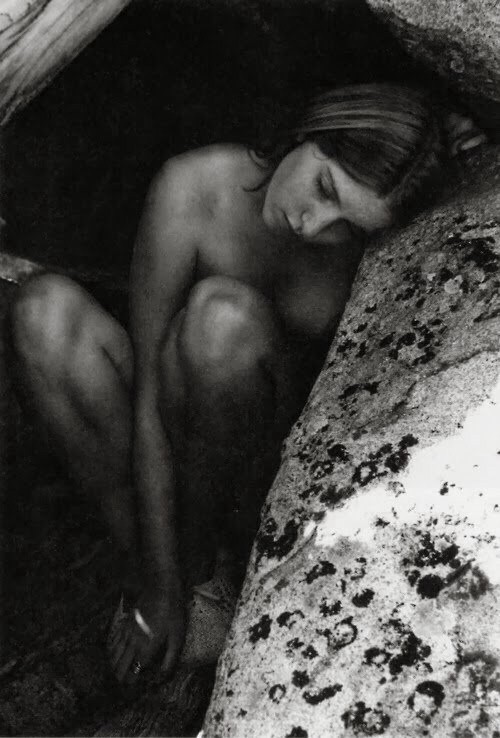
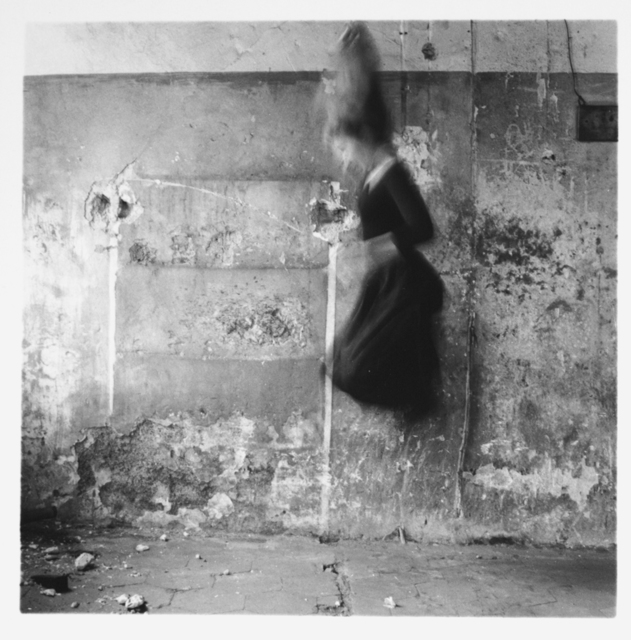
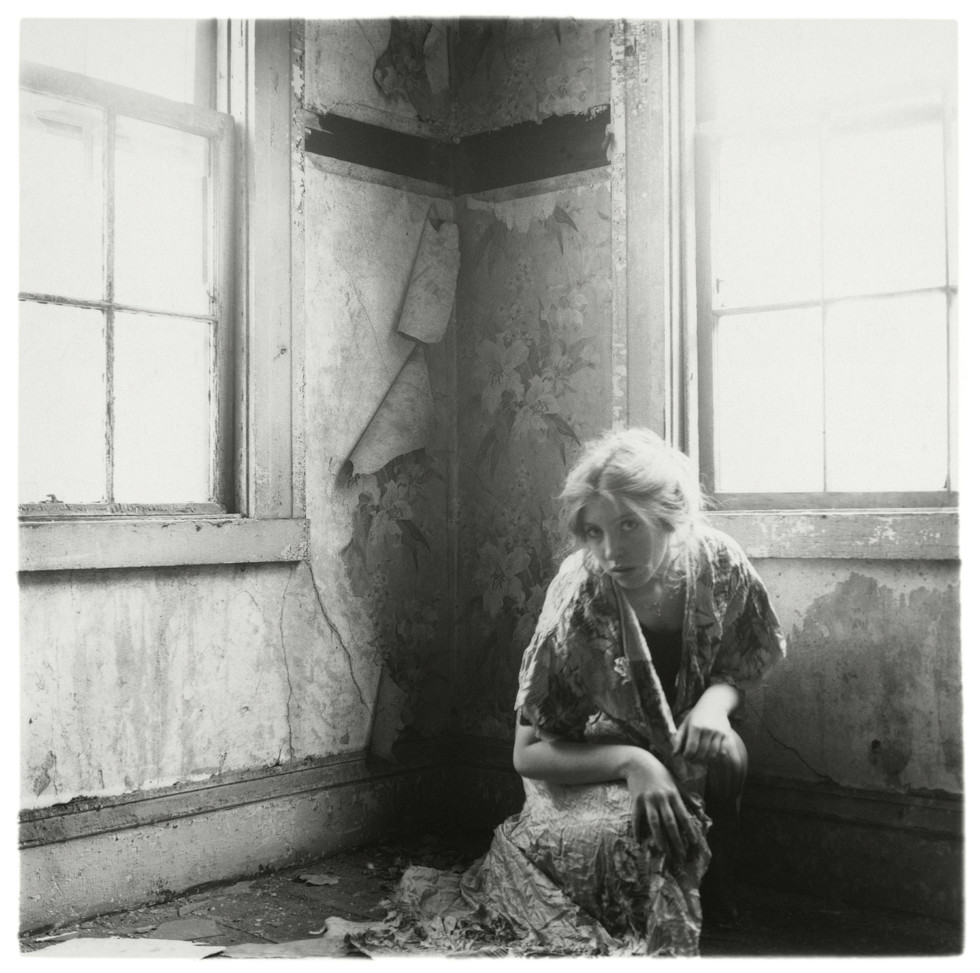
Francesca Woodman (1958–81) explored issues of gender representation and the use of the female body in her work. Self-portraits dominate her substantial portfolio, often portraying dark psychological states and disturbing scenes. She uses her body, locations and props to evoke a sense of surrealism, mystery and vulnerability. In Space 2, (Tate, 2019) for example, her body almost disappears into the blur of movement. This visual strategy recurs in her work and, since her death, has been interpreted as Woodman using photography both to present herself to the camera as an exhibitionist and to help herself disappear.
The work of Fransesca Woodman
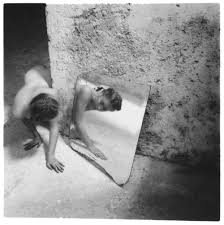
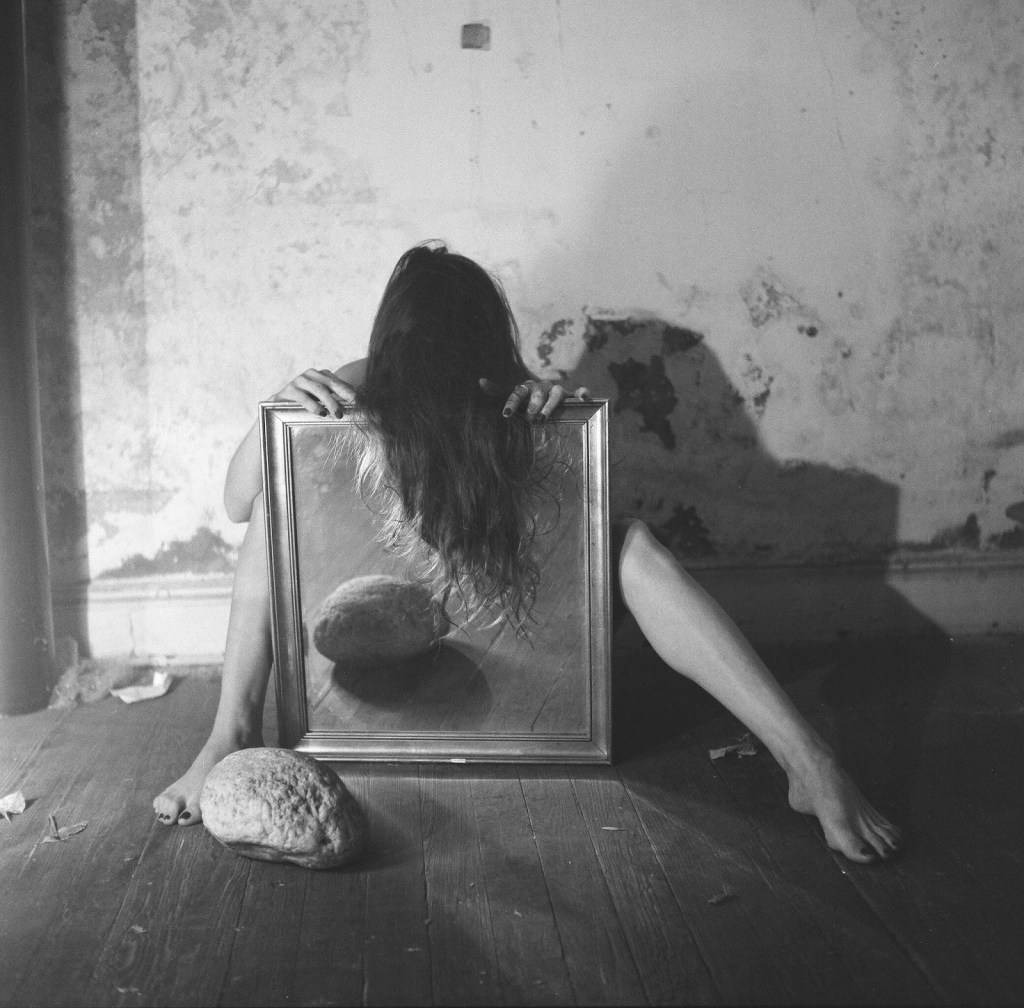
Her work was in black and white and her body is used in many of the images as can be seen in the slideshow below. Her face is hidden in several images and some with her eyes closed, showing how she is sending a message about her state of mind and her body image.
The derelict house with decaying decor also represents her state of mind. The snake shows her vulnerability and perhaps a message that she was in danger.
Blurred images and a focus on her shadow come through in her work where this perhaps eluded to how she felt, as if she didn’t really exist,or a desire to not exist.
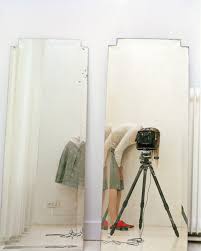
There are several images I found that Woodman made of the female body and the representation of this in a creative way using props such as wallpaper or a mirror.





 Jenny Stork: Photography 1: Context & Narrative