Photobooks : J. Colberg

My tutor suggested further reading around editing and sequencing of images, this is an area I need practice and to develop an effective techniqe

Some notes I took from the book so far :

The book’s concept is very important

Elements of the story can be introduced at first without being related – the viewer trusts the author that the story will be revealed later on in the book and they can make sense of the photos – eventually things will start to relate to what has been seen before

Use double sided tape so can attach and remove images either from a wall or a dummy book

Dont put too many different layouts and image sizes for different spreads

Start edit and sequence and simple layout with a basic dummy – and then when happy refine other bits.

Simple decisions and ideas lead to a complex and truly immersive book – Mariela Sancan (Moises) – the book is unfolded to discover portraits of an old man in his 70’s – her dad died from suicide and this searching experience in the book reflects her pain.

Design :

  • How a page works
  • How to pace information
  • How text can support an image and vice versa

Design is not what the photographer wants but what the work in question demands

Most photographers are not trained designers- approaching a professional designer early on in the process is a good idea – find graphic and physical manifestation of your photographic ideas

Tien Van Der Heijden – Dutch Designer

2 books on either side of the design spectrum : Walker Evans – American Photographs and Interrogations, Donald Weber

A designer that knows how to read the language of photography can have input on the editing too

Design helps telling the story in a physical form that adds to the intention of the story

Limited budget will force you to enhance the essentials and the basic elements – often making the work stronger as a result

The Dutch Photobook – Aperture 2012

The photobook, A History – Martin Parr

Kuipers 10 golden rules pdf

Physical aspects : the colour cast across a book especially if its a budget print

Choice of paper, type of printing and type of binding will all affect the outcome

Perfect Binding – a common cost effective binding, restricts opening – avoid detail close to the middle – there is no perfect binding option and with age a physical object will deteriorate no matter what the quality of binding used

Richard Benson describes the difference between a photobook and an exhibition :

“How naive are we to think that we can see it all at first glance when hung on a wall or on a computer monitor. The book solves this problem, we can look long and hard without distraction and return to it again and again. Photographs can become like old friends, and like the best of them they can reveal themselves endlessly as we come to know them better”

In my own work

I need to start to print out my work and get the editing and sequencing part of my work better – put images on the walls and live with them

Need to find a partner that can critically evaluate my work and I can work with going forward

Become familiar with a number of photo books to inform your own work – try to understand whether they work, how they work – how their different elements come together and how design helps to support the work

Bibliography

http://jmcolberg.com/weblog/extended/archives/how_to_make_a_photobook/

http://harveybenge.blogspot.com/2012/03/photobook-some-thoughts-on-editing-and.html

http://jmcolberg.com/weblog/2012/04/review_the_dutch_photobook_by_frits_gierstberg_and_rik_suermondt_eds/

A1 Research : Two Sides Of The Story : Lorca diCorcia

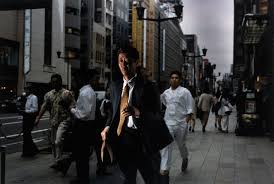
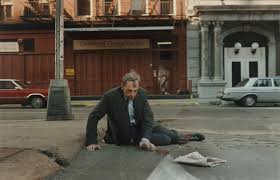
Feedback from my tutor about assignment 1 suggested further reading into the work of diCorcia- his method was to set up a camera a distance from where he is located and use a remote control to operate it, so people are photographed without their knowledge in a completely natural state

The main points I noted from watching the youtube video were :

The method of making work was to :

  1. Set up the lighting rig and the scene ( the dramatic elements)
  2. Use a polariod with actors and construct the scene in advance and test the result
  3. Let the subject walk into the frame – these can be either known or unknown people

I classify people into different archetypes, most of the time they are not like that but I manipulate them to be like that.

To photograph people in the street effectively you have to sensitise yourself to the subtle clues

A photo captures a moment of truth and diCorcia operates to disrupt this completely

Often he didn’t know his subjects because of his methodology

The interior of a person is very different to the exterior, “life is a performance”

Because of the physical distance from which the images are taken, this gives the viewer alot of authority to interpret and experience the images in the way they want to.

The eye level cinematic approach to making his work is what draws the viewer in and makes them more real and engaging

The idea you can manipulate people and the world in this way is an interesting and compelling motivation for me.

For my own work: this was a very quick diagnostic assignment, diCorcia took over 3000 images to make a series of 17 – so lots more work and photos needed to be able to create something I am happy with

Setting up with a tripod, perhaps at a cinema style level which is square and a level aspect would give more impact – use a remote for taking the shots

Think about lighting, this has a huge impact on the feel of the image

Bibliography

Lorca diCorcia, P. (2014). The Hepworth Wakefield: Photographs 1975 – 2012 .
[online] Available at: https://www.youtube.com/watch?v=So_FK4qnz5Q [Accessed 21
March. 2020].

Barrett (1986) Photographs & Contexts Art Education, Vol. 39, No. 4. (Jul., 1986), pp. 33-36

Below are key notes from recommended reading from my tutor after my A1 submission.

Photographs are segments excised from large real-world situations

Photographs are instants frozen from a real-world temporal flow

We ought to replace a pictured segment back into the unpictured world – we need to do this to understand what a photographer has done and what the picture is about

Understanding the difference between a picture and the reality of where the picture was made is essential to understand and appreciate the photograph

Understanding the difference between a picture and the reality from which it was made is essential to understand and appreciate the photograph

Internal context : that which is given in the photograph – how form and subject combine to express – this is an obvious starting point for any photo – methodologies for investigating the apparent in a photo need to be considered – some photographs only need internal context to understand their meaning, a general knowledge of culture and careful attention to what is being shown is enough. Depth of field, ISO, exposure and other technical aspects are also used to express meaning and need to be considered too.

Original context : refers to what is broadly physically and psychologically present at the time the photographer made the image – the photographer’s intent, the intellectual, sytlistic and imagistic thoughts of the photographer. Knowledge about circumstances surrounding the photograph makes it more than what is obviously displayed and therefore more meaningful.

External Context: refers to the photographers presentational environments – how and where it is being presented, how other interpreters have understood it and where it is placed in the history of art. The meaning of any photo is highly dependent on the context in which it is placed.

Learning how critics and historians think and work and sometimes adopting this approach may benefit students

Students should examine how presentational environments influence the meaning and understanding of a photo

Photographer, editor or curator who has put text next to a photograph? Students should seek to know this to understand the meaning of the image

An editor or curator are forms of interpretation only and are therefore not part of the photo

Take advantage of alternative viewpoints when studying a photo

Simple name, date, title, medium, size and source of the reproduction are clues to the meaning

An untitled photograph could be considered a work of art because there is no title

What was going on in the art world and social and historically when the photo was made?

The photographer can alter the meaning and emotional effect of a photograph by surrounding it with other photographs

Curators arrange photographs for new theoretical insights and greater emotional impact.

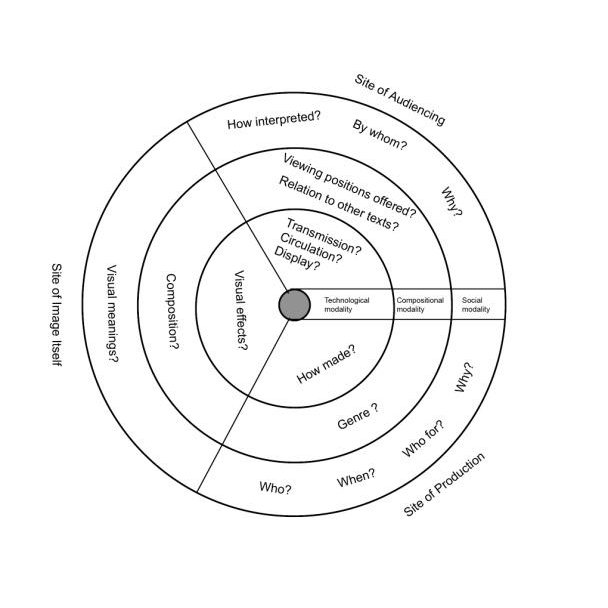
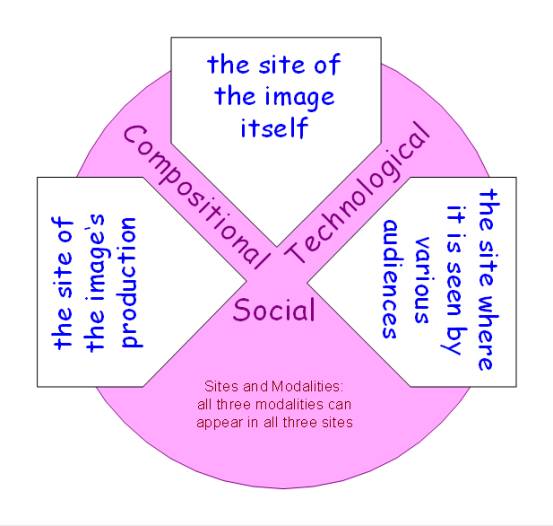
Taken from Gillian Rose : Visual Methodologies

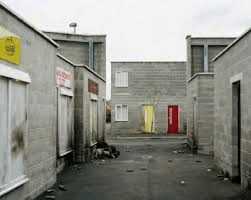
Unit 1 Ex3: The Photograph As Document: Project 4: The Gallery Wall, Documentary As Art: Public Order

Look at some more images from this series on the artist’s website.
• How do Pickering’s images make you feel?
• Is Public Order an effective use of documentary or is it misleading?
Make some notes in your learning log.

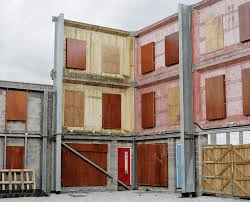
Pickerings images are of desolate fake urban areas where the police practice how they would deal with a violent riot situation. The images are after their training and there are no people in her work which I find quite disconcerting, the areas, although they look deprived are rather clean and clinical which also creates a sense of unease.

I don’t think Public Order is an effective piece of documentary since this training area assumes that riots only happen in urban areas when we know that they also take place in the countryside and different environments to what is described in these images.

I would imagine that since it is a training area that a documentary series of images would be more meaningful if they included people and what they use this area for, it would be less ambiguous and would not leave the viewer to construct the meaning as much as they would in this series.

“Behind Flicks Nightclub 2004” These images don’t make me feel comfortable, they are disconcerting
The lack of people in all these images creates ambiguity which is not documentary

Reading List

Essential Reading
● Bate, D (2009) Photography: The Key Concepts. London: Berg.
● Curana, N. & Fox, A (2012) Behind the Image: Research in Photography.
Lausanne: AVA.
● Langford, M. et al (2010) Langford’s Basic Photography (9 th ed.) Oxford:
Focal Press.
● Short, M (2011) Creative Photography: Context and Narrative. Lausanne: AVA.
● Warner Marien, M (2014) Photography: A Cultural History (4th ed.) London:
Laurence King.


Further Reading
● Baker, S (2016) Performing for the Camera. Tate Publishing: London.
● Barthes, R (1977) Image – Music – Text. London: Fontana Press.
● Bate, D (2009) Photography: The Key Concepts. New York: Berg.
● Bate, D (2016) Art Photography. Harry H. Abrams.
● Berger, J (1972) Ways of Seeing. London: Penguin Books.
● Belsey, C (2002) A Very Short Introduction to Poststructuralism. Oxford:
Oxford University Press.
● Bright, S (2011) Art Photography Now (2nd revised edition). London: Thames
& Hudson.
● Bright, S (2010) Auto Focus: The Self-Portrait in Contemporary Photography.
London: Thames & Hudson.
● Brilliant, R (1991) Portraiture. London: Reaktion Books.
● Bull, S (2009) Photography. London: Routledge.
● Bussard, K (2006) So the Story Goes: Photographs by Tina Barney, Philip-Lorca
diCorcia, Nan Goldin, Sally Mann and Larry Sultan. New Haven, CT: Yale
University Press.
● Campany, D (2008) Photography and Cinema. London: Reaktion Books.
● Cotton, C (2009) The Photograph as Contemporary Art (2nd revised edition).
London: Thames & Hudson.
0 Photography 1: Context and Narrative
● Dexter, E. and Weski, T (2003) Cruel and Tender. London: Tate Publishing
● Eijkelboom, H (2014) People of the 21 st Century. Phaidon Press: London.
● Eskildsen, U (2008) Street & Studio: An Urban History of Photography.
London: Tate Publishing
● Eco, U (1989) The Open Work. Cambridge, MA: Harvard University Press.
● Fox, A. & Caruana, N (2012) Behind the Image. Lausanne: AVA Publishing.
● Howarth, S (2005) Singular Images: Essays on Remarkable Photographs.
London: Tate Publishing.
● Hurn, D. and Jay, B (1997) On Being a Photographer: A Practical Guide (3rd
edition). Anacortes, WA: LensWork.
● Jeffrey, I (1981) Photography: A Concise History.
● Jeffrey, I (2009) How to Read a Photograph. London: Thames & Hudson.
● Kozloff, M (2007) The Theatre of the Face: Portrait Photography Since 1900.
London: Phaidon Press.
● La Grange, A (2005) Basic Critical Theory for Photographers. Oxford: Focal
Press.
● Lowry, J, Green, D & Baetens, J (2009) Theatres of the Real. Brighton:
Photoworks.
● Sontag, S (1979) On Photography. London: Penguin.
● Szarkowski, J (1984) Mirrors and Windows: American Photography since 1960.
New York: MoMA.
● Short, M (2011) Context and Narrative. Lausanne: AVA Publishing.
● Williamson, J (2010) Decoding Advertisements: Ideology and Meaning in
Advertising (reissue edition). London: Marion Boyars.
● Wells, L. (2009) Photography: A Critical Introduction (4 th ed.) Abingdon: Routledge

Unit 1 Ex5: The Photograph As Document: Project 5: The Manipulated Image: Critical Analysis

Read the section entitled ‘The Real and the Digital’ in Wells, Liz. (2009) Photography:
A Critical Introduction (4th edition). Abingdon: Routledge, pp.73–75. You’ll find this
on the student website.
Does digital technology change how we see photography as truth? Consider both
sides of the argument and make some notes in your learning log.

The Real And The Digital (Liz Wells – Photography, A Critical Introduction) 

The convergence between computing and audio-visual technologies has, as we all know, produced new kinds of digital media which are transforming the means of image-making together with its social, commercial and aesthetic practices.  Here, we need to note that digital media -with its ability to create, manipulate and edit images –   has given new prominence to arguments about the nature of photography and taken them into the popular domain.  These may briefly be summarised as: questions about the nature of the photographic image; about new ways of defining and understanding ‘the real’ that are brought about by processes of globalisation and postmodern philosophical positions, and, finally, questions about the relationship of photography to other media. It is now clear that images with all the  appearance of ‘real’ photographs may have been created from scratch on computer, montaged from many sources, altered in some respects, or radically transformed. Figures  may be added or removed and the main constituents of the picture rearranged to suggest new relationships or bizarre conjunctions. Does all this not destroy the claim of photography to have a  special ability to show things as they  are and raise serious doubts about those genres with a  particular investment in the ‘real’ -documentary and photojournalism? We can, of course, observe that, as we have already seen, the manipulation of images is nothing new and that photographs have been changed, touched-up or distorted since the earliest  days. But we are not looking here merely at a  technically sophisticated way of altering images, but at much more profound changes that challenge the ontological status of the photo-graph itself. If a photograph is not of something already existing in the world, how can we regard it as an accurate record of how things are? Roland Barthes’ influential conception of the nature of the photograph, is  that it is the result of an event in the world, evidence of the passing of  a moment of time that once was and is no more, which left a  kind of trace of the event on the photograph. It is this trace which has been  considered to give photographs their special relationship to the real. That is that they function, in the typology of signs offered by the American semiotician, C.S. Peirce, as indexical signs. The nature of the sign within semiological  systems is  important, but it is interesting to note that we have always known  that photographs are malleable, contrived and slippery, but have, simultaneously, been prepared to believe them to be evidential and more ‘real’ than  other kinds of images. It is possible to argue that the authenticity of the photograph was validated less by the nature of the image itself than through the structure of discursive, social  and professional practices which constituted photography. Any radical transformation in this structure makes us uneasy about the status of the photograph. Not only do we know that individual photographs could have been manipulated, but our reception and understanding of the world of signs may  have been transformed. Writing in the French newspaper Liberation, in 1991 the  social theorist, Jean Baudrillard famously remarked that ‘the gulf war  did no t  take place’ (Baudrillard 1995). He was commenting on the nature of the real and the authentic in our time and suggesting that .in  t he world of th e  spectacle,  it is pointless to posit an external reality that is then  pictured, described and represented. In his view everything is constructed and our sense of the world is mediated by complex technologies that  are themselves a  major constituent of our reality. What took place, then, was not t he  first Gulf War but  a whole sequence of political, social and military actions that  were acted out in a new 74

kind of social and technical space. While this  may be an extreme  way of formulating the argument, it is clear that a  complex of technical, political, social and cultural changes has transformed not just photography, but the whole of visual culture. For example, David Campany  points out that ‘almost a third of all  news “photographs” are frame grabs from video or digital sources’ and comments that: The definition of a  medium, particularly photography,  is not autonomous or self-governing, but heteronymous, dependent on other media. It  derives less from what  it is technologically than what it is culturally. Photography is what we do with it. And what we do with it depends  on what we do with other image technologies. (Campany 2003: 130; emphasis in original) One significant consequence of this has been a  new merging and lack of definition between photographic genres.  It is increasingly difficult to  distinguish one kind of photograph practice from another. As we shall see later, titles, such as ‘documentary’ are of little use as labels for the new kind of work that is  being  produced. Indeed, all descriptive titles have been freely appropriated and find themselves used in curious couplings, for example, one sub-genre of photography now well established in the USA is that of’wedding photojournalism’.

Notes taken that I found interesting :

The American philosopher and semiotician John Deely said that “objects” are dosed with human experience – when they are photographed they become “signs” – he believes that photographing objects can never be the truth because of this. As soon as we photograph somethng they become objects of our experience. The interpretation of all objects is affected by human experiences

David Campany has stated that a third of all news photographs are screen grabs from videos or a digital source

“Photography is what we do with it” – David Campany

A consequence of digital technology is a new merging of traditional photographic genres – documentary photography is of little use now as a label for the new kind of work that is now being produced – new terms such as wedding photojournalism and citizen photographer have emerged

Social networks are now acting as publishers of photographers, several informal photographs are taken and uploaded around the world rather than the tradtional way of days gone by – mainstream media are accessing them and using them as events unfold

Foreign news and hard news has been squeezed for resources and squeezed for space by cheaper and more advertising friendly features on lifestyle, products and celebrity – coupled with the fact that some governments restrict formal photographers in scenes of conflict, so the rise in demand for the amateur photographer is a result – to add to this, the photo that appears amateurish may come with more authenticity and credibility than a professional photo

There is still room for professional photos of conflict and hard news images of professional quality but even this changing to the storage and transport in a digital format rather than print

Thoughts and Reflection

I believe that photographs, whether in the digital age or when the first documentary work was made, there is always a version of the truth produced because the person making the work will be affected by his or her own life experiences and this will result in what they choose to photograph and what not to, what they decide to include in the frame and what to omit. These elements can alter the narrative drastically but can still be an image that has not been digitally manipulated.

I believe that eyewitness photojournalism can be a good thing because news is communicated almost instantly and in this world of instant gratification it has become an expectation. Fake news is on the rise and also the amount of time we spend reading short, sound bite news items, this can lead to misinformed paranoia and anxiety.

Mobile phone photography and the use of AI in phone photography will, I believe replace the large pro DSLR cameras in the next 10 years. Current phones can take night photos and bring deatil into an image that is not apparent to the human eye, AI will search millions of similar images and in 4 seconds will rectify the image being taken to produce the best version automatically. Mobile phone companies are currently competing is by the quality of their camera, there are hundreds of experts working to improve this phone feature and not anywhere near that much resource is being applied at Canon or Nikon to improve their product in the same way.

Photography is not about taking a technically perfect shot, it is in the words of David Campany “what we do with it” and this will become even more prominent when anyone can take a technically perfect shot because of the advancement in technology.

Bibliography

Contentstore.cla.co.uk. 2020. Openathens / Sign In. [online] Available at: <https://contentstore.cla.co.uk/EReader/Index?p=RDpcU2l0ZXNccHJvZHVjdGlvblxUZW1wXERDUy1kNzlkNjVkZC1lNjkzLTQ4OTUtOWQ0My04ZTg2Mjc1ZjIzNWUucGRm&o=JnB1Ymxpc2hlZENvbnRlbnRfSWQ9OTQ0ODA3JmNvbnRlbnRSZXF1ZXN0X0lkPTEwMjUxMDcmZG9jdW1lbnRMaW5rPWEyYjcyNDkxLTIzZWMtZTkxMS04MGNkLTAwNTA1NmFmNDA5OSZjb250ZW50SXRlbV9JZD0yODAwOTE=&id=a2b72491-23ec-e911-80cd-005056af4099&gt; [Accessed 12 May 2020].

Unit 1 Research: The Photograph As Document : Project 1: Judith Williamson’s ‘Advertising’ Articles

What is Source?

Extract from Source website : “Source is a quarterly photography magazine, available in print and as a digital edition, published in Belfast, Northern Ireland. We publish emerging photographic work and engage with the latest in contemporary photography through news, thoughtful features and reviews of the latest exhibitions and books from Ireland and the UK. Our website brings together an archive of writing and pictures from the magazine alongside current features”.

I have subscribed to the printed version of this magazine, I think this will be a useful reference for me during this module and continued study. I am trying to get my sources of reference and information from a variety of sources rather than just the internet so this will be one of them.

Tiffany Advert Comments, Key Points For me

These are points I found interesting about Judith Williamson’s observations on the image in the Tiffany advert ( image is below)

A new concept for me is that black and white or sepia images are used to show something that is timeless or classic. The reason B&W imagery has been used in this advert for example.

Black and white gives the impression of more classy, less transient than colour – so is often used in high end watches and luxury goods advertising – has come to represent something more serious, more aesthetic than colour – it also has a timeless connotation

This image of a couple in the pouring rain signifies spontaneity and very much like Cartier-Bresson’s “Decisive Moment” – and this also translates across into the decisive moment of proposing or deciding to be in a relationship – he also used to shoot in black and white.

It is also interesting how the narrative on the side (the short poem) and the ending question “will you” ties in with the narrative of the image. ‘Will you know that you’re more fun on/ a bad day than most people are on good ones/ and that I wouldn’t mind if it rained/ every day for the rest of my life if it meant/ I could spend it with you?’ The ‘Will you?’ in larger print, above the close-up image of the diamond rings, leads the romantic narrative to its culmination in a proposal.

Bibliography

Hull, S. (2020). Source Magazine: Thinking Through Photography – About Source. [online] Source.ie. Available at: https://www.source.ie/main/about.php [Accessed 7 Feb. 2020].