Brief
Start by doing some reflecting in your learning log. What kinds of subjects might be seen as unphotographable? How might you go about portraying them using Photography?
List a few examples of things you’re experiencing now or have
recently been thinking about. This doesn’t have to be too in-depth or revealing,
but it can be if you want. Equally, it might be something as apparently trivial as
how you’re going to fit everything into your busy day.
At first you may come up with literal examples, but the more you think about them the more those ideas will develop into specific and more original ones. Make a list of at least seven ideas. Try and keep to things you have a personal interest in or curiosity about.
Keep a notebook with you at all times and make notes when ideas strike you as
interesting. (This is good practice for all stages of the degree and beyond. Ideas
books are something to be revisited time and again for ideas and hints for the
photographer you’re becoming.)
Now implement one of your ideas. Aim for a tightly edited and visually consistent
series of 7–10 photographs.
Initial Response To The Assignment
Feelings appear to be impossible to photograph, or unphotographable upon first impressions, objects are an obvious subject. The senses other than sight, such as taste, smell and feel appear at first to be unphotographable.
I have done a lot of reading about the language of photography to really understand this concept and in order to make work that communicates what you want it to. You have to think about making your image with the subject, form and content in mind. I have also listened to a lecture by Eileen Rafferty on the Language of Photography on YouTube and this has helped me understand this concept too. The subject needs to be clear and other elements in the frame are used to support it. The visual elements need to help you communicate the concept or idea, the symbols or metaphors need to tell the story.
Think of things that are personal to me and that I currently have a special interest in.
How would I photograph the unseen? The use of symbols and metaphors are useful to portray a feeling or an emotion, for example, light is often seen as a symbol of joy or hope, a single flower could mean isolation, a road the leads to somewhere that is hidden or obscure could mean an uncertain future ahead.
As I go about my daily walks I see these symbols in nature that I could used to communicate my current mood and feelings during this period of lockdown. I have a personal interest in nature and the outdoors and I have taken my inspiration from this and developed it into work that communicates my feelings during this challenging lockdown period.
Research / Inspiration
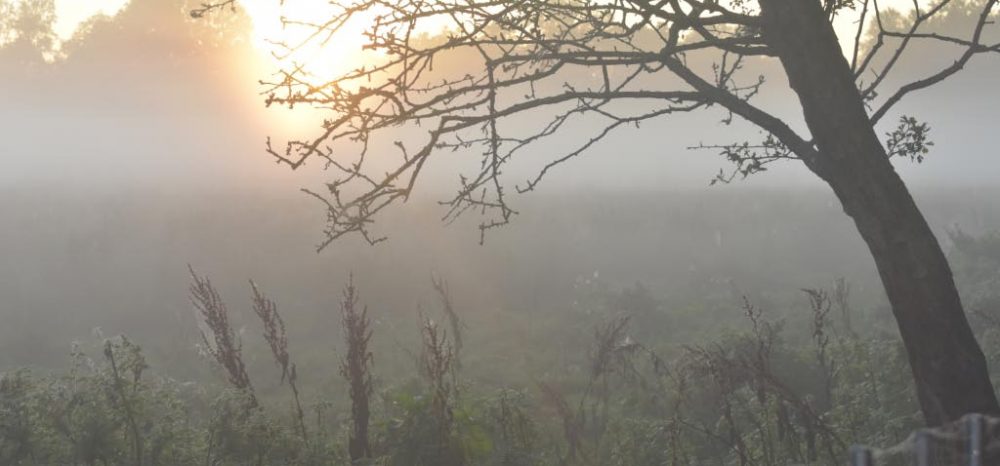
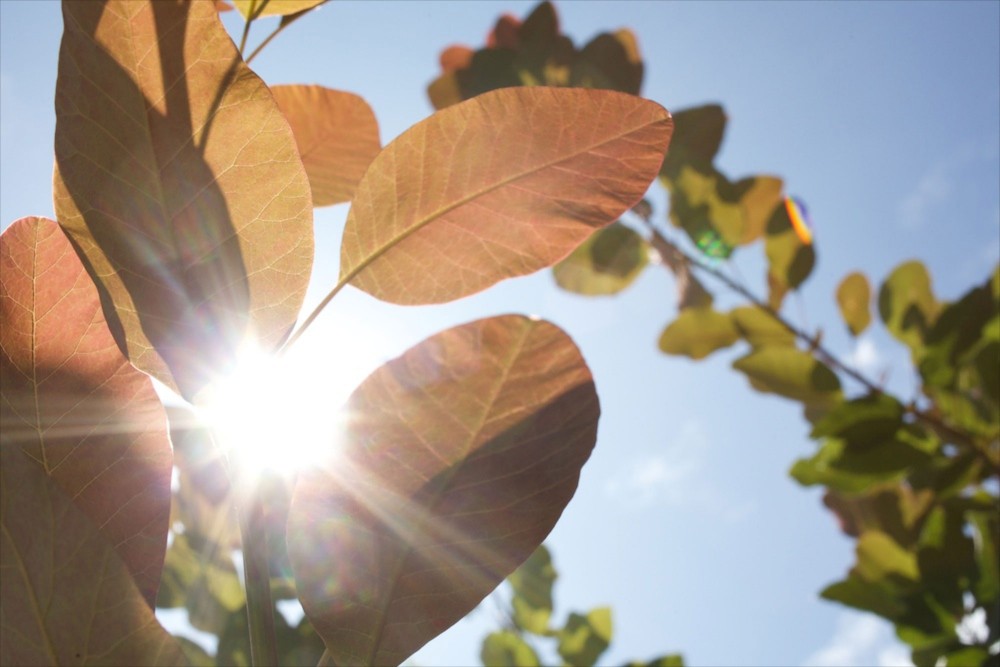
Bryony Cambell’s work “The Dad Project” inspired me with her photographs of the light and how the sunshine gave her some comfort in difficult times. This is not related at all to the main narrative but is related in an “unspoken” way to her feelings at the time.
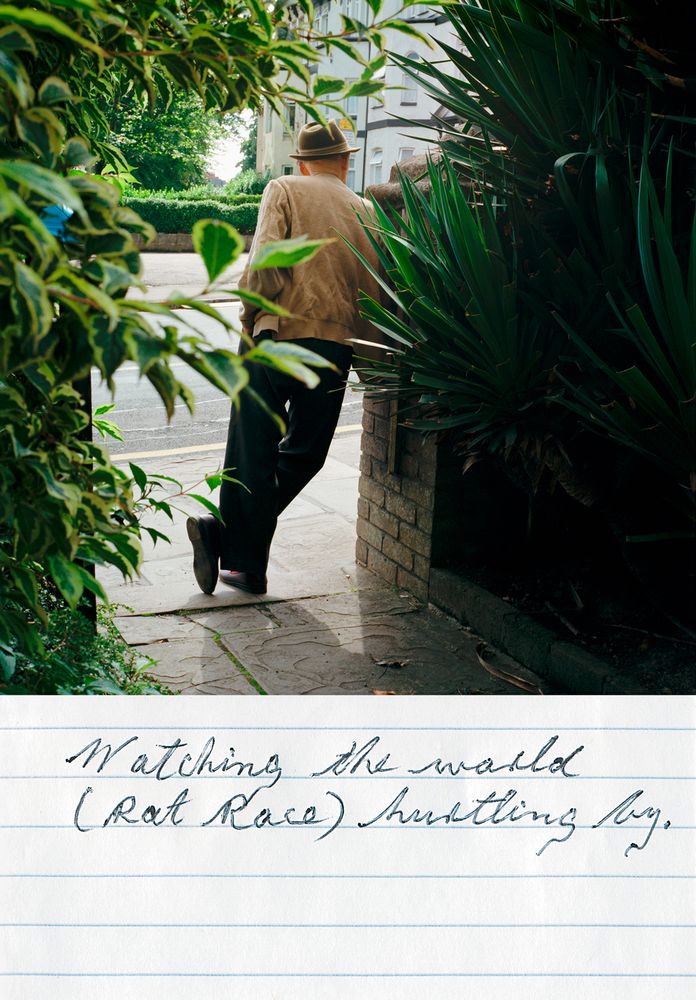
In Graham Clarke’s book called “The Photograph” on page 33 in the chapter entitled “How to read a photograph” he speaks of the photograph always having the capacity to probe and suggest larger conditions, which underlies the notion of an image’s potential “universal” appeal and international language. He suggests there are photographic themes which mitigate against the argument for a photographic language rooted in the culture as the ideology within which the photograph established its meaning. We can then speak of a language of photography, in which every aspect of the photographic space has a potential meaning beyond its literal presence in the picture”. The set of images I plan to create for this assignment will be inspired by this thinking, there will be meanings beyond the literal image, these meanings may be slightly different to each different person viewing the image. I decided to test this theory and asked each member of my family to interpret each image. I have attached the collection of hand written interpretations to each corresponding image to create a set of six diptychs for my assignment.
I also researched the work of Kaylyn Deveney, The Day To Day Life of Alfred Hastings and I was inspired by the way Deveney got the subject to interpret his own photographs in his own handwriting and in his own words, so the subject has more control in the work and it is more of a collaboration. This is what I have done with my work for this assignment and has been the main source of inspiration for my work. I have used lined paper out of a small notebook for each person to write their thoughts and feelings on each image I presented to them.
Ideas
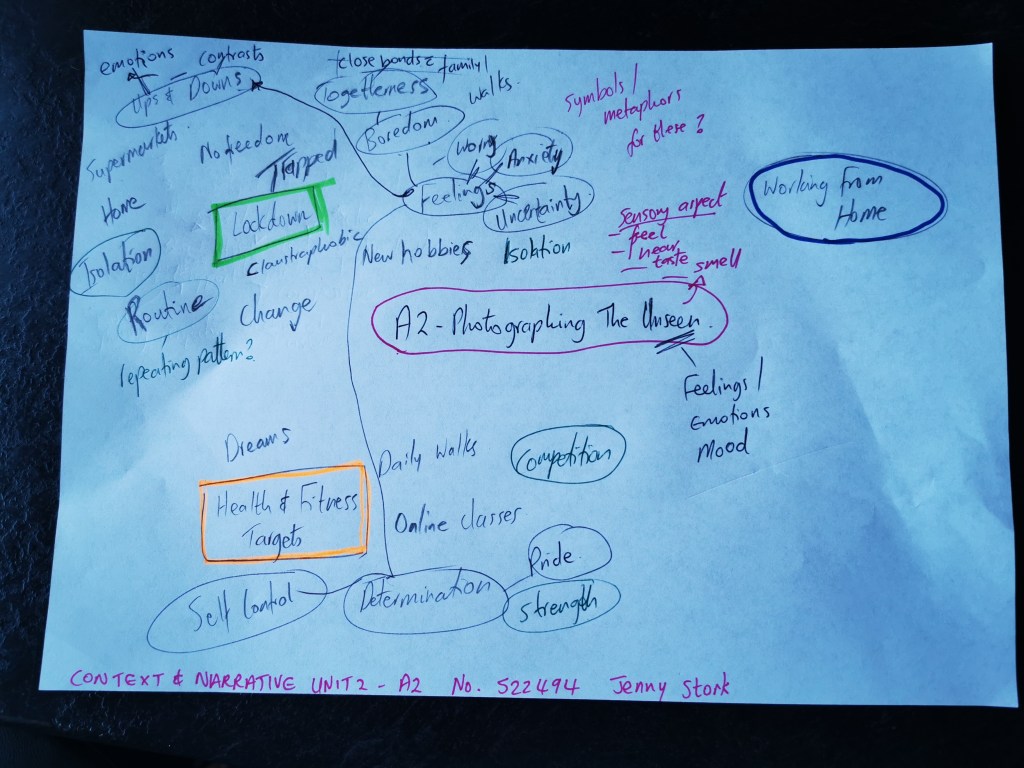
As i created my mind map I came up with three ideas that kept recurring, these were:
Working from home: something that has hugely changed my day to day routine and my life in general
COVID and the lockdown measures: how these have impacted me personally, and those closest to me.
Heath and fitness targets: being someone who has recovered from a critical illness, health is very often what I focus on and think about
Planning
I decided to choose the Lockdown theme and interpret this through images since it has had the biggest impact on my life and has really affected every pat of my life from mental health and wellbeing to relationships and my life goals. It is like every aspect of my life as I knew it has gone and everything is up in the air with the potential for radical change. As I went on my daily exercise walks I began to see images that took on other meanings, such as a path that takes a turn and the end is not visible, this can be interpreted in a way that we are all on a journey during COVID times and the end is very unclear.
Execution
Editing my work I find is one of the most challenging aspects. I took on board my tutors’ feedback from my first assignment and printed out a selection of images I thought may be strong contenders. I laid these out on a table and created a group I thought would look good together, I then noticed the blue sky was very dominant so I discarded these images and went for more muted tones to tie the series together, browns, greys and greens instead. I tried to choose images that had strong shape and lines. I lived with a group for a while then revisited the group and my mind was constantly changing about what I wanted to include. I also had to think that each image has to be different and tell a different story to the others and be able to stand up in it’s own right.

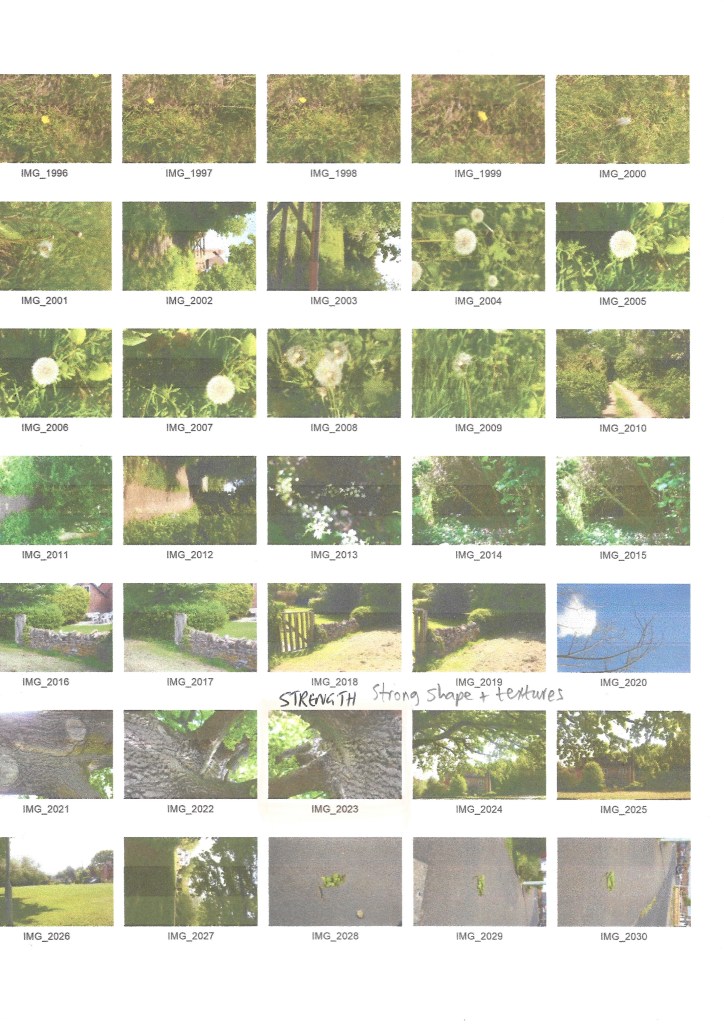
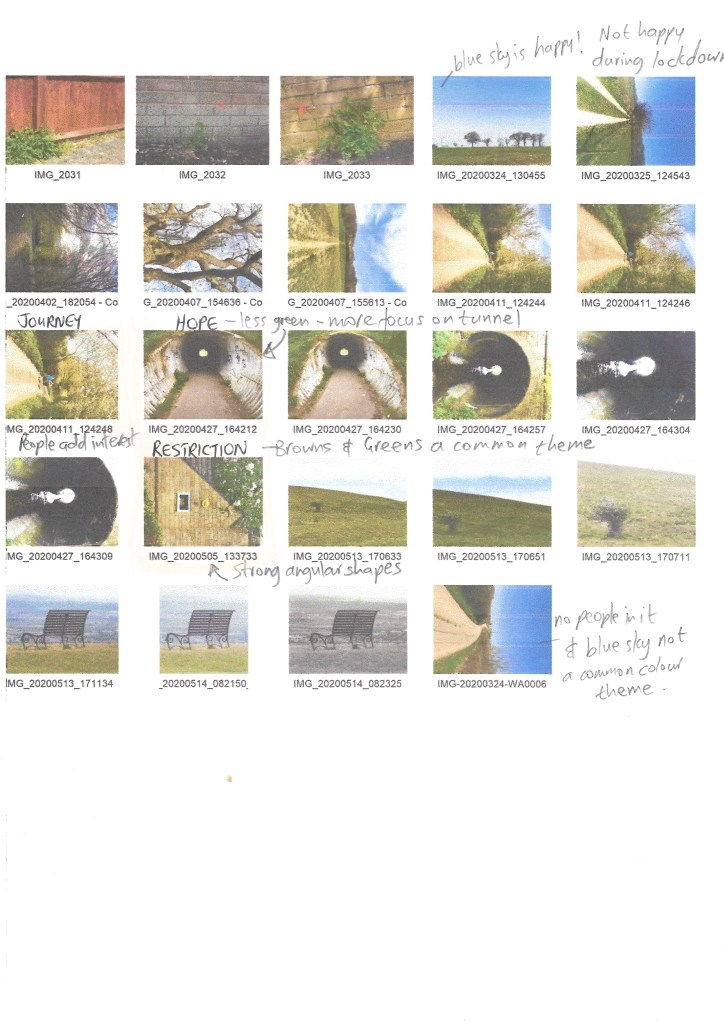
The annotations on my contact sheets are of emotions that come to mind when I see beyond the literal subject matter, I tried to identify strong form and shape and consistent colouring through the chosen images. I find this really difficult and it did help to print off a number of ones I was potentially interested in submitting and just laid them out on a table to see which ones visually connected as a group
Conclusion and Further Work
Once I had created the work and numbered the photographs in my series, those contributing with written words used the numbering I gave to each image. I then thought that the images I chose could have been sequenced better to tell a story. The number allocation was random, when I rework this and depending on feedback from my tutor I will look to apply a narrative thread to this work.
Bibliography
Stork, J., 2020. Learn The Language Of Photography Through Critique (Eileen Rafferty Youtube Lecture). [online] Jenny Stork: Photography 1: Context & Narrative. Available at: <https://contextandnarrativewriting.poetry.blog/2020/05/04/learn-the-language-of-photography-through-critique-eileen-rafferty-youtube-lecture/> [Accessed 5 May 2020].
Stork, J., 2020. Unit 2: Exercise 2: Research Task: Relay. [online] Jenny Stork: Photography 1: Context & Narrative. Available at: <https://contextandnarrativewriting.poetry.blog/2020/04/20/unit-2-exercise-2-research-task-relay/> [Accessed 12 May 2020].
Clarke, G., 1997. The Photograph. 1st ed. Oxford: Osford History of Art, p.33.
 Jenny Stork: Photography 1: Context & Narrative